Paolo Bulgari's death: kidnapping, mafia and billion-lira ransom in the luxury brand's history
Paolo Bulgari died aged 89, whose brother was kidnapped in Rome in 1975. The family paid out 1.3 billion lire as ransom.
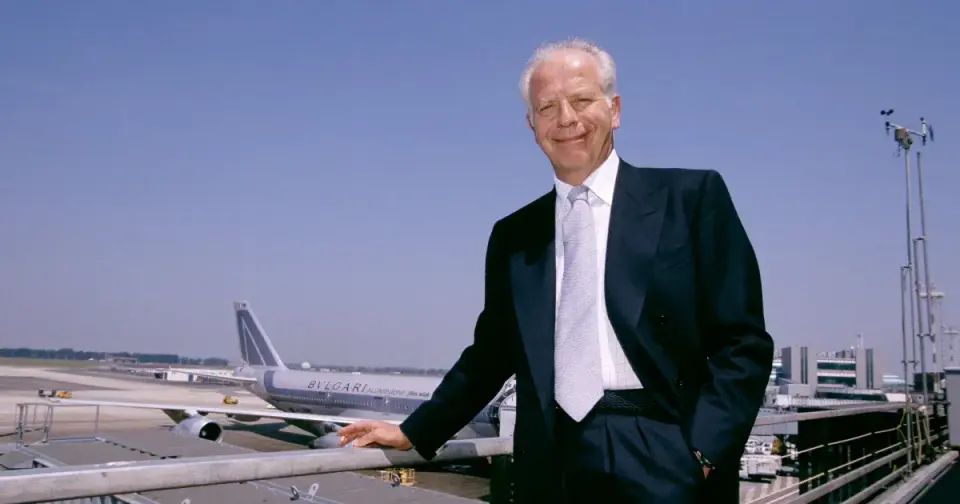
The Bulgari dynasty's dark decade: kidnapping, mafia and ransom in Rome
On 21 November, Paolo Bulgari died aged 89, a defining figure of one of the world's most famous luxury jewellery brands, the family announced. His death marked the end of a life whose darkest chapter unfolded in the violence-torn Rome of the 1970s, a period Telex has covered in detail.
On the morning of 14 March 1975, black metal shutters came down over the Bulgari jewellery shop on one of Rome's most expensive shopping streets, the Via Condotti. Neighbouring shops also remained closed, expressing solidarity: the previous evening, armed men had kidnapped forty-year-old Giovanni Bulgari, known to everyone as Gianni, who ran the family business.
According to a New York Times report from 15 March 1975, three armed men attacked the jeweller in Rome's city centre. The police found Bulgari's car the next day, but authorities discovered little evidence at the scene. A neighbouring shop owner who personally knew the family believed the criminals had chosen Gianni because he was the only one of the three Bulgari brothers who did not carry a pistol.
Negotiations with criminal organisations
Paolo and Nicola Bulgari eventually decided to try to reach an agreement with the kidnappers without police assistance. The two brothers spent more than a month negotiating with various criminal organisations – including the Calabrian mafia and Sardinian armed groups – for their brother's release.
"In my brother's case, I had to conduct the negotiations personally. After a month, Gianni came home," Paolo Bulgari recalled in a 2005 interview with Panorama, in which he described the kidnapping as the most difficult period of his life.
The family ultimately paid 1.3 billion lire in ransom for Gianni. Based on consumer price indices from the Italian statistical agency (ISTAT), this sum equates to more than €8.8 million, or approximately 3.3 billion forints, in 2025 values – including the October 2026 price index increase.
The kidnappers initially demanded $16 million from the family. Accounts differ to this day as to exactly how much money was handed over to them – CNN confirms the aforementioned figure of 1.3 billion lire.
The years of lead in Italy
The Bulgari case was not isolated. In Italy, the seventies – the so-called Anni di Piombo, or years of lead – were marked by political assassinations, clashes between extremist organisations and the rise of organised crime. According to contemporary reports in People magazine, in the year before Gianni's kidnapping, forty other kidnappings had taken place across the country.
One of the most famous cases of the period was the 1973 kidnapping of John Paul Getty III: the sixteen-year-old son, grandson of American oil magnate J. Paul Getty, was held captive for months. Ridley Scott's film "All the Money in the World" dramatised this story.
The Bulgari brothers were aware of the danger. Paolo and Nicola therefore carried pistols when they were in Rome – but Gianni did not want to carry a weapon on the streets.
Greek roots, Roman luxury
The Bulgari dynasty was not born in Italy. Paolo's grandfather, Sotirios Voulgaris, was a Greek silversmith from Epirus, then under Ottoman rule, who first lived in Naples before settling in Rome. He opened his jewellery shop in 1884, gradually Italianising his name in the process: Voulgaris became Bulgari.
The business became truly famous by the 1950s and 1960s. Rome was then a centre of the international film industry, and Hollywood stars shopped at Via Condotti boutiques during their time between takes. Regular Bulgari customers included Sophia Loren, Audrey Hepburn, Ingrid Bergman and Grace Kelly.
One of the brand's greatest admirers was Elizabeth Taylor, who became more closely acquainted with Bulgari jewellery during the Roman filming of Cleopatra. Her partner, Richard Burton, later gave Taylor Bulgari jewellery on several occasions. Burton once remarked that Taylor had learnt only one Italian word during her time in Rome: Bulgari.
Paolo's role in the brand's rise
Paolo Bulgari was born in Rome in 1937. He studied law but joined the family business in 1960. He was particularly interested in gemstones and in time became one of the most respected experts in the jewellery industry. Together with his brothers, he began designing jewellery that markedly differed from the products of the dominant Parisian jewellery houses of the time: they used large, coloured gemstones, yellow gold and forms borrowed from ancient Roman art.
After their father's death in 1966, the eldest brother, Gianni, took over the running of the business. He was well-known in Hollywood circles, competed in car races, was mentored by Enzo Ferrari, and piloted his own aircraft. He was considered one of the most prominent figures in Italian luxury industry – yet the family's wealth and renown increasingly made them a target.
With Paolo Bulgari's death, a witness disappeared who had personally experienced how luxury, organised crime and million-dollar sums were intertwined in seventies Rome – and who, despite this, played a decisive role in making Bulgari one of the world's most recognised luxury brands.
Source: Telex