Italian mafia blocks fentanyl – not out of compassion, but for profit
Criminal clans are preventing the spread of fentanyl in Italy to protect their own cocaine and heroin trafficking. However, experts warn that the causes of the crisis are more complex.
Fentanyl in Italy: mafia as an unwilling guardian
According to plus7dni.pluska.sk, the low prevalence of fentanyl in Italy is largely due to criminal organisations themselves – not out of concern for the health of the addicted, but to protect their own billion-euro profits from cocaine and heroin.
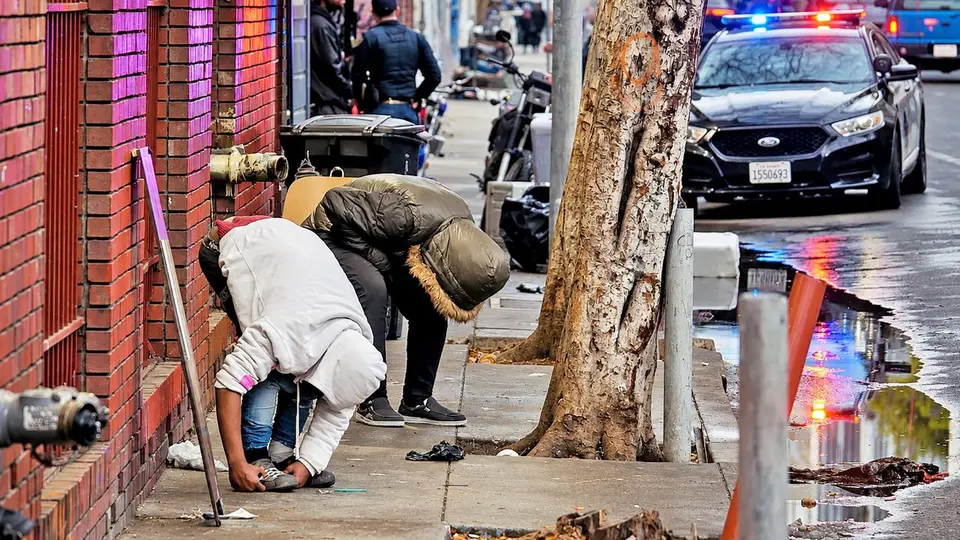
Images from American streets, showing people standing with heads bowed to their chests and knees buckling under their body weight, have circulated online. The media labels them "the living dead". Every further dose of fentanyl could be the last. In hospitals, this substance is used during operations and to relieve severe pain – it is up to one hundred times more potent than morphine. On the illegal market, however, its power turns into a lethal risk: overdose can stop breathing, and the user may not even know they have taken fentanyl. It can be mixed into another drug or concealed in a counterfeit pill.
Italy has not yet experienced a similar epidemic. According to a government report from 2026, five deaths linked to this substance were recorded there last year.
Business interests of the clans
Writer Roberto Saviano, who has long focused on organised crime, wrote in July in the newspaper La Repubblica that Italian mafiosi are actively preventing the spread of fentanyl. The clans, according to him, are protecting their established heroin and cocaine trade. Fentanyl would drain their customers, bodies on the streets would force politicians to act, and police operations targeting fentanyl could also jeopardise their current business. A customer who returns has greater value to the clans than one who dies.
"Fentanyl kills easily," warned Naples prosecutor Nicola Gratteri in an interview with the newspaper La Stampa. At the same time, however, he acknowledged that the substance could be attractive to the mafia: a small quantity can be used to prepare many doses and its transport is simpler than cocaine. High profits are thus accompanied by considerable risk.
General Vincenzo Molinese, commander of the specialised carabinieri unit ROS, described to a parliamentary commission how mafia organisations use contacts with foreign suppliers and control street dealing. If they do not include fentanyl in their own offer, they can significantly obstruct its path to customers. However, according to him, this does not yet prove that they are actually blocking it.
Alternative explanation
"There is also another explanation," counters Leonardo Fiorentini, national secretary of the Forum Droghe association, which has advisory status with the United Nations. He points out that in North America, the fentanyl crisis has its roots in the mass prescription of opioids from the 1990s. "Pressure from pharmaceutical companies, documented in many court cases, led thousands of people to addiction," he explains. When some of them lost access to medication or lost their health insurance, they turned to the black market, which adapted to their demand.
"In Italy and across Europe, such a background does not exist," Fiorentini continues. He refers to differences in opioid prescribing and the availability of healthcare. Heroin, moreover, remains available and many addicts prefer it, according to him. Fiorentini also recalls the clans' past: "The mafia had no hesitation in bringing heroin to market at the turn of the 1970s and 1980s." Numerous overdose deaths did not deter them at that time.
Theft from a Rome hospital
In June 2026, a fentanyl theft alarmed Italy. Eighty ampoules disappeared from the pharmacy of the Jewish Hospital in Rome. The safe showed no signs of forced entry. According to later findings by the ANSA news agency, more than twenty people, including security staff, could have had access to the key. "I cannot explain how such a thing could have happened. We always performed all necessary checks," the pharmacy manager told investigators. The report was filed on 24 June.
Molinese, speaking to a parliamentary commission in July, described the theft as a sign that someone was trying to obtain fentanyl. "In Italy, we have not yet recorded signs of organised crime involvement," he said, but emphasised that this did not rule out its participation. Investigators were also to determine whether the stolen ampoules were destined for the internet market in Italy or abroad.
The theft prompted an immediate government response. The Health Ministry sent inspectors and deployed specialised carabinieri who examined drug records and key handling. New security rules have been in effect since 26 September – from safes and alarms to access control. Italy, moreover, had a plan against fentanyl abuse since March 2024, which provides for early detection of the substance in laboratories, training for healthcare professionals and adequate stocks of naloxone.
What would truly help
Fiorentini considers the measures taken so far to be insufficient. "I would ensure a dense network of low-threshold services accessible to everyone throughout the country," he says. Such support is also intended for people who are not yet able to stop using drugs. He sees the greatest shortfalls in southern Italy and on the islands. "This network must provide naloxone, substance testing and supervised consumption spaces and help people access treatment," he lists.
He sharply criticises the policy of Deputy Prime Minister Alfredo Mantovano. "Everything else, including his miraculous plans against fentanyl, which will melt like snow in the sun at the first small hospital theft, is propaganda," Fiorentini argues.
Low prevalence of fentanyl, according to him, does not mean that Italy has its drug problem under control. "Not causing panic and strengthening prevention are two decisions that must go hand in hand," he emphasises. And Saviano adds that protection from the mafia is not good news – it is, in his view, "the worst".
Source: Google News SK — Crime (sk)