Drug crime in Luxembourg: 72% of cases in the capital, assessment after 18 months
After 18 months, Luxembourg draws an initial assessment of the Drogendësch 2.0 action plan: arrests rose by 17%, offences fell by 15%.
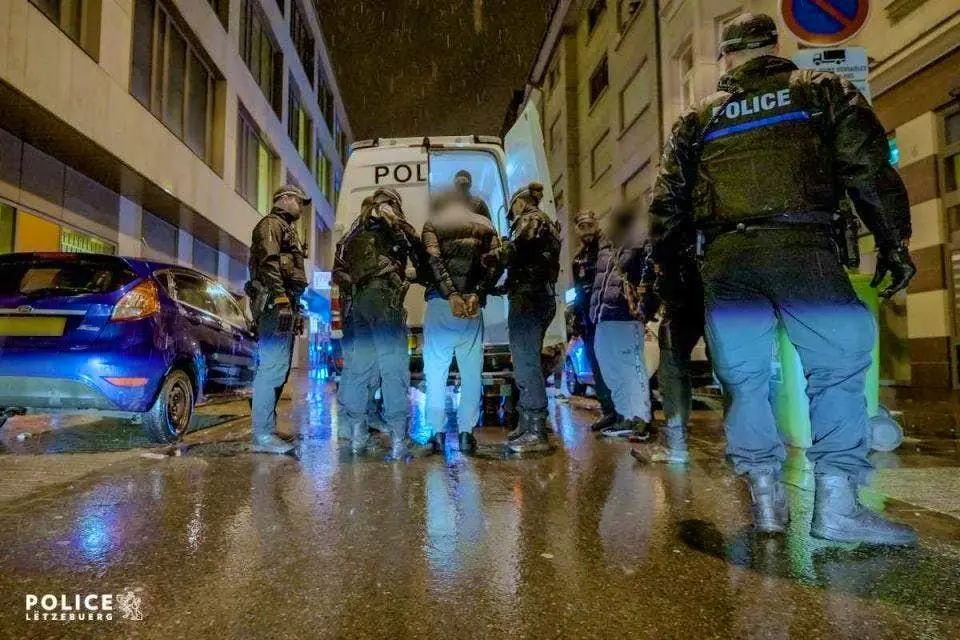
Drogendësch 2.0: initial assessment after eighteen months
Four ministers, the Attorney General, the Director General of Police and the Mayor of Luxembourg City drew up a first assessment on Tuesday in Parliament — as reported by L'Essentiel. The focus was on the action plan to combat drug crime, known as Drogendësch 2.0, which had been launched in May 2025.
Of the 71 announced measures, according to the responsible ministers, 32 are currently in force, 17 are being implemented, 17 further are in planning and only five have not yet been initiated. CSV deputy and city alderman Laurent Mosar commended the progress, but cautioned: "The government has made efforts. But even if the situation is not yet satisfactory, many projects have been adopted — but the pace still needs to be stepped up a bit."
Arrests up, offences down
Interior Minister Léon Gloden cited concrete figures: arrests rose over the past 18 months by 17%, identified offences fell by 15%. "The increase was quite significant in terms of arrests, proceedings and sentences handed down, which shows that the prosecutor's office has gained in impact," Mosar explained.
Attorney General John Petry emphasised that around 75% of drug offences are recorded in the context of arrests in flagrante delicto. The planned introduction of accelerated court appearance — scheduled for a vote in early 2027 — could ease the work of the judiciary. Petry stated that "the scale of the phenomenon" had changed since the introduction of the plan.
Capital in focus
72% of drug-related crime is concentrated in the city area of the capital. Since the introduction of strengthened expulsion from public places — adopted in July last year — 29 people have been expelled from the country and 21 people temporarily excluded from certain locations.
Socialist deputy Liz Braz criticised city policy: "The mayor has been denouncing crime, insecurity and neglect for some time. One can ask, however, whether city policy takes all problems into account and brings the right solutions."
Repression versus prevention
In addition to stepped-up police presence and tougher expulsion from public places, the plan provided for harsher penalties and accelerated proceedings. On the prevention side, measures included, among other things, the expansion of psychomedical-social services, new structures for Abrigado — the centre for people with addictive disorders in Bonnevoie — and an increase in admission capacity.
Braz listed the implementation status of the individual ministries: the Interior Ministry had implemented or initiated twelve of sixteen measures, the Justice Ministry all of its measures, the Health Ministry 12 of 37. In this she sees "evidence that the government is prioritising repression issues". Health Minister Martine Deprez and Family Minister Max Hahn countered that prevention measures often required infrastructure investments and stronger co-ordination with municipalities.
Source: L'Essentiel