Drug trafficking threatens 274 indigenous communities in the Peruvian Amazon
A report presented in Lima reveals that 274 indigenous communities face invasions and violence due to the advance of drug trafficking in their Amazonian territories.
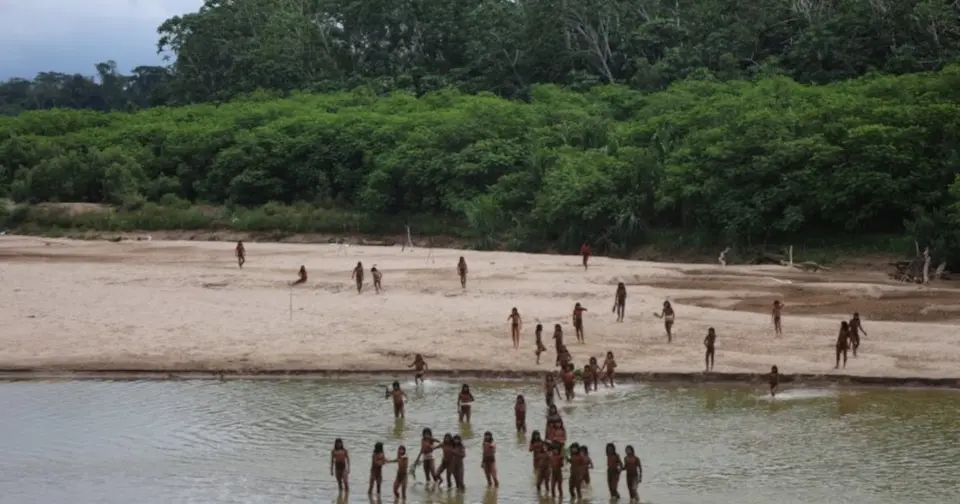
274 indigenous communities at risk from drug trafficking expansion in the Amazon
At least 274 indigenous communities in the Peruvian Amazon face invasions, displacement and violence due to the advance of drug trafficking in their territories. This is revealed in a report presented on Wednesday, 28 May in Lima, according to infobae.com. The document details the routes of illicit drug trafficking, its direct impacts on indigenous peoples and the way in which state policies have contributed to worsening the crisis.
The report was prepared by the Interethnic Association for the Development of the Peruvian Rainforest (AIDESEP), the Regional Organisation AIDESEP Ucayali (ORAU), the Institute of the Common Good (IBC) and Amazon Watch, with the writing carried out by Ricardo Soberón.
Absent state and communities singled out as suspects
Soberón was direct in statements to RPP: "The state did not look at the fact that there were ancestral and collective rights in the territory". He added that "the Peruvian state and governments, far from considering them an ally, consider them the main suspect", referring to indigenous communities.
According to figures from the Ministry of Interior cited in the document, Peru is currently the world's second largest producer of coca leaf, with more than 92,000 hectares cultivated in 2023. Of that total, 13,054 hectares—14% of the national total—are located within indigenous community territories.
Clandestine airstrips and export routes
The report estimates that there are at least 500 clandestine landing strips in the Peruvian Amazon. In the Ucayali region alone, more than 85 have been identified, many in active operation and located within communities without legal security or effective state presence. This illegal air infrastructure is used to move drug shipments to Brazil and Bolivia, and from there to the international market.
The potential cocaine production in Peru reached 785 tonnes in 2021, according to the document, with 99% of that production destined for abroad. The report concludes that the Amazon has become a strategic export platform for organised crime.
Indigenous peoples subject to pressure and violence
Kakataibo, Asháninka, Yagua and Ticuna communities have been invaded by illegal actors who have established crops, laboratories and transit routes. Pressure mechanisms include bribes, recruitment of young indigenous people and selective killings.
Marcelo Odicio, president of the Native Federation of Kakataibo Communities (Fenacoka), summed it up in concrete terms: "There are landing strips and complete abandonment of territorial control by the Peruvian state, by the Ministry of Interior, Ministry of Defence".
The report identifies four key drug trafficking routes in the Amazonian region. These corridors have brought with them massive deforestation, contamination of rivers with chemicals used in cocaine production and the displacement of entire communities.
Since 2020, 27 indigenous defenders have been murdered in contexts linked to drug trafficking, many without justice or subsequent reparation.
Anti-drug policies questioned
The document also questions state strategies for combating drugs. Between 2014 and 2019, the DEVIDA body promoted individual land titling in communal territories, a formalisation logic that in practice facilitated the fragmentation of collective territory and its subsequent occupation by illegal actors.
CORAH eradication operations, meanwhile, have been applied without prior consultation or sustainable productive alternatives. The effect has been the displacement of the coca frontier towards increasingly remote areas, including territories of indigenous peoples in voluntary isolation (PIAV), such as those in the Kakataibo Norte and Sur reserve.
Luis Hallazi, from the Institute of the Common Good, noted that "the impact of drug trafficking for Amazonian indigenous peoples is reflected in the invasion of their territory, environmental degradation through deforestation and river contamination for coca cultivation and cocaine production, with the consequent violence against the population and the permanent insecurity suffered by indigenous communities".
Proposals and call to consumer nations
To stop the advance of drug trafficking in indigenous territories, the report proposes a series of urgent measures: to collectively title and georeference territories, to reform anti-drug policy with an intercultural approach, to create a multisectoral working group to order the enabling titles over indigenous lands, to strengthen protection for defenders and to drive international cooperation with shared responsibility, especially with consumer nations.
Miguel Guimaraes, vice-president of AIDESEP, expressed: "The report should serve us as an alert and roadmap, for both the indigenous movement and all our allies. But, above all, we hope that the Amazonian states will make radical decisions to contain this environmental and human rights drama, and we trust that the international community, and in particular the destination countries where cocaine is consumed, will assume a more decisive role in protecting the rights of indigenous peoples that we are putting at risk".
Source: Google News PE — Crime