Fuel tax fraud costs State €460 million in 2025, according to EPCOL study
An EPCOL study with support from Deloitte estimates losses of €460 million in taxes in 2025 alone, with more than 500 million litres of undeclared fuel per year.
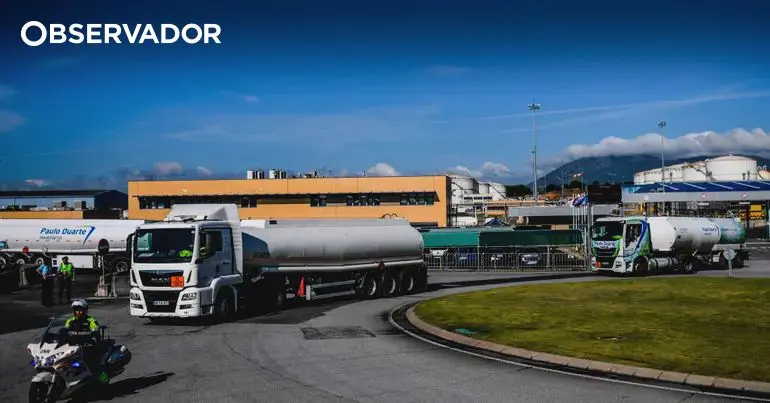
State lost €460 million in fuel tax revenues in 2025, study reveals
Google News PT — Crime highlights a study by EPCOL (Portuguese Fuel and Lubricant Companies), conducted with technical support from consultancy Deloitte, which estimates fiscal losses of €460 million in 2025 associated with fraud in the imported fuel sector, particularly from Spain. More than 17,000 fuel tankers are estimated to have transported annually more than 500 million litres of undeclared fuel, without the corresponding mineral oil tax (ISP) and VAT entering the State's coffers.
The volume of undeclared fuel is equivalent to that transported by one in every four lorries crossing the border with Spain, a phenomenon which EPCOL classifies as "an operational dimension of relevance and with measurable impact on sector logistics".
Cumulative losses exceed one billion euros between 2023 and 2025
The study covers the period between 2023 and 2025, estimating total average losses of €1,121 million — €704 million in ISP and €417 million in VAT. During this interval, the undeclared volume worsened by 45 per cent and the lost fiscal revenue increased by 71 per cent, partly because ISP rates rose, amplifying the financial impact of each litre that escapes taxation.
The €460 million estimated solely for 2025 represents more than 70 per cent of the value of aid granted to fuel prices during that year through a discount in mineral oil tax. According to the Budget Technical Support Unit (UTAO), this fiscal support for fuel prices cost 600 million euros to the public purse.
Fraud accelerated following Spanish restrictions in 2024
Tax evasion intensified when Spain tightened fiscal control rules in 2024, beginning to require bank guarantees and/or financial guarantees from operators. Paradoxically, the measure appears to have pushed part of fraudulent activity to the Portuguese side of the border. Although losses in ISP are higher in absolute value, it was VAT fraud that recorded the greatest acceleration in 2025, according to operators contacted by Observador.
The central mechanism identified in the study is a carousel-type scheme: the creation of intermediary companies that purchase fuel in Spain under a fiscal storage regime, deferring VAT payment and exploiting legal loopholes to deduct tax that is never actually delivered to the State.
Government approves legislative measures, but implementation takes time
At the presentation of the study held on Wednesday, EPCOL's secretary-general, António Comprido, acknowledged that non-compliance represents between 2 per cent and 4 per cent of the market. Comprido praised the Government's initiative, describing it as the only one to take measures since the first warnings were issued in 2018, but cautioned that the window between the approval of measures and their entry into force would be exploited by non-compliers. "They will already be looking for the legal loopholes in the new legislative package," he said.
Two weeks ago proposals for amendments to the VAT and mineral oil tax codes were approved, which will still have to be discussed and approved in Parliament — which, according to available information, should not happen before the start of the parliamentary recess.
The sector has identified between 10 to 15 smaller operators, some originating from Spain and already known to Portuguese authorities, as the main responsible parties for the fraud schemes.
What changes with the new legislative package
The amendments approved by the Government include a set of measures aimed at closing the loopholes exploited by fraudulent operators:
- Reversal of VAT taxpayer status (reverse charge) throughout the entire fuel supply chain up to the final operator. With this mechanism, the obligation to settle VAT passes from the supplier to the purchaser, eliminating the risk of deductions based on VAT that is never delivered to the State.
- Mandatory monthly VAT regime, facilitating the cross-checking of information and the early detection of fraudulent schemes.
- Bank deposit of three million euros required from traders to obtain and maintain certification.
- Loss of certification in the case of false declarations or failure to comply with fiscal or regulatory obligations, with prohibition from returning to activity for five years — extendable to the respective directors and managers.
Implicit tolerance raises suspicions in the sector
Among sector operators there are those who associate the delay of the authorities — both Portuguese and Spanish — in acting with a relative tolerance towards fraudulent behaviour. The argument advanced is that cheaper fuel from these circuits contributes to containing pressure on the final sale price, in a context of sharp rises in energy prices. The study does not confirm this interpretation, but records the pattern of continuous fraud growth since 2021, despite successive warnings from the sector to the authorities.
The study and its conclusions were formally communicated to the Portuguese Government.
Source: Google News PT — Crime (pt)