Senior police officer denies political orders in Mohamed arrests, Guyana court hears
Senior Superintendent Prem Narine rejected claims of political interference in the arrests of Azruddin and Nazar Mohamed. He also denied destroying records on instructions from above.
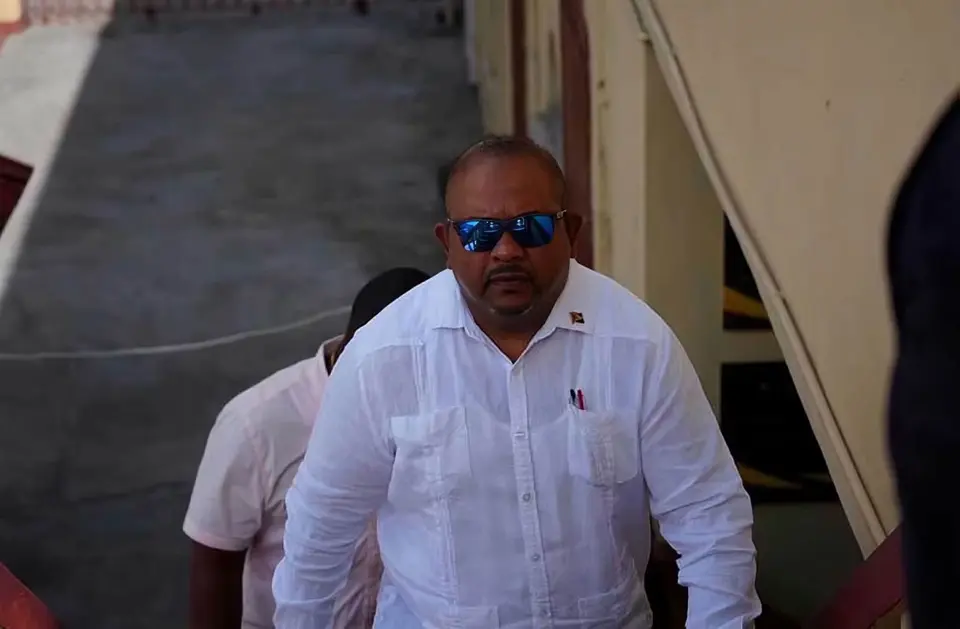
Narine denies political direction in Mohamed arrests, defends notebook destruction
Senior Superintendent of Police Prem Narine told a Guyana court on Tuesday that no political instructions were behind the arrests of Azruddin and Nazar Mohamed, as newsroom.gy reports from the ongoing committal proceedings tied to the October 31, 2025 detentions.
Narine, continuing under cross-examination by defence attorney Siand Dhurjon, flatly rejected a series of suggestions that his actions had been politically motivated or directed from above.
Dhurjon put it to Narine that he had been instructed to destroy records that might have revealed who gave him orders in relation to the Mohameds.
"That is not true," Narine said.
The attorney then suggested that Narine had been told to clear his phones and erase communication traces with the President. Narine dismissed that as "totally wrong."
Dhurjon pressed further, suggesting the notebooks were destroyed precisely because they could have identified who directed Narine's actions on October 31, 2025. Narine maintained the notebooks were destroyed because they contained sensitive information relating to serious investigations, and that the entries concerning the Mohameds were limited — recording only the times he was present at the arrest locations. He said the relevant details were subsequently transferred to the backs of the arrest warrants.
Unaware of government statements, Narine claims
The defence questioned Narine about public statements made by senior government figures regarding the Mohameds. Narine said he was unaware of adverse remarks attributed to President Irfaan Ali, Vice President Bharrat Jagdeo, Attorney General Anil Nandlall or Foreign Affairs Minister Hugh Todd.
He also said he had no knowledge of an alleged public statement by Todd linking the Mohameds to Venezuelan President Nicolás Maduro.
Those questions followed Narine's earlier evidence that he considers Azruddin Mohamed a threat to national security — an assessment he said was grounded in Special Branch intelligence, not in statements from government officials. According to Narine, that intelligence pointed to Mohamed's involvement in matters including murder, torture, execution-style killings, the beating of employees and bribery. Narine acknowledged having personally investigated some of those matters.
Mohamed's political profile raised
Dhurjon also questioned Narine about Mohamed's recent political activity. Narine acknowledged that Mohamed had contested the 2025 general elections against the sitting government and that Mohamed's party had secured 16 parliamentary seats.
He initially said he was unaware that Mohamed's platform had been critical of the government, before acknowledging he had heard some comments Mohamed made against the government — though he said he could not recall the specifics.
Dhurjon suggested Narine was not being candid with the court.
"I am being honest with the court," Narine replied.
Notebook destruction: Standing Order 50 invoked
The destruction of Narine's notebooks remained a focal point of Tuesday's hearing. Narine maintained that Standing Order 50 and the Official Secrets Act guided his decision to destroy the books.
Dhurjon challenged him to identify a specific provision authorising the destruction of police documents. Narine said Standing Order 50 as a whole guided him and that the Official Secrets Act, along with provisions governing Special Branch, superseded the general requirements in Standing Order 28.
He acknowledged that Standing Order 28 requires police pocketbooks and memorandum books to be properly maintained and that pages should not be torn out — but held that those requirements did not override the legal obligations applicable to Special Branch operations.
Narine's cross-examination was not completed on Tuesday.
Proceedings to extend into November
Permanent Secretary at the Ministry of Foreign Affairs and International Cooperation Sharon Roopchand-Edwards, the prosecution's first witness, also has yet to complete her cross-examination.
The prosecution has indicated it may call further witnesses, including Police Superintendent Rodwell Sarrabo and Foreign Affairs Minister Hugh Todd.
The committal proceedings are scheduled to run into November. Separately, the Court of Appeal is expected to hear a constitutional challenge concerning the extradition proceedings on October 13. The appellate court has permitted the committal proceedings to continue but stayed any final decision by Chief Magistrate Judy Latchman pending the outcome of that appeal.
Source: Google News GY — Crime