1923 Dublin murders of two Jewish men: religion, the IRA, and a cold case
Bernard Goldberg and Ernest Kahn were shot dead in Dublin in 1923 in killings linked to pro-Treaty IRA men. Their murders cast doubt on Ireland's claim of never killing a Jew for his religion.
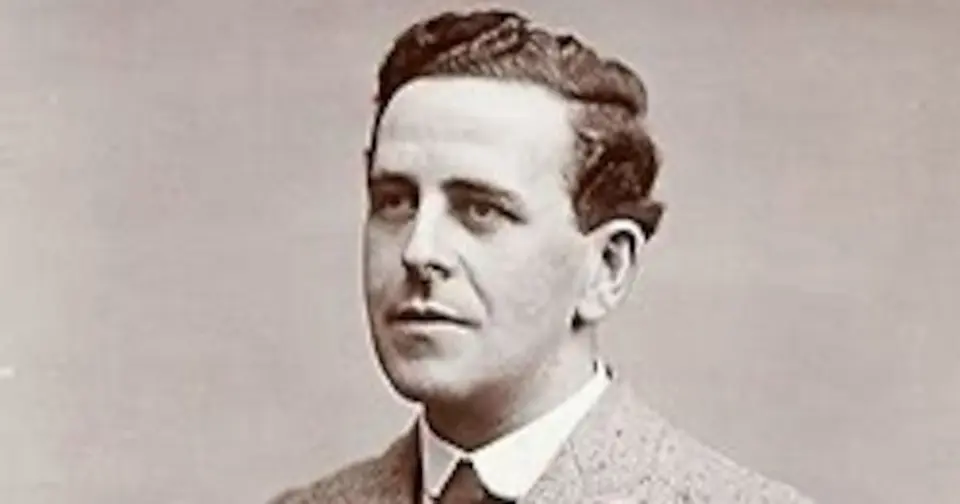
Dublin's forgotten 1923 antisemitic killings and an IRA cover-up
A claim long repeated in Irish public life — that Ireland is "the only country in Europe where not one Jewish person has been killed because of his religion" — does not hold up to scrutiny, irishtimes.com reports. The murders of Bernard Goldberg and Ernest Kahn, both shot dead in Dublin in the autumn of 1923, contradict it.
The late Joe Briscoe, of the well-known Jewish Fianna Fáil family, was heard making exactly that claim at a public talk. His words were sincere, but he appears to have been unaware of — or to have forgotten — both killings, which took place in Dublin a few years before he was born.
Goldberg, a 42-year-old salesman originally from Manchester, was shot at St Stephen's Green on Halloween night 1923. The circumstances suggest possible mistaken identity in a republican feud: unfinished business from the Civil War.
The killing of Kahn, a fortnight later near his home in Portobello — the district then known as "Little Jerusalem" — appears more clearly sectarian. A 24-year-old civil servant in the Department of Agriculture, Kahn was walking home with a friend from a Jewish social club on Harrington Street when gunmen stopped them. The friend, wounded but survived, said afterwards that the attackers asked whether they were Jews before opening fire.
Both killings were carried out by pro-Treaty IRA men attached to Beggar's Bush barracks. These men were feared by their own supervisors and operated largely as a law unto themselves. No serious investigation followed. The murderers were ultimately allowed to leave the country.
A parliamentary farce in 1934
When the murders resurfaced in the Dáil eleven years later, in 1934, the result was what the columnist describes as "an absurdist drama of the parliamentary kind". The occasion was a debate on the so-called Blueshirts Bill, which sought to outlaw the wearing of paramilitary uniforms in public.
Fianna Fáil minister for finance Seán MacEntee hinted in the chamber that opposition members knew who had carried out the killings. When pressed to name names, he shot out an accusing finger at Deputy Tom O'Higgins, a leading Blueshirt. O'Higgins denied the charge, and MacEntee backed down, saying meekly: "I accept that."
He then suggested that other members of O'Higgins's organisation knew the killers, and pointed at Deputy Gearóid O'Sullivan. When O'Sullivan demanded to know whether he was being accused of sheltering murderers, MacEntee again retreated. The session ended with an opposition member calling the minister a "coward" before walking out without withdrawing the remark.
A sketch writer for this newspaper — unnamed, but possibly a young Patrick Campbell, later the Irishman's Diarist and subsequently a BBC television personality — recorded the parliamentary theatre with evident dry amusement.
The perpetrators: Collins's men, California, and an army pension
It is now established that the principal perpetrator was James Conroy, a former member of Michael Collins's "Squad" who had been present at Béal na Bláth. His accomplices were the brothers Ralph and Fred Laffan. Ralph was arrested in connection with the murders in 1925 but released on the grounds that the two brothers were so physically alike they could be confused.
All three subsequently fled to Mexico. Conroy alone returned, in 1932, and successfully claimed an Army pension. He went on to settle in California, where he died in 1981.
A literary echo
The columnist notes a coincidence that is probably nothing more: the surnames Kahn and Goldberg echo those of the two mysterious characters — McCann and Goldberg — in Harold Pinter's debut play, The Birthday Party. In Pinter's work, the pair arrive at a seaside boarding house to carry out an unspecified "job" on the lodger, Stanley. Critics have described the play as a "comedy of menace".
Pinter is unlikely to have known of the Dublin killings. His biographer Michael Billington has written that McCann and Goldberg were chosen to represent "not only the West's most autocratic religions, but its two most persecuted races" — an Irish Catholic and a Jew arriving together as instruments of an unnamed, lethal authority.
The Birthday Party is also notable, in an Irish context, for being what the columnist calls "almost certainly unique as a work of Nobel Prize-winning literature for mentioning Carrickmacross" — albeit misspelt, without the middle "c". McCann, an ex-priest character, is said to come from that town.
Whether Pinter chose the name for its "aural cipher" quality — hinting at "Carry-my-cross" — remains a matter of critical speculation. That the Dublin murders of 1923 have echoed, however faintly, through the culture of the century that followed is not in dispute. The men who carried them out escaped justice. One collected a pension for his service to the state.
Source: Google News IE — Crime (en)