Alexander Litvinenko's father calls son a 'traitor' in Russian state TV interview
Valter Litvinenko, 73, broke down in tears on Russian state television, begging to return home and calling his murdered son a British spy.
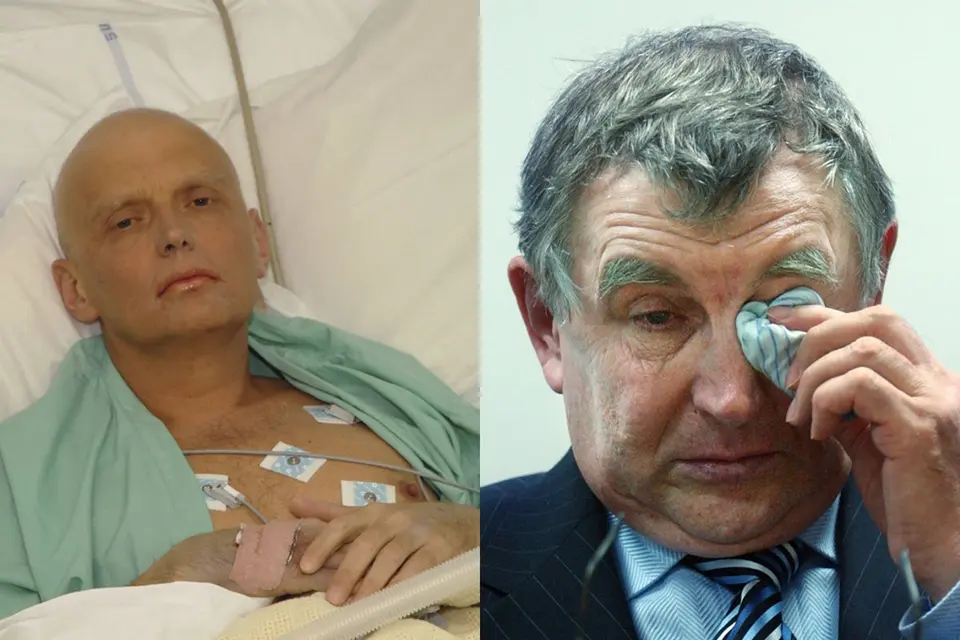
Litvinenko's father recants on Russian state TV, calling poisoned son a 'traitor'
The father of Alexander Litvinenko — the former KGB officer who died in London in 2006 after being poisoned with polonium — has called his son a "traitor" and appealed to Russia for forgiveness, in an interview broadcast on Russian state television, independent.co.uk reports.
Valter Litvinenko, 73, broke down in tears during the broadcast, pleading to be allowed to return to his homeland. "Forgive me, my motherland. And help me return home, help an old man," he said on camera.
The elderly man described a bleak existence in a small Italian town, living in an unheated flat in poverty. He fled to Italy with his family in 2008, apparently to avoid retribution from Russian authorities after publicly accusing the Kremlin of ordering his son's assassination. His wife — Alexander's mother — died last year. Valter Litvinenko said that prominent Kremlin opponents, including London-based exile Boris Berezovsky, were no longer taking his calls and had no interest in helping him.
His apparent change of heart followed a disclosure by Alexander Litvinenko's widow, Marina, who recently confirmed that her husband had co-operated with British security services and been paid for that work. The revelation appears to have struck his father hard.
"What am I supposed to do, cry out around the world about my traitor of a son?" Valter Litvinenko said. "When I found out he had worked for their spy agencies… that was a real blow. That's it. It was such a blow."
The television station said it had received a letter from Valter Litvinenko several days before the broadcast, in which he referred to his son as a "British spy" and sought forgiveness. A voiceover accompanying the interview chastised his earlier public accusations, claiming that "many in the West" had exploited his statements for political purposes.
British authorities have concluded that Alexander Litvinenko was killed by Andrei Lugovoi, a former KGB agent, at a meeting in a London hotel. From his deathbed, Litvinenko accused Vladimir Putin — then president and himself a former KGB officer — of ordering the murder. Russian authorities have consistently denied any involvement and refused to extradite Lugovoi, who now sits in the Russian parliament as a member of a nationalist party with Kremlin ties, a position that grants him additional legal protection.
The circumstances in which Russian television found Valter Litvinenko — isolated, cold, and grieving — suggest his recantation was driven as much by material desperation as by ideological conviction. "It's cold here, and nobody needs you. You die, they'll just pull your body out and take it away. Like with my wife, she also always wanted to go home, back to Russia," he said.
Whether Russia will act on his appeal and facilitate his return remained unclear at the time of publication. The tone of the broadcast, however, indicated that the Russian authorities intended to draw maximum political benefit from his words — a propaganda gain coming only weeks after Jonathan Powell, Tony Blair's former chief of staff, confirmed that a hollow rock in a Moscow park, which Russia had alleged in 2006 was used by MI6 to transmit and receive intelligence, had indeed been used by British spies.
That admission, made in a BBC documentary series about Putin, gave pro-Kremlin figures fresh ammunition to attack Russia's liberal opposition. Many of those opponents had previously dismissed the so-called "rock scandal" as a fabrication by Russian security services.
Source: The Sun