Facial recognition errors increase wrongful arrest risk for ethnic minorities, watchdog finds
A report by HMICFRS warns police risk arresting innocent people if officers treat flawed facial recognition results as evidence. Ethnic minorities face the greatest risk of misidentification.
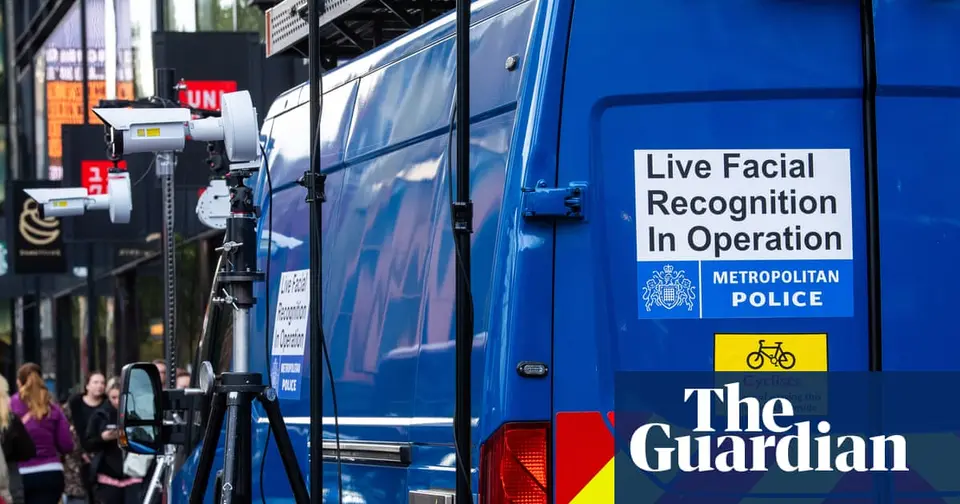
Police facial recognition system puts ethnic minorities at greater risk of wrongful arrest
Police officers in England and Wales risk arresting innocent people — disproportionately from ethnic minority backgrounds — by treating inaccurate facial recognition data as confirmed evidence, according to an official inspection report published on Wednesday.
The Guardian UK reports that the findings come from His Majesty's Inspectorate of Constabulary and Fire & Rescue Services (HMICFRS), which examined the use of retrospective facial recognition (RFR) — a form of the technology considered less controversial than live facial recognition, as it analyses existing images rather than scanning crowds in real time.
Officers acting on matches without adequate checks
Inspectors found that some investigators did not understand that RFR results constituted intelligence, not evidence, and therefore required further verification before enforcement action was taken.
"Some investigators didn't know that RFR results were intelligence rather than evidence and required further enquiries before officers took enforcement action," the report stated. "We found that some investigators didn't always carry out enough corroborative enquiries before acting on potential matches. In a small number of cases, officers relied too heavily on RFR results, which led to inappropriate investigative action."
The report also identified problems with the quality of images submitted for analysis. Auditors found cases in which operators uploaded blurred photographs or images containing multiple faces, reducing the system's capacity to return reliable matches.
Algorithm bias flags minorities more often
Beyond procedural failures, the report identified persistent bias within the underlying algorithm. The technology is more likely to wrongly identify people from ethnic minorities as suspects, raising the risk that innocent individuals from those communities will face unwarranted police contact.
The report called for further action: "More needs to be done to reduce the risks of people being wrongly arrested."
A separate concern raised by inspectors relates to data retention. Custody images that should have been deleted were found to have been retained, creating an additional risk to public confidence in how the technology is governed.
No comprehensive legal framework in place
HMICFRS concluded that legislation has not kept pace with advances in facial recognition technology. "There is no comprehensive statutory framework governing this technology's use," the report said, adding that this makes it harder for forces to understand the lawful basis for deploying RFR and what safeguards are required.
His Majesty's Inspector of Constabulary Kathryn Stone said public support for the technology depended on demonstrable accountability: "Police forces must be able to show that appropriate safeguards are in place, risks relating to bias and data retention are effectively managed, and decisions are still subject to human judgment. A clearer statutory framework, stronger national standards and improved governance and oversight arrangements are essential to maintaining public confidence."
Civil liberties groups call for tighter controls
Jasleen Chaggar, from campaign group Big Brother Watch, said the findings were deeply concerning. "The revelations that officers are treating facial recognition as bona fide evidence rather than a probability score is alarming," she said. "This approach significantly increases the risk that more innocent people will have officers knock on their door to arrest them for crimes committed in towns they've never visited."
Chaggar also warned that a lack of logging created further risks: "Police aren't even logging their use of retrospective facial recognition, meaning people could wrongfully become suspects in criminal investigations without even realising why they've been accused."
She added that the algorithm operates "at biased settings that are more likely to misidentify women, Asian and black people" while searching against "millions of unlawfully held custody images."
Prof Pete Fussey of the University of Southampton, a former police adviser on facial recognition, said the report exposed a legal compliance problem. "Meaningful human scrutiny of AI systems is a legal requirement, yet the report gives examples of investigators taking the computer's suggestions at face value without further checks," he said.
Police leadership defends technology's potential
Ben Russell, the National Police Chiefs' Council lead on facial recognition, acknowledged the report while emphasising the technology's value. "Policing remains committed to the ethical, proportionate and responsible use of retrospective facial recognition to help investigate crime, bring offenders to justice and keep communities safe," Russell said, adding that the NPCC welcomed HMICFRS's recognition of "the exciting possibilities of this technology."
The inspection underscores a widening gap between police enthusiasm for facial recognition as a crime-fighting tool and the safeguards required to deploy it without undermining civil liberties or public trust.
Source: The Guardian UK