How British Muslim girls were groomed and lured into joining ISIS
The 2015 disappearance of the Bethnal Green schoolgirls to Syria prompted journalist Azadeh Moaveni to investigate how young British Muslim women were recruited by ISIS.
The grooming of Britain's missing girls: inside the ISIS recruitment network
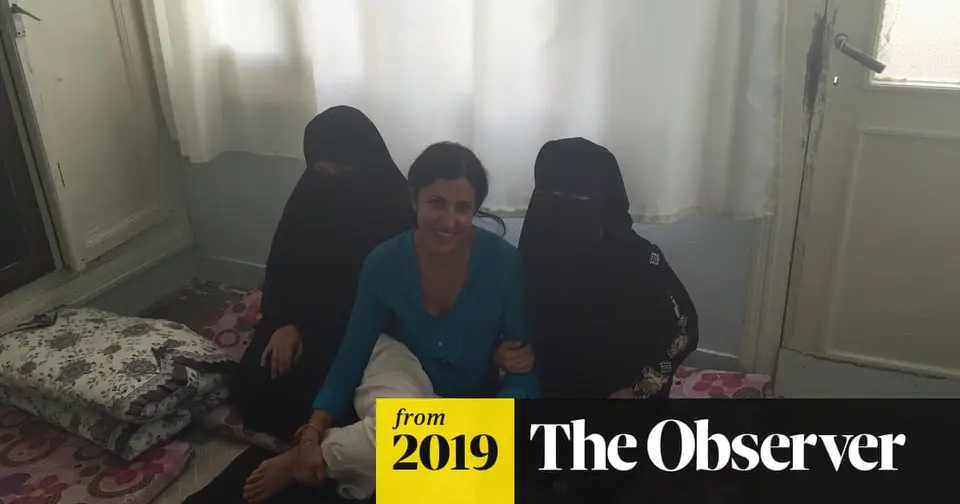
When three schoolgirls from Bethnal Green vanished from east London in early 2015 and boarded flights to Istanbul, their parents had no warning. Sharmeena Begum had left first, travelling to join ISIS. Amira Abase, Kadiza Sultana and Shamima Begum followed two months later. They were 15 years old, described by teachers as studious and well-liked — girls walking the careful line between conservative home lives and liberal modern London. As theguardian.com reports, journalist Azadeh Moaveni travelled to Turkey, Syria and Tunisia to investigate how they and others like them were drawn in.
The press coverage that followed their disappearance was swift and brutal. Within days, the narrative shifted: "our girls", young teenagers groomed by sophisticated online recruiters, became "brides of jihad". Moaveni, then teaching journalism at a London university with a large Muslim student body, read the coverage with what she describes as a morbid fascination. The absence of political context, the loaded polls suggesting much of Muslim Britain sympathised with ISIS, and the sharp tabloid headlines produced a tangible atmosphere — one her students lived even if they did not read the papers. Incidents on the bus to campus multiplied; hijabi women were insulted with increasing regularity.
Moaveni's interest was not merely professional. She grew up in California in the 1980s, the daughter of an Iranian family at a time when the United States and Iran were adversaries. Iran, a country with a distinguished history, became in popular imagination a place of darkness and irrationality — defined in the western press by veiled women and clerical hostility to the west. That framing, she argues, prefigured how ISIS-affiliated women would later be depicted: as visual shorthand for barbarism rather than as individuals with comprehensible, if catastrophically misdirected, motivations.
Her own adolescence, she writes, was saturated with a deep mistrust of western foreign policy, absorbed from parents who regarded mainstream news as propaganda for American empire. She felt alienated in Silicon Valley suburbia, chafed against her mother's restrictions, and was drawn romantically to the idea of radical resistance in the Middle East. After university she moved to the region, acquired a Palestinian boyfriend, and told her parents she would not return — that her place was among "our people". The difference between her trajectory and that of the Bethnal Green girls, she argues, was largely one of privilege and opportunity: she had a safe path, as a correspondent for prestigious newspapers. They did not.
When Moaveni examined the social media exchanges the girls had made before their departure — the blogs they followed, the ideas they shared — she found the content unnervingly familiar. They had been awakened, as young people often are, to injustice for the first time. One week they worried about A-levels; the next they were reading about the rape of Muslim women in Syrian government prisons. The female recruiters whose material they consumed promised a life of dignity in an Islamic homeland — the ability to wear hijabs, to become doctors and good wives, to be recognised as full citizens. Much of the recruitment material was not straightforwardly false. The injustices it invoked were real. What the girls could not easily see was that these promises were harnessed to a project run by former Iraqi Ba'athists who had no genuine interest in the identity struggles and social justice concerns of teenagers in east London.
The power of that recruitment operation was rooted in its exploitation of genuine grievances. Young women who felt marginalised — caught between communities, unseen in mainstream British culture, and newly conscious of violence against Muslims abroad — were offered belonging, purpose and adventure. The offer of an escape from conservative parents, framed as something simultaneously rebellious and righteous, was difficult to resist for girls who lacked the frameworks or life experience to identify the manipulation beneath it.
Moaveni visited the Shoreditch tower block where Sharmeena Begum's father lived. Working long hours, he had been unaware of what was developing in his daughter's mind. He had, in fact, felt relieved that she had stopped talking about wanting to be a fashion designer. Reconstructing the network that ensnared the girls — the online connections, the incremental radicalisation, the final departure — left Moaveni with a sense of near-personal responsibility. She wanted to find them; to write about them in terms that were neither a courtroom verdict nor a village hanging.
The question she kept returning to was not whether the girls' choices were catastrophic — they clearly were — but what combination of resentments, desires and social conditions made those choices possible. The ISIS recruitment pipeline that targeted young British Muslim women was not a random phenomenon. It was precise, patient and deeply attuned to the specific vulnerabilities of its targets: girls who were clever, curious and idealistic, but whose idealism had been intercepted and redirected before it could find safer expression.
Shamima Begum remains the most publicly debated of the four. Last week, then Home Secretary Priti Patel stated she saw "no way" Begum could return to the United Kingdom. The legal and political arguments around her citizenship continue. But Moaveni's investigation, which took her across three countries, insists on a prior question — how she got there at all — as the necessary foundation for any serious public reckoning with what happened to the girls of Bethnal Green.
Source: The Sun