Met Police missed repeated chances to stop detective who raped and abused women
BBC Panorama reveals the Metropolitan Police failed to act on multiple warnings about detective inspector Warren Arter, who sexually exploited women whose cases he investigated.
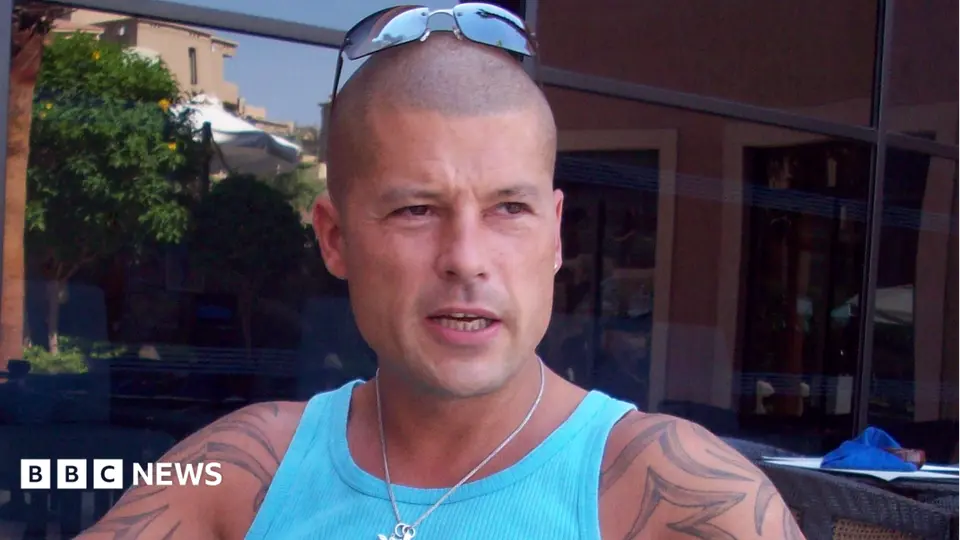
Metropolitan Police failed to stop predatory rape-unit detective for over a decade
The Metropolitan Police missed multiple opportunities to remove a detective inspector who used his position to sexually exploit vulnerable women, bbc.co.uk reports following an investigation by BBC Panorama.
Warren Arter ran a unit investigating sexual assaults in south-east London. He used that role to target women it was his duty to protect. Two women, speaking publicly for the first time, have told Panorama how he groomed them. One says he raped her.
Arter also subjected his wife, Rebekah, to years of serious sexual abuse. He filmed her being abused and distributed the footage. Rebekah died in Barbados two years ago while on holiday with him. The BBC revealed on Sunday that Arter lied about what took place on the Caribbean island.
Arter took his own life days after his arrest at HMP Wandsworth.
Missed warnings spanning more than a decade
Panorama has identified several specific failures by the Met:
In 2010, medical staff discovered Arter alone with a woman in the toilets of a sexual assault referral centre, hours after she had reported being raped. The Met was informed but did not open an investigation.
Between 2014 and 2018, the force received six corroborated intelligence reports relating to sexual misconduct by Arter. No action was taken.
In early 2024, the Met was told Arter had sent an illegal upskirting image but failed to arrest him. It only did so three months later, after Rebekah's death in Barbados.
That final missed opportunity came after the Casey Review had already concluded that the Met was "institutionally misogynistic", and after the convictions of Met officers Wayne Couzens and David Carrick — both rapists — and a public pledge by Commissioner Sir Mark Rowley to confront such behaviour within the force.
The former detective who led one internal investigation into Arter has now told the BBC that senior officers attempted to interfere with his inquiries, even after he had identified potential victims. Despite those findings, Arter was suspended but remained on full pay for seven years before being sacked in 2023 — not for sexual misconduct, but for drug offences.
21 potential victims identified
The police watchdog, the Independent Office for Police Conduct (IOPC), identified 21 potential victims of Arter during its own inquiry. The Met has not contacted all the women whose cases Arter handled across his 20 years as a serving officer.
The upskirting image sent in March 2024 — to a woman Panorama refers to as Layla — should have prompted his immediate arrest. Bail conditions or custody, Panorama notes, would have prevented Arter from travelling to Barbados with Rebekah that June.
On 28 June, Arter telephoned Rebekah's relatives from the island to tell them she had died.
Rebekah's story
Rebekah first came into contact with Arter in 2006 when, while trying to leave an abusive relationship, the Met assigned then-Detective Sergeant Arter to investigate her former partner. Arter pursued her, and the two began a relationship. He quickly moved into her home.
Her now-adult son, Elliot, says Arter initially made his mother feel "safer" but that his behaviour changed rapidly. "He'd say to her: 'Get in the kitchen, make my dinner you slag. Make me a tea you [expletive] bitch,'" Elliot recalls.
Arter would watch pornography openly on his tablet in the living room, Elliot says. He also collected urine samples from the boy, claiming he was sending them to a police laboratory in connection with the teenager's football development. Elliot now suspects it was to conceal Arter's own drug use.
The inquest into Rebekah's death heard that the use of sedatives had become routine in the household. A daily smart-speaker alarm announced "G o'clock" — a reference to GHB, a drug commonly known as a date-rape drug.
In the years before her death, Arter filmed and distributed videos of Rebekah being sexually abused. The BBC has reviewed some of that footage. Many of the recordings show her unconscious or incapacitated while Arter verbally degrades her. In one video he says, "You should get raped." In another, he can be heard speaking to a man behind the camera, asking him to stay quiet and saying "they go mad otherwise" — suggesting the footage was being made for wider distribution.
Arter sent abuse videos of Rebekah unsolicited to at least four women he knew. Two were women whose cases he had investigated, including Layla.
Layla's account
Layla first met Arter in 2010 after reporting that she had been raped. His exploitation of her continued for more than a decade. It was she who eventually reported the upskirting image — which she had by then deleted — to IOPC staff. Her adult daughter, who was present during that conversation, says Layla identified the woman in the photograph as Rebekah, whom she recognised from footage Arter had previously sent her.
The IOPC says the staff member involved has no record or recollection of being told the woman's identity. The watchdog also noted that, as Arter was no longer a serving officer at that point, it did not have the authority to investigate the matter itself. It did, however, pass the upskirting allegation to the Metropolitan Police.
Met issues first public apology
In response to Panorama's findings, the Metropolitan Police has for the first time publicly apologised to the women Arter abused. The force says it is now examining his electronic devices in an effort to identify further victims and is urging other women to come forward.
The Met has not, however, reviewed all the cases Arter handled during his two-decade career.
BBC Panorama: The Predator in the Police aired on BBC One on Tuesday 17 November at 21:00, and is available on BBC iPlayer.
Source: Google News UK — Crime (en)