Synthetic opioids fuel record drug deaths in Scotland as nitazene labs uncovered
Scotland's drug death toll is expected to rise again as synthetic opioids and new psychoactive substances flood the illicit market. Two suspected nitazene labs have been raided in 14 months.
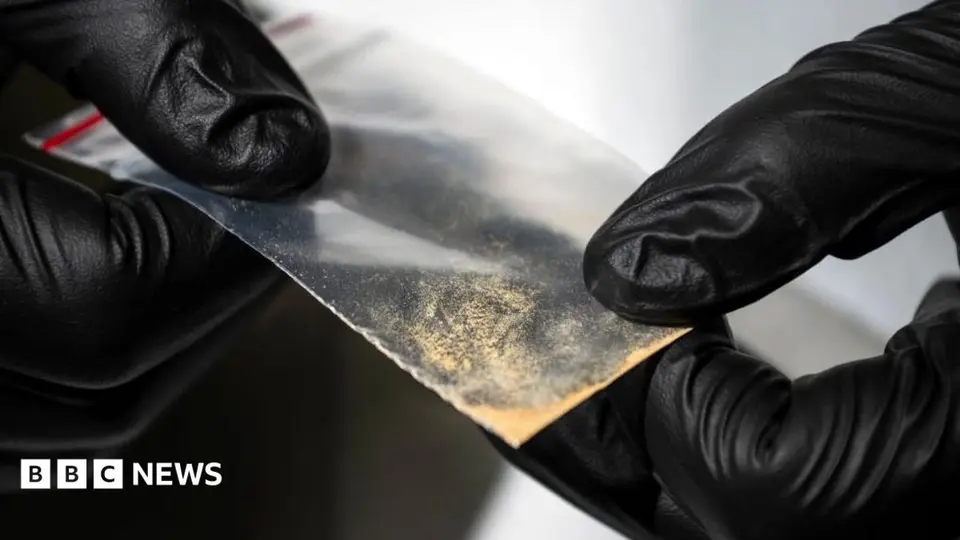
Nitazene factories and a surge in synthetic drugs push Scotland deeper into crisis
Scotland's already severe drug death crisis is being compounded by a wave of powerful synthetic substances, bbc.co.uk reports, with new figures due on Wednesday expected to show another rise in fatalities in the country already regarded as Europe's drug death capital.
Over the past three years, the illicit drugs market has been transformed by an explosion in synthetic cannabinoids and opioids — substances manufactured in clandestine laboratories rather than derived from cultivated plants such as poppies or coca. Among the most dangerous are nitazenes and orphines, synthetic opioids some of which are hundreds of times more potent than heroin.
In 2024, nitazenes were implicated in 76 drug-related deaths in Scotland, according to official figures — more than three times the number recorded the previous year.
Police Scotland has raided two suspected nitazene factories in the past 14 months. In July 2025, officers uncovered an alleged illicit drugs laboratory in Patna, Ayrshire, leading to the arrest of three people. Deputy Chief Constable Jane Connors later described it as the UK's first suspected nitazene laboratory. BBC News can also reveal that two men, aged 43 and 56, were arrested in February this year after police searched a unit in Loanhead, Midlothian, as part of a separate investigation into another suspected synthetic opioid lab.
"The illicit drug supply in Scotland is getting more and more dangerous," said Dr Lorna Nisbet of Dundee University's Leverhulme Research Centre for Forensic Science. "These drugs are extremely dangerous, and it's pretty rapid for us to be able to keep up as scientists."
Her laboratory is soon to take on an expanded role as Scotland's national drug testing facility — a development she says will allow near real-time information to be passed to drug-using communities and help inform government policy.
On average, a new psychoactive substance emerged every week in 2025, according to the European Union Drugs Agency (EUDA). The agency points to tighter controls imposed by China and the Taliban's ban on poppy cultivation in Afghanistan as factors pushing production closer to consumer markets — including Scotland.
Organised crime groups are increasingly blending synthetic substances into existing drug supplies to maximise profits, according to Police Scotland. Supt Niven Bull condemned the practice in direct terms: "I think it's shameful behaviour that we're seeing from these organised crime groups. They are profiting from people's misery."
Bull said the force was pursuing a twin-track strategy — aggressively targeting dealers while also seeking to support users. In 2025, officers seized around £80m worth of street drugs; so far this year that figure has already reached £78m. "Hundreds of individuals have been arrested, and many people are serving custodial sentences," he said. At the same time, Bull stressed that officers encountering people suffering from addiction would seek to refer them to appropriate services.
On the ground, charity workers describe an increasingly perilous environment. Gareth Balmer, national harm reduction lead for the drug, alcohol and mental health charity With You, said synthetic opioids are now appearing across the entire drug supply — in benzodiazepine street pills, cannabinoids known as spice, cocaine and heroin alike.
"This is a frightening new landscape," Balmer said. "I don't think drugs have ever been as risky or as dangerous as they are now." He warned that some of the new substances are so potent that a grain-sized amount could prove fatal, and said access to naloxone — which can reverse the effects of an opioid overdose — is now more critical than ever.
Staff from With You were recently working with former drug and alcohol users in woodland at Glenbarr on the Kintyre peninsula, as part of a nature-based programme aimed at helping people reconnect with their surroundings and process trauma. Balmer said some users are suffering unexpected and catastrophic overdoses, unaware that what they have taken contains synthetic opioids.
The rapidly shifting landscape also presents a challenge for legislators. EUDA has noted that "new and harmful substances continue to be created to circumvent legal controls," leaving policymakers in a perpetual race to identify and ban dangerous new compounds before they can spread. Under current constitutional arrangements, control of illicit drugs is reserved to Westminster under the Misuse of Drugs Act 1971, while public health, policing and prosecutions fall under the remit of the Scottish Government and its agencies.
Prof Niamh Nic Daeid, director of Dundee University's Leverhulme laboratory, said the expanded national facility would help address the knowledge gap. "Drugs are changing all the time," she said. "Part of the establishment of this facility is to have a research capability that will enable us to try to keep up. If we don't know what substances are present in the samples, how can we provide the right advice?"
Dr Nisbet echoed the urgency: keeping pace with the science behind a supply chain that introduces a new substance roughly every seven days is, she acknowledged, a formidable task.
Source: Google News UK — Crime (en)