Adam Toledo shooting: Chicago divided over police officer's split-second decision
The release of body camera footage showing the fatal shooting of 13-year-old Adam Toledo by a Chicago officer has reignited debate over police tactics and reform.
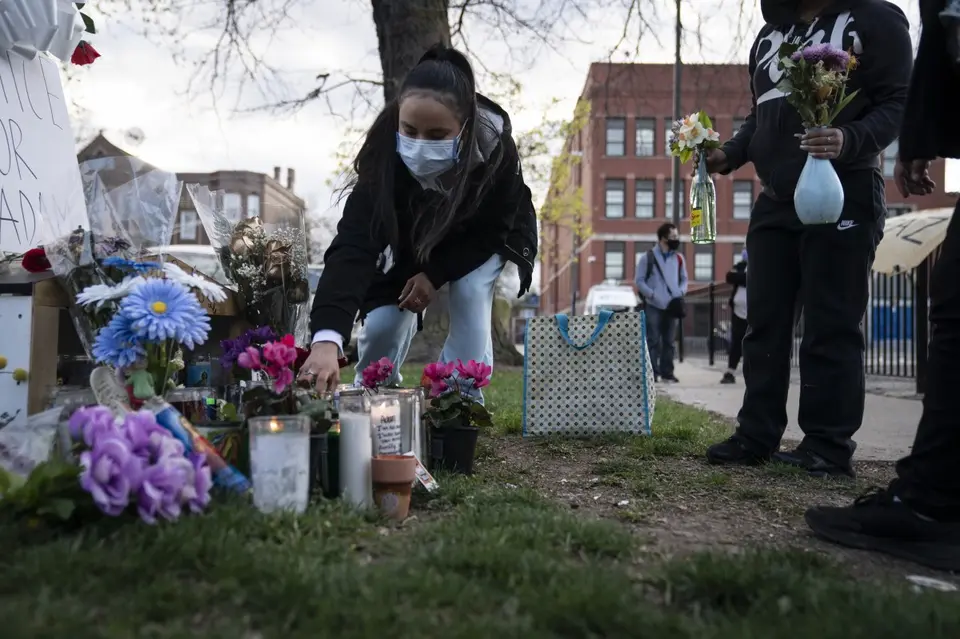
Chicago split over fatal police shooting of 13-year-old Adam Toledo
The release of body camera footage showing the fatal shooting of 13-year-old Adam Toledo by a Chicago police officer has divided the city, chicagotribune.com reports, reopening long-standing questions about use of force, foot pursuits, and the pace of police reform.
Tactical Officer Eric Stillman shot Toledo once in the chest on 29 March, in a dark alley in the Little Village neighbourhood, after responding to reports of shots fired in the area. Police initially described the incident as an "armed confrontation." Video footage reviewed at slower speeds, however, appeared to show Toledo tossing a gun and beginning to turn with his hands raised in the moment before Stillman fired.
The footage — released by the Civilian Office of Police Accountability just two weeks after the incident — prompted sharply contrasting responses from policing experts, legal scholars, and community representatives.
'Split-second judgment': Expert opinions diverge
Charles Ramsey, former police chief in Washington D.C. and Philadelphia and a veteran of police reform efforts, said he believed Stillman acted appropriately given the circumstances.
"When you look at the entire picture, you wish to hell he hadn't shot," Ramsey said. "But at the time it happened, the split-second decisions that had to be made, it's understandable. It's tragic, but it's understandable."
Ramsey grew up in Chicago and served as a patrolman in the same district where Toledo was killed.
Craig Futterman, a University of Chicago law professor specialising in police accountability, took a starkly different view. He argued that Toledo had already begun to comply with the officer's commands at the moment the shot was fired.
"Officer Stillman's yelling, 'show your hands … drop it,' and the boy does exactly as he's instructed," Futterman said. "He stops and he turns and he begins to put up his hands, empty hands toward the officer."
Futterman questioned whether the confrontation required a split-second lethal response at all. "He was in the act of complying with what precisely the officer asked him to do," he said. "Did it have to be a split-second judgment?"
What the footage shows
The officer's body camera audio clearly captured Stillman shouting "show me your hands!" followed by "drop it!" A frame-by-frame review showed a pistol-shaped object appearing to be visible in Toledo's right hand behind his back as he paused near a fence opening and turned his head toward the officer.
Separate surveillance footage from a nearby parking lot showed Toledo making an underhanded throwing motion with his right arm behind the fence, just before he turned back toward Stillman. A gun was later recovered at the spot where Toledo appeared to have tossed it. As the shot rang out, Toledo appeared to be facing the officer with both hands raised to approximately shoulder height. He then fell to the ground.
Toledo's attorney, Adeena Weiss Ortiz, said the sequence of events was clear. "If he had a gun, he tossed it," Weiss Ortiz said. "The officer said, 'show me your hands,' [and Toledo] complied. He is trained to not shoot somebody unarmed. He is trained to look, he is trained not to panic."
Reform debate resurfaces
The shooting has renewed calls for a formal foot-pursuit policy for Chicago police. Adam Bercovici, a former Los Angeles police lieutenant now working as a security consultant, said Stillman made a tactical error by pursuing Toledo alone.
"When you do pursue a suspect by yourself and you're alone, and you get into a confrontation, there's a likelihood that deadly force is going to happen," Bercovici said. He argued that a clear foot-pursuit policy could have prevented the shooting entirely.
"Chicago has a lot of violence right now. Suspects are going to run from the police. So if you don't have a foot-pursuit policy, you're just making it up as you go," Bercovici said.
On the floor of the Illinois House, state Representative Edgar Gonzalez, whose district includes the block where the shooting took place, addressed colleagues directly. "So if you put your hands up, they shoot. If you put your hands down, they shoot," Gonzalez said. "If you walk, you run, you hide, you sleep, you do exactly as they say, they still shoot. What the hell are we supposed to do?"
A changed, but still contested, landscape
The Toledo case unfolded against the backdrop of the city's experience with the 2014 killing of Laquan McDonald, whose death at the hands of a police officer sparked a major overhaul — still considered largely incomplete — of the Chicago Police Department.
The contrast in how the two cases were handled was notable. In the McDonald case, dashcam footage was withheld by City Hall for more than a year and only surfaced after a court order. In Toledo's case, the Civilian Office of Police Accountability released a broad package of evidence, including multiple camera angles, within two weeks of the incident.
The nature of the evidence also differed significantly. McDonald's death was recorded on a low-resolution dashcam with no audio, while Toledo's shooting was captured up close, with the officer's commands clearly audible and the sequence of events visible in graphic detail.
Activists had already begun circulating a still image on social media — leaked before the official release — showing Toledo with his hands raised. Many described it as evidence that the shooting was unjustified and that minority communities continue to bear the brunt of aggressive policing tactics, despite years of calls for change.
The Chicago Police Department has not announced criminal charges against Stillman. The case remains under review by the Civilian Office of Police Accountability.
Source: Google News MT