Freed after 13 years, Tennessee man faces return to prison after Supreme Court ruling
Patrick Dewayne Smith was released in 2024 under First Step Act compassionate release rules, but a Supreme Court ruling now threatens to send him back to prison for life.
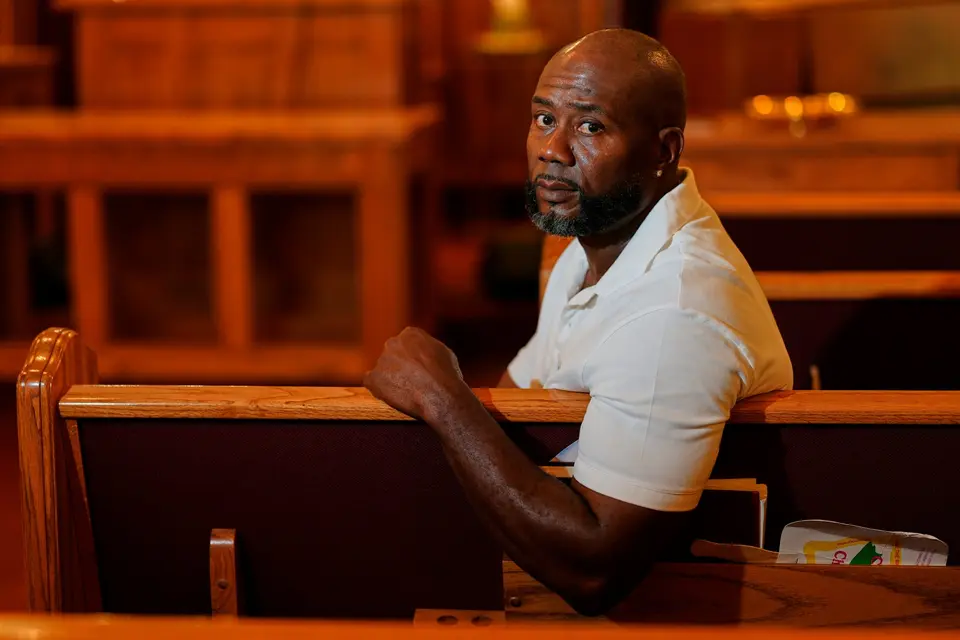
Life sentence looms again for man freed under First Step Act
Patrick Dewayne Smith attends church with his family on Sundays at a modest brick building with a white steeple in rural Tennessee. He works two jobs. He cheers for nieces and nephews at ball games — children he had never met before his release. After serving 13 years for a nonviolent drug conviction, he has been rebuilding his life since 2024.
That life could be taken away again.
As wtop.com reports, a federal judge freed Smith under compassionate release provisions tied to the First Step Act, a landmark criminal justice reform signed during President Donald Trump's first term. But the US Supreme Court ruled in May in a 6-3 decision that sentencing disparities between older, harsher penalties and current law do not constitute "extraordinary and compelling" reasons to grant early release.
"Every time I get a call, I'm hoping it's some good news. Or, you know, at least not no bad news," said Smith, a 47-year-old whose beard is now flecked with grey.
Smith is one of approximately a dozen people nationwide who could be returned to prison as a direct result of the ruling, according to FAMM, a sentencing reform organisation formerly known as Families Against Mandatory Minimums. The group says that without clemency from the White House, those individuals stand to lose the second chances they have already begun living.
A law championed by Trump — and now undermined by his own court
The First Step Act was described at signing as the most significant rewrite of federal sentencing law in a generation. It reduced mandatory minimum sentences for certain offences, particularly nonviolent drug crimes. Trump said at the time the law would "make our communities safer and give former inmates a second chance at life after they have served their time."
The legislation was championed in large part by Jared Kushner, Trump's son-in-law and then-senior adviser, who had a personal connection to the issue: his own father had served time in federal prison.
Thousands were released in the years following the law's enactment. In 2023, the US Sentencing Commission adopted additional rules allowing judges, in certain circumstances, to consider changes in sentencing law when deciding on compassionate release applications from people who had served at least ten years. The Department of Justice argued those rules exceeded the authority granted by the First Step Act, but judges across the country nonetheless approved releases for dozens of people.
The case eventually reached the Supreme Court. Writing for the conservative majority, Justice Amy Coney Barrett held that Congress's deliberate choice not to apply newly reduced penalties retroactively could not itself be a compelling reason to grant a sentence reduction. "It is hard to see how Congress's deliberate decision not to extend newly reduced penalties to those already sentenced could be a convincing reason that 'warrant(s)' a reduction," Barrett wrote.
Daniel Harawa, a law professor at New York University, described the ruling as one of two decisions in the last Supreme Court term that narrowed options for people serving long sentences. "I worry a lot about what this means for federal criminal justice reform," he said.
Smith's path to a life sentence
Smith grew up in a small town in rural northern Alabama. His lawyers described in court documents how he became addicted to drugs as a teenager. At 17 he was arrested twice for selling crack cocaine to an informant. Marijuana convictions followed. He served roughly three years.
After his release he worked in construction and as a janitor. In 2010, prosecutors said, he became involved with a drug ring selling crack cocaine and marijuana along the Tennessee-Alabama state line. Phone calls recorded by the US Drug Enforcement Administration captured his participation. He was convicted of drug conspiracy and money laundering after withdrawing from a plea agreement that would have carried a sentence of 12 to 14 years in exchange for his cooperation.
His lawyers described his role as "unremarkable." Nevertheless, the federal conviction combined with his prior record triggered a mandatory life sentence — the longest handed down in a 20-person case, exceeding even that of the acknowledged ringleader. The sentencing judge openly questioned whether the punishment fit the crime but said the law left her no discretion.
Smith said he kept his head down during his years behind bars, taking prison jobs and avoiding infractions. "What kept me sane was that faith, that belief in God," he said.
He missed small things — sleeping in a full-sized bed, taking a bath after a long day. He missed larger ones too. His mother died during his first year in prison and he could not ask his family to absorb the $1,000 travel cost that would have allowed him to attend her funeral.
After the Sentencing Commission adopted its updated compassionate release rules, Smith applied for a reduction to time served. Nearly a year later, a court agreed and ordered his release. He returned to Alabama and moved in with his sister.
Clemency the only remaining path
Shanna Rifkin, FAMM's general counsel, said the people now facing re-incarceration have done everything asked of them. "They're reestablishing relationships with families. They're volunteering in their communities. They're working," she said. "Having them reincarcerated is so unjust given that they have demonstrated their rehabilitation."
A White House official, speaking anonymously because they were not authorised to comment publicly, said the Trump administration remains proud of signing the First Step Act and is actively reviewing developments related to the ruling. Without a grant of presidential clemency, however, FAMM says there is no legal avenue left for Smith and those in a similar position.
Source: Irish Independent