Murder charge dropped against Richard Glossip after three decades on death row
Oklahoma dismissed the murder charge against Richard Glossip, 63, who pleaded guilty to a lesser charge after nearly 30 years of legal battles over the 1997 killing of his boss.
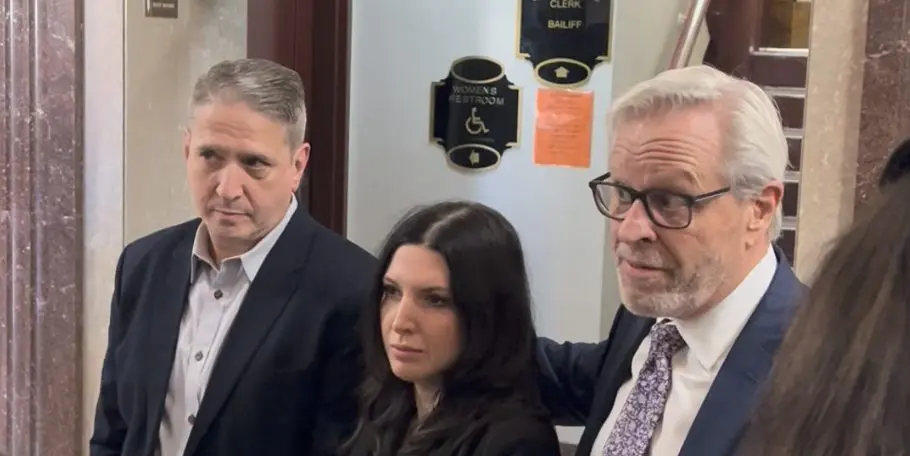
Oklahoma drops murder charge against Glossip, ending three-decade legal saga
Less than a month before a third trial was set to begin, Richard Glossip on Thursday pleaded guilty to a lesser charge in the 1997 murder of his employer Barry Van Treese — a case that has kept him on death row for nearly three decades, theintercept.com reports.
Oklahoma County Court Judge Natalie Mai accepted a plea from Glossip, 63, to accessory after the fact and dismissed the murder charge against him during a hearing that had originally been scheduled to address pretrial matters. Members of the Van Treese family watched from the jury box as Glossip answered a series of routine questions confirming the plea was voluntary. Mai did not ask specific questions about the crime itself.
A conviction built on a single witness
Van Treese was killed inside Room 102 of a motel his family owned on the outskirts of Oklahoma City. Justin Sneed, a 19-year-old maintenance man, admitted to carrying out the killing but told police that Glossip had orchestrated it. Sneed, currently serving a life sentence, avoided the death penalty by becoming the state's star witness. No other physical evidence tied Glossip to the crime.
At Glossip's 1998 trial, prosecutor Fern Smith told the jury that Glossip had taken advantage of the younger Sneed, offering him money to kill Van Treese so Glossip could take over the motel. "Glossip encouraged, aided and abetted and sent Mr. Sneed off to do his dirty work," Smith said.
Doubts about that account emerged shortly after Glossip arrived on death row. A video of Sneed's police interrogation showed Oklahoma City detectives using coercive questioning to pressure Sneed into implicating Glossip. Glossip's defence attorneys had failed to present the tape at trial, and an Oklahoma court overturned his first conviction on grounds of ineffective assistance of counsel. A second jury convicted him again in 2004 and sentenced him to death.
Supreme Court overturns conviction, then attorney general reverses course
In 2025, the U.S. Supreme Court overturned Glossip's conviction, finding it was rooted in false testimony and prosecutorial misconduct. Around that time, Oklahoma Attorney General Gentner Drummond — who had previously expressed serious reservations about the state's case — was running for governor. He reversed an earlier informal agreement he had reached in 2023 with Glossip's lead attorney Don Knight, under which Drummond had indicated he would resolve the case with a plea to accessory after the fact in exchange for time served, provided Glossip agreed not to sue Oklahoma over his arrest and incarceration.
Instead, Drummond announced he would prosecute Glossip for first-degree murder a third time.
Case in disarray ahead of third trial
In the eighteen months that followed, the state's position grew increasingly untenable. Prosecutors from Drummond's office conceded they were ill-equipped to bring the case to trial. Evidence gathered since the original 1998 proceedings had been lost or destroyed. Multiple witnesses had died. Prosecutors also acknowledged that Sneed — who has attempted to recant his testimony on several occasions — could not reliably be expected to recall the events of the night Van Treese was killed.
Under Oklahoma law as it stood at the time of the killing, the maximum penalty for accessory after the fact was 45 years. Glossip's attorneys say that, accounting for the decades he spent on death row and credits accrued for good behaviour, he would have been eligible for release as far back as 2016 and should serve no further time in custody.
However, no sentencing agreement was reached between the defence and the state. In a statement released after the hearing, Drummond made clear his office intends to seek additional prison time. The final decision on whether Glossip should be sentenced to time served or face further punishment rests with Judge Mai.
"More than paid his debt to society"
Glossip has consistently maintained his innocence throughout the case. His account of the night of the killing holds that Sneed woke him around 4 a.m. by knocking on the wall of his adjacent apartment, claiming he had chased off drunks who broke a motel window. When Glossip asked about Sneed's black eye, Sneed told him, "I killed Barry." Glossip said he did not initially take the remark seriously, and that it was only the following morning — when Van Treese was reported missing — that he began to consider Sneed might have been telling the truth. He did not immediately inform police, saying his girlfriend suggested waiting until they had a clearer picture of what had happened.
It was that initial failure to come forward that formed the original basis for the accessory after the fact charge.
"For 30 years, Richard Glossip has maintained his innocence," Knight said in a statement following Thursday's hearing. "After nearly executing him nine times, the State of Oklahoma has now dismissed the murder charge against him. This morning, to finally put this matter to rest, Rich pleaded guilty to being an accessory after the fact. We believe Rich has more than paid his debt to society."
Glossip was twice convicted and sentenced to death for Van Treese's murder. He came within hours of execution on multiple occasions before stays were granted. The plea entered on Thursday, while not an acquittal, effectively closes the murder case against him after 27 years.
Source: Google News MT