Vermont cold case: father-son detective duo confronts 1986 murder suspect in prison
Retired detective Tom Truex and his son Sam travelled to a California prison to question David Morrison over the 1986 murder of golf pro Sarah Hunter.
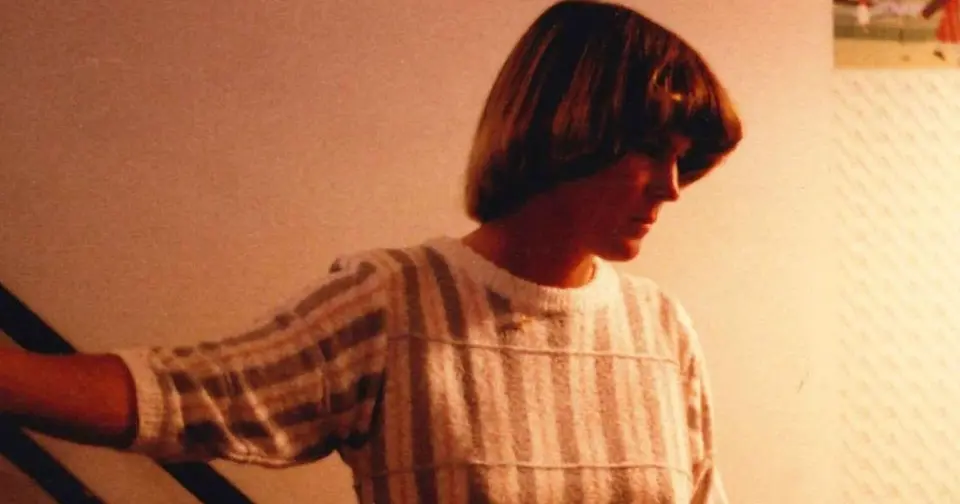
Vermont cold case reopened after 37 years: detectives face prime suspect
According to cbsnews.com, it had been 37 and a half years since retired Vermont State Police Detective Sergeant Tom Truex last spoke to David Morrison — the man he believed had murdered Sarah Hunter in 1986. This time, Truex did not go alone.
Tom and his son Sam, also a detective, travelled to Solano State Prison in California, where Morrison was serving time for unrelated offences. Sam's question to the man was blunt: "How did you kill Sarah Hunter?"
A promising life cut short
In 1986, Sarah Hunter was working as a golf pro at the Manchester Country Club in Vermont. Kevin Dailey, then president of the club, described her arrival as seamless. "She stepped right into the role," Dailey said. "She oversaw the pro shop and she also continued to give lessons."
On the morning of 19 September 1986, Hunter failed to appear for her first lesson of the day. Dailey recalled his initial unease. "It was so unusual for Sarah to not let us know where she was," he said.
His concern deepened when he learned that Hunter's Nissan had been found abandoned behind a Citgo station car wash in Manchester Village. The vehicle had been wedged in so tightly, Dailey noted, that no one could have entered or exited it normally. "We realised something perhaps not very good had happened to Sarah," he said.
Tom Truex, then a Vietnam veteran and state police detective, was called in by the Manchester Police Department to assist. The initial assessment was straightforward: a missing person case.
Tracing her last known movements
Investigators worked to reconstruct Hunter's movements on the night she disappeared. Her boyfriend, described by Truex as a local car dealer and "a very upstanding person," told a Manchester detective she had left his residence at 8:05 that evening to go home. On the way, she stopped at a place called Leo's Motors and picked up a six-pack of Coors beer.
Hunter was renting a room at the Livingston Boarding House at the time. When police searched her room, they found one Coors on the bureau. She had made it home — but what happened next remained unknown.
Days passed without any trace. No credit card activity. No contact with family or friends. Tom Truex recalled a gut feeling forming early: "She's gonna turn up dead."
Both her boyfriend and her ex-husband were investigated and both had confirmed alibis. Truex widened the net to include everyone at the country club. "Everybody was a suspect at that point," he said, acknowledging that many leads turned out to be dead ends.
A purse in the brush
Sixteen days after Hunter's disappearance, a break came. On 4 October 1986, children riding bikes discovered a purse in the brush along a roadside in Danby, Vermont — 15 miles from the boarding house where Hunter had been staying. Inside was her identification.
For Truex, the find pointed to one conclusion: "Somebody grabbed her, probably."
Weeks continued to pass with no further sign of Hunter. Dailey voiced the fear that had settled over the community. "Everybody was concerned that we would never know really what happened to Sarah," he said.
Thanksgiving discovery
The call came on Thanksgiving Day. Tom Truex and his family — including 12-year-old Sam — were gathered at relatives' home in New York, about to sit down to dinner, when Tom's phone rang. The message was stark: a body had been found, and investigators believed it was Sarah.
A property owner in Pawlet, Vermont, had made a grim discovery: the skeletal remains of a woman who had been missing for 69 days. Hunter lay alone in the woods next to a cornfield, 20 miles north of the last confirmed sighting of her alive.
The medical examiner determined that the 32-year-old had died by strangulation. Her clothing had been disturbed, and investigators believed she had likely been sexually assaulted, though that could not be confirmed from the physical evidence alone. A sock found dangling on a nearby barbed wire fence suggested to Truex that she may have tried to flee — or had been dragged back.
"You didn't just kill Sarah Hunter"
News of Hunter's death reached her college friend Athena Varounis while she was working as an FBI agent. "I was in shock," Varounis said. "You didn't just kill Sarah Hunter."
Varounis described Hunter as a force of nature — a gifted athlete and magnetic personality who had made an immediate impression at Wilson College in Pennsylvania. "She was like the north wind," Varounis said. "She would just breeze on in. It was almost like the room would part and people would look, because Sarah Hunter had arrived."
Hunter had been a standout on the sports field and a natural leader off it, Varounis said. At 18, her life had been just beginning.
Father and son, 37 years on
The case would remain unsolved for decades. Tom Truex never let it go. When his son Sam followed him into detective work, the two eventually pursued the investigation together, ultimately travelling to Solano State Prison to put their questions directly to David Morrison.
Whether Morrison provided any answers during that encounter is part of the broader CBS News 48 Hours investigation. What is not in dispute is the determination that drove two generations of the Truex family to that prison visiting room — and the question Sam asked the moment they sat down across from the man his father had long considered the prime suspect.
Source: Google News MT — Crime (en)