Five Scots gangsters arrested in Dubai face up to two years awaiting extradition
Ross 'Miami' McGill and four associates have been detained in Dubai amid Scotland's ongoing gang war. They could face years in a notorious prison before any extradition to the UK.
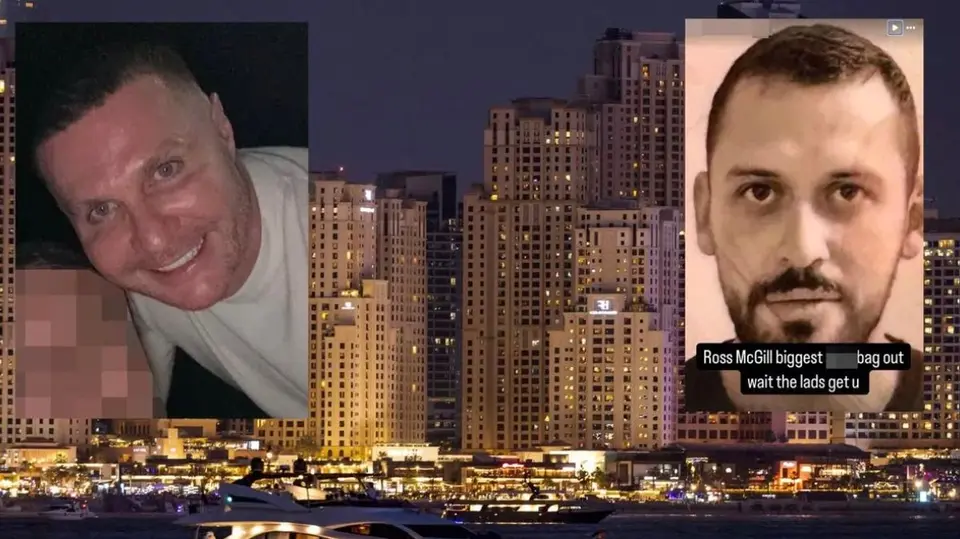
Five Scots held in Dubai as gang war reaches the UAE
Five men linked to Scotland's underworld — including Ross 'Miami' McGill, 31, Steven Lyons, 44, and Stephen 'Jimmy' Jamieson, 42 — were arrested in the early hours of Tuesday morning in a crackdown on serious and organised crime in the United Arab Emirates, dailyrecord.co.uk reports.
The remaining two detainees are understood to be Steven Larwood, an associate of the Lyons clan, and a Rangers Ultra associate of McGill's. The group was picked up in a dramatic pre-dawn raid, though British authorities have not yet issued any official statement on the grounds for the arrests, according to the Scottish Daily Express.
The five men now face the prospect of spending up to two years inside Dubai Central Prison — known locally as Al Awir — while extradition proceedings are pursued. The facility has a grim reputation for violence, gang rape and, according to reports, Russian mobsters deliberately infecting rivals with HIV.
Dubai's shifting stance on extradition
For years, Dubai was regarded by the international criminal fraternity as a reliable sanctuary. The unspoken understanding, underworld sources have long maintained, was that foreign criminals operating without directly disrupting Emirati society would be left alone.
That calculation has changed. A series of high-profile extradition applications have recently succeeded, and the UAE is under growing pressure from Interpol and Western governments to abandon its image as a criminal safe haven.
For extradition to proceed, Dubai Extradition Lawyers note that a number of criteria must be satisfied: the offence must be criminalised in both countries; it must carry a minimum custodial sentence of one year; it must threaten public safety or the rule of law; it cannot be political in nature; and capital punishment cannot apply. The UAE also retains the right to refuse extradition of its own nationals.
Human rights activist Radha Stirling, who runs the legal charity Detained in Dubai, is sceptical about what the shift in approach actually represents. "It wants to shed its reputation as a criminal safe haven, especially under pressure from Interpol and Western allies," she said. "But one extradition doesn't reflect meaningful change in a legal system that remains opaque, politicised and lacking in basic due process."
Stirling argues that extraditions from the UAE are rarely the product of impartial legal proceedings. "More often, they are part of political or diplomatic bargaining — quid pro quo arrangements that have little to do with justice," she said. "This makes it incredibly dangerous for anyone with business disputes, political enemies, or public profiles that might make them a target."
She added that enforcement appeared to hinge not on the weight of evidence but on whether a particular individual was "politically and economically expendable", warning that the lack of consistency and transparency "should deeply concern Ireland and all countries engaging in extradition treaties with the UAE."
The gang war that preceded the arrests
Underworld sources told the Record it was "only a matter of time" before McGill's rising notoriety caught up with him and those around him. A large-scale gang conflict erupted on the streets of Scotland in March, and McGill is alleged to have been at its centre.
According to those sources, the violence was triggered after an associate of Edinburgh cocaine boss Mark Richardson allegedly purchased £500,000 worth of cocaine from McGill — paying with counterfeit banknotes. McGill is then alleged to have orchestrated a series of firebombings and other attacks through a shadowy group operating under the name Tamo Junto, striking targets in both Edinburgh and Glasgow from the start of March onwards.
Tamo Junto members subsequently directed their violence at individuals and properties connected to Richardson and his associates, including figures linked to the Glasgow Daniel family. The resulting disorder has led to 57 arrests by Police Scotland as part of an operation named Operation Portaledge.
The Edinburgh duo initially reported by dailyrecord.co.uk as being detained in Dubai — two men the outlet declined to name for legal reasons — were accused of attacking another Scot at a five-star resort in an alleged stabbing incident. That report described the pair as the hoods blamed for the fake-cash cocaine deal that first ignited the gang conflict. Their connection to the broader group of five now in custody underlines how deeply the fallout from that original transaction has spread — from Scotland's streets to a Dubai jail cell.
Source: The Sun