Egisto Ott sentenced to 49 months in prison – masterminds remain at large
Former constitutional protection officer Egisto Ott was unanimously convicted of espionage and abuse of office. Central questions surrounding the network behind the BVT attack remain unanswered.
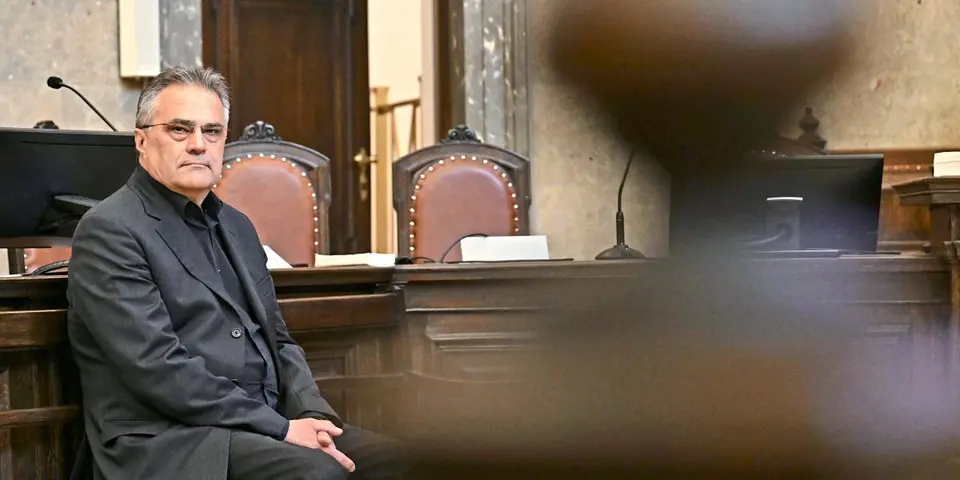
Verdict in Austria's largest espionage case – but the reckoning is far from complete
The jury left no doubt: on Wednesday, they unanimously convicted former constitutional protection officer Egisto Ott of espionage, abuse of office and further offences to 49 months of unconditional imprisonment, of which at least 20 months must be served without the possibility of an electronic tag. The verdict is not final – Ott announced an appeal and a nullity complaint on grounds of possible procedural errors, as Der Standard reports.
With this, Austria's largest espionage case of recent years is far from concluded. Central figures remain at large, and many questions surrounding the co-ordinated attack on intelligence service structures that began in 2017 have remained unanswered. Peter Gridling, then director of the Federal Office for Constitutional Protection and Counter-Terrorism (BVT), spoke of a "surprise attack".
First warning and stolen mobile phones
In spring 2017, a partner service first warned the BVT about Ott: the officer was sending internal information to his private Gmail address. In the same year, an anonymous dossier circulated containing serious allegations against BVT and Interior Ministry staff – transmitted to journalists and authorities. The Vienna Public Prosecutor's Office suspects to this day that Ott was involved in drafting this document, which was aimed primarily at ÖVP-aligned officials such as Cabinet Chief Michael Kloibmüller. Ott denies the allegations.
In July 2017, the current Federal Police Director Michael Takacs handed three mobile phones to Ott's later accomplice Anton H.: his own device as well as those of Kloibmüller and the current head of the Asylum Office Gernot Maier. The devices had fallen into the water during an outing of Interior Minister Wolfgang Sobotka's (ÖVP) cabinet; H. was to repair them or recover data. The jury found it proven that H. and Ott unlawfully retained and exploited the smartphones – apparently to gather material against the ÖVP-aligned leadership.
Kickl takes over the ministry – and increases pressure
At the end of 2017, the Interior Ministry changed hands to Herbert Kickl, now FPÖ leader. His ministry apparatus exerted vehement pressure on the Economic and Corruption Prosecution (WKStA) to act on the dossier affair. From within the BVT, Kickl's General Secretariat supplied three witnesses who heavily incriminated their colleagues: Anton H., Ott's former supervisor Martin Weiss, and Ursula Peterlik, then wife of Foreign Office General Secretary Johannes Peterlik.
Their testimony laid the groundwork for the scandalous raid on the BVT at the end of February 2018. BVT Director Gridling and his deputy were temporarily made suspects; Kloibmüller left the ministry.
The trail to Marsalek and Moscow
The role of former Wirecard manager Jan Marsalek remains unclear to this day. The Vienna-born businessman is said to have maintained contacts with Russian intelligence circles since 2014. From 2018 onwards, BVT department head Martin Weiss officially worked for Marsalek's company IMS Capital. Whether Marsalek orchestrated the attack on the BVT from behind the scenes – and whether it was a covert Russian operation – remained open during the trial.
Ott himself persistently remained silent on these questions. In 2021, Weiss stated that he had directed various inquiries to Ott for Marsalek, subsequently travelled to Dubai and has been sought ever since. Marsalek fled to Moscow in 2020 following the Wirecard collapse, where according to available intelligence he is now said to be working for Russian intelligence services.
Bulgarian agents in Vienna
British investigators caught a group of Bulgarian-origin agents in 2023 who apparently guided Marsalek across Europe. Secured chats between Marsalek and the leader of the group proved that the agents visited Ott's ex-brother-in-law's apartment in Vienna at least twice. There they are said to have first collected the three stolen smartphones, later also received what is known as a Sina laptop – a highly encrypted device used by civilian authorities. Why Marsalek should have had an interest in this device remains unclear.
Investigators found no direct communication between Ott and the Bulgarian agents. Ott and H. were regarded merely as the lowest level in the suspected chain of command – through Weiss and Marsalek it is supposed to have reached as far as Moscow. The fact that Weiss and Marsalek, both Austrian citizens, were able to escape remains an open question.
Political aftermath
The day after the verdict, party political sparring is already in full swing. The ÖVP sees the guilty verdict as exposing the FPÖ as a "security risk": Ott was also convicted of passing sensitive information to FPÖ politicians; moreover, he was to be given a post in a planned mini intelligence service in the Foreign Office under Karin Kneissl.
The FPÖ describes the case as an "SPÖ espionage scandal" and points to Ott's former party membership. The SPÖ counters that Ott was already expelled from the party in 2018 and that the verdict could not be clearer.
What remains from this exchange is the image of a constitutional protection service that over many years was not only attacked from outside, but also weakened from within – and whose complete reckoning still lies ahead.
Source: Der Standard