Styrian entrepreneur in court: EU subsidy fraud and forged company quotations
A Styrian entrepreneur has been charged with document forgery and subsidy fraud at Graz regional court – he pleaded not guilty.
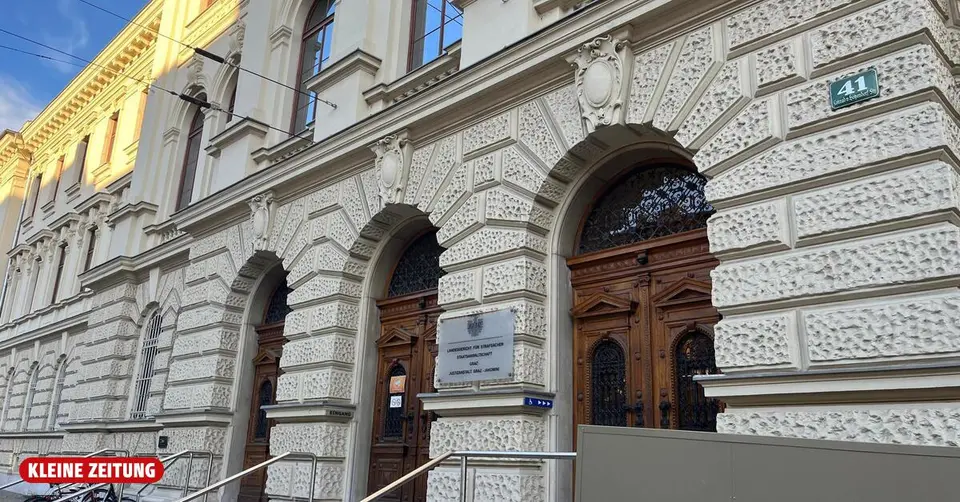
Graz trial: defendant denies allegations of EU subsidy fraud
According to the Kleine Zeitung, a Styrian entrepreneur appeared in court on Monday at the Graz regional court for criminal matters. The prosecution alleges him of document forgery and subsidy fraud – he pleaded not guilty.
The defendant is accused of having been entrusted with the handling of a cross-border EU project involving Hungarian, Slovenian and Austrian municipalities. To obtain full funding, he is said to have forged two company quotations and presented them to an administrative employee of another company for submission. The employee was allegedly under the impression that the documents were genuine. It was only an audit by the federal ministry that brought irregularities to light.
The case is complex and stretches back many years. Even IT experts were unable to clearly establish who actually created the forged documents. The judge pressed intensively on this point during the proceedings.
Given a comparatively modest damage of just over 2,000 euros – despite what the judge called a "gigantic investigation procedure" – the court proposed a diversion. The defendant rejected it: "That would mean I had authority that I did not have. I only know the forged quotations from the case file."
Particular attention was drawn to an email from the administrative employee to the defendant and the association, in which she wrote: "The auditor can already smell a rat." The judge asked the defendant directly: "Do you know what the rat is?" He denied it and explained that the email was sent to several people and he did not feel he was being addressed.
A former general manager of the association testified as a witness that the project had "only caused stress" – for ten years, audit authorities had repeatedly requested missing documents, which the defendant either did not provide or provided late. As a result, funding had been repeatedly reduced. "If proper work had been done from the outset, we would not be sitting here today," the witness said.
When asked by the judge why he had signed a termination by mutual agreement if he had done nothing wrong, the witness replied: "Yes, that was a mistake, but I wanted nothing more to do with such practices. Those responsible now want to shift the blame. That is third-rate."
After six hours, the hearing was adjourned. The trial will continue in January. Further witnesses are then to be heard, including the administrative employee and representatives of those companies whose quotations are alleged to have been forged.
Source: Kleine Zeitung