Falzone trial: lawyer argues murder, Paolo Falzone had 22 seconds to act
Mr Mayence contends that Paolo Falzone deliberately drove into the carnival procession, killing jester Frédéric D'Andrea. He is seeking seven murder convictions and 81 attempted murder convictions.
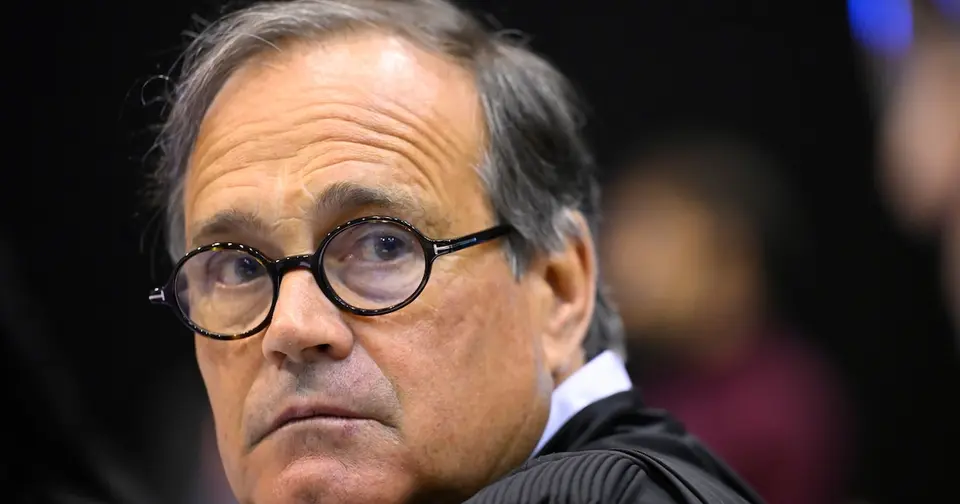
Falzone trial before the assize court: the premeditated murder thesis
According to DHnet, Mr Jean-Philippe Mayence delivered an aggressive pleading before the assize court, arguing that Paolo Falzone was motivated by an intent to kill at the moment his BMW struck the carnival procession. The lawyer is seeking that the accused be convicted of seven murders and 81 attempted murders.
Regarding the death of jester Frédéric D'Andrea, Mr Mayence goes further: he characterises the facts as assassination, considering them to have a premeditated character. He firmly rejects the defence thesis, which invokes involuntary manslaughter resulting from a failure in foresight or caution.
"When it's an accident, you stop and you help. That's not what happened here," he stated before the jury.
The speedometer video, key exhibit for the prosecution
The qualification retained for Frédéric D'Andrea's death was reinforced following the discovery of a video showing Paolo Falzone filming his speedometer a few seconds before the impact. This sequence demonstrates, according to Mr Mayence, that the accused had lied about the circumstances: he was driving at excessive speed whilst directing his attention to his telephone.
The lawyer describes, before the impact, a driver who transformed his car into a "weapon": a modified vehicle, used in sport mode, driven at speeds described as "astronomical" on a route that Paolo Falzone knew perfectly, frequented by residents and subject to speed limits.
At the moment of impact, the BMW was travelling at approximately 105 km/h. Mr Mayence asserts that the accused had the necessary time to avoid the collision: he would have spotted the crowd but only braked one second before the crash, without performing any evasive manoeuvre. After the impact, the driver continued on his way despite the presence of victims on and in his vehicle — which the lawyer interprets as the continuation of his intent to kill.
Twenty-two seconds of silence in the courtroom
The crux of Mr Mayence's demonstration rests on a precise temporal sequence. Between the point where Paolo Falzone spotted the crowd and the braking that caused the jester to fall, twenty-two seconds elapsed. "Jurisprudence considers that time is not a determining element," the lawyer recalled, before marking a silence of twenty-two seconds in the courtroom — the same lapse of time as at the moment of the facts.
The expert cited by the civil party found no trace of panic. "He made the perfect gesture," stressed Mr Mayence, reiterating his conclusions. Then the vehicle ran over the victim.
"He deliberately chose to run over the jester when he had the time to change his mind," the lawyer declared.
Several statements by the accused himself were recalled in support of this thesis. To a police officer, Paolo Falzone had confided that he had killed a jester. Before the court, questioned by Mr Mayence, he also acknowledged having wanted to "avoid" the jester — a formulation that the lawyer considers revealing of a full awareness of the victim's presence. The reconstruction and testimonies, including that of the investigating judge, furthermore established that the jester was clearly visible. "It is a certainty that he saw him," Mr Mayence hammered home.
Finally, the civil party questioned the reason for braking at that specific location. "No reason," the expert replied. To illustrate the impossibility of hearing the audible warning of a jester, Mr Mayence showed a silent video before shaking a rattle in front of the jury.
Antonino Falzone: the sleep thesis rejected
The lawyer was no more lenient with Antonino Falzone, passenger in the BMW. Mr Mayence firmly contests the version according to which the latter was sleeping at the moment of impact.
He relies on several elements: Paolo Falzone declared on several occasions that the two men were discussing before the tragedy; the noise generated by the speed and the activated sport mode made sleep implausible; the telephone data in the file would, in his view, be incompatible with a state of sleep.
"He completely associates himself with what the other is doing," maintained Mr Mayence, believing that Antonino Falzone was following the speed displayed on the speedometer. The lawyer also mentioned a video recorded shortly before the tragedy, in which a voice pronounces "oh, oh": if this voice is that of Antonino Falzone, that would constitute an additional element establishing that he was awake.
A pleading concluded on the verge of tears
The council chamber and then the committal chamber had already retained seven murders and 81 attempted murders, considering that the file contained sufficient elements to justify a referral before the assize court. Mr Mayence recalled that several magistrates had reached the same conclusion before him.
"He reflected on the gestures to be made. And he made them," he concluded, after finishing his pleading on the verge of tears, thanking the audience for their "lesson in life".
Source: DHnet