Drug trafficking in Belgium: Airbnb properties used as storehouses by criminal networks
Belgian criminal gangs are using short-term rental properties such as Airbnb to store drugs, weapons and money, according to the national drugs commissioner.
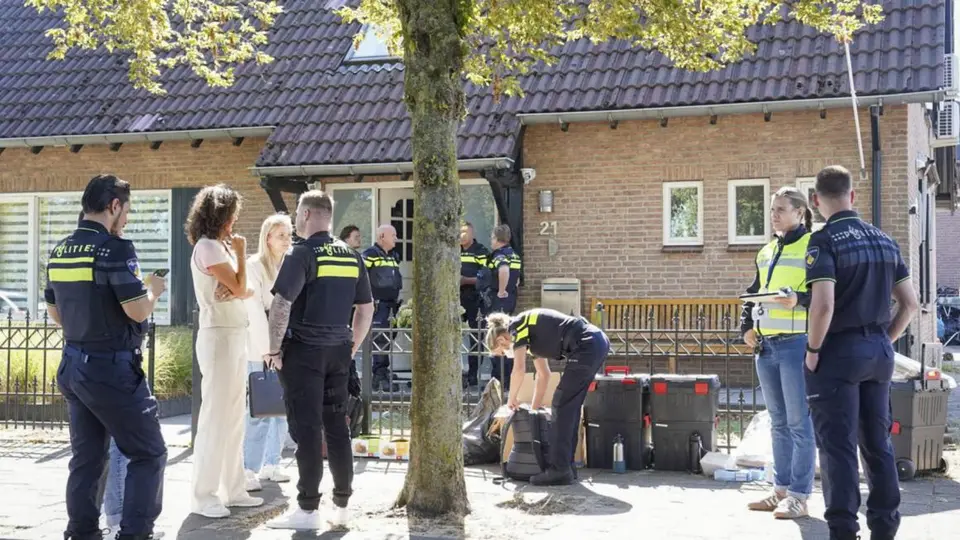
Airbnb diverted by organised crime in Belgium
Criminal networks are using short-term rental properties such as Airbnb as storehouses to keep drugs, weapons, money and sometimes even people, warns Belgium's national drugs commissioner Ine Van Wymersch. According to cnews.fr, which relays her statements made to the Guardian and the newspaper De Standaard, the growth of online commerce facilitates organised crime "enormously".
The flexibility of platforms exploited by traffickers
Van Wymersch details the logic of the traffickers: "You need someone to pick up a consignment at the port. You don't know exactly when the boat will arrive. Well, you can rent an Airbnb apartment or studio for three days. It's very flexible. If the boat doesn't go to Antwerp but to Marseille, cancellation is free."
Belgian authorities acknowledge they do not have a precise estimate of the scale of the phenomenon. According to the commissioner, these rental companies have "a very good legitimate purpose" but must strengthen their resilience to prevent such abuse.
Concrete seizures in Brussels and Flanders
In early August, police seized 3.3 kg of cocaine and 4,845 euros in cash from an apartment rented via Airbnb in the centre of Brussels, which had allegedly been used for storing and packaging drugs, according to the Belga agency. In 2024, when eleven people were sentenced for drug trafficking between Belgium and the United Kingdom, it was revealed that a seizure valued at 21 million euros had taken place in an Airbnb rental in Staden, in West Flanders.
Airbnb's response
An Airbnb spokesperson in Belgium refused to comment directly, referring instead to statements by Clément Eulry, director of Airbnb for France and the Benelux, published in De Standaard. The latter indicated that reservations made for criminal purposes represented an extremely small minority of the millions processed each year, while acknowledging that even a single case was already one too many.
Eulry specified that the company used artificial intelligence in particular to identify suspicious bookings, and that reports of problematic guests were systematically forwarded to the police and local authorities.
The digital economy at the service of organised crime
Short-term rentals represent only one aspect of the modern economy being exploited by organised crime, according to Van Wymersch. She also cites the ease of creating anonymous email accounts, encrypted communications, cryptocurrencies and the omnipresence of parcel delivery.
"The fact that e-commerce is booming facilitates organised crime enormously," she asserts. Delivery companies are "very much at risk" of being used as instruments, she adds, because "it is no longer a suspicious situation to see a white van stop at your neighbour's house and hand over a small package".
A commissioner born from a security crisis
Ine Van Wymersch became Belgium's first national drugs commissioner in 2023, after Antwerp established itself as one of Europe's main entry points for cocaine. Her appointment followed a wave of violence linked to trafficking: in 2022, the justice minister at the time had to live under police protection following the discovery of an alleged kidnapping plot, and Antwerp experienced a series of grenade attacks as well as the fatal shooting of an 11-year-old girl, a victim of a conflict between rival gangs.
Last year, an investigating judge, forced to live four months in a safe house and who remained anonymous, warned that Belgium risked becoming a "narco-state", in a sharp criticism of the government's response. Van Wymersch confirms that she herself has made this warning: "If we do nothing, we risk becoming a narco-state where we no longer know who the good guys and who the bad guys are."
Targeting money, the heart of the criminal operation
Her priority is to tackle the finances of crime: "This many-headed monster has only one heart, and that is money." Her strategy consists of targeting small businesses — hair salons, nail bars, night shops — used to launder funds. Her message to local authorities: inspect and investigate the "dodgy shop" in the neighbourhood, because "all these small businesses form one big network".
According to her, gangs have changed their modus operandi, moving away from the large money laundering operations of the past in favour of more dispersed and anonymous structures. Illicit activities are now outsourced to different gangs specialising in money laundering, supply or weapon use. "It's really crime as a service, and it's very opportunistic," Van Wymersch sums up.
The iceberg strategy
The commissioner is known for her "iceberg strategy" against organised crime linked to drugs. Shootings and explosions constitute the visible part, she explains, whilst below the waterline are harms less directly associated: people killed by drivers under the influence, victims of domestic violence or sexual offences linked to drugs.
While emphasising the importance of police work, Van Wymersch believes that society must guarantee young people a prospect for the future to prevent them being attracted to gangs — which would amount, according to her analogy, to melting the iceberg.
Source: Google News FR — Crime (fr)