Lawyer denounces "situation of terror" following armed attack against former prosecutor Zeballos in Cochabamba jail
Lawyer Mariano Medina warned of a lack of security in prisons following the attack on Alberto Zeballos and questioned the preventive detention of his client, former magistrate Aldo Quezada.
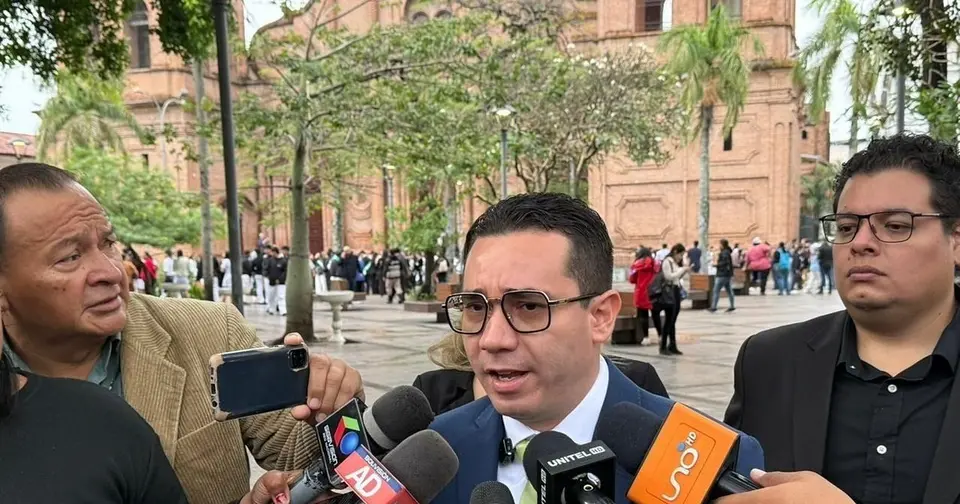
Quezada's defence questions charging in Roma case following attack on former prosecutor at El Abra
Lawyer Mariano Medina expressed alarm at the shooting attack suffered by former departmental prosecutor Alberto Zeballos inside El Abra jail in Cochabamba, and used the opportunity to question the detention conditions for prisoners deprived of liberty in Bolivia. According to El Deber, the incident occurred this Wednesday when another inmate fired at Zeballos as he was entering a bathroom in the penitentiary. The former prosecutor was subsequently transferred to a medical centre.
"We are living in a situation of terror, one could say, there is no security in any respect", Medina said in reference to the attack. The legal expert lamented that preventive measures had not been adopted to protect Zeballos, who has been detained since 4 October in the framework of an investigation into an alleged protection network for Uruguayan drug trafficker Sebastián Marset.
"Life comes first, health comes first, their fundamental rights come first. It is not possible to leave him adrift", said Medina, who claimed to know Zeballos and described him as a young, intellectual professional.
Transfer of Quezada and Porras to San Pedro jail
Medina also questioned the transfer of his client, former magistrate Aldo Quezada, and former anti-narcotics prosecutor Julio César Porras to San Pedro jail in La Paz. Both were arrested in Santa Cruz on Sunday, 15 November and taken to La Paz the following day. Following a hearing lasting several hours, a judge ordered six months of preventive detention for both within the framework of the Roma case.
The measure was handed down just three days after Quezada and Porras received three-year prison sentences for criminal organisation in the Suitcases case, through abbreviated procedures. In that file they had remained at liberty under judicial measures before being arrested for the new investigation.
The defence lawyer described the charging against Quezada as "arbitrary" and pointed to contradictions in the case. According to Medina, a new investigation was opened in La Paz just two days after his client appeared before a judge and the Public Ministry in another proceeding, which in his view would have breached the principle of unity of the Public Ministry, established in article 5 of criminal procedural law.
Defence rejects prosecution's hypothesis on Quezada's promotion
One of the defence's central observations points to the prosecution's thesis that Quezada would have accessed the presidency of the Departmental Court of Justice of Santa Cruz thanks to his friendship with Rómer Saucedo, former president of the Supreme Court of Justice, with the purpose of favouring drug trafficking.
Medina rejected that version. He argued that Quezada was incorporated as a constitutional justice in 2019 following an evaluation process in which the Council of the Judiciary, the Supreme Court of Justice and the Constitutional Court all participated. Moreover, he noted that Quezada was elected president of the Departmental Court in January 2025 by decision of the Full Chamber of that institution, and not by direct appointment from Saucedo.
"Because we are friends, are we now automatically facing a criminal act?", the lawyer questioned, considering that the personal relationship between the two former authorities does not in itself demonstrate criminal involvement.
No evidence of judicial pressure, according to defence
Medina further denied that there are elements proving that Quezada used his position to benefit Marset, his relatives or people in his circle through judicial decisions. He recalled that the former president of the Departmental Court did not issue rulings individually and stated that no judge has indicated having received pressure or instructions from Quezada to favour any person under investigation.
"What is the evidence? What is the element that establishes that he protected drug trafficking, that he benefited or that he participated in an act having to do with drug trafficking?", asked the defender.
Medina indicated that those observations were incorporated in the appeal filed against the judicial decision and expressed his expectation that the appellate court would review the defence's arguments. He also questioned the assessment made during the precautionary hearing: according to the lawyer, the judge himself would have noted an ambiguity relating to a supposed cybernetic technical report that sustains part of the charging, which in his view evidences the absence of sufficient objective elements to justify the extreme measure.
The Roma case and the investigation into Marset
The Roma case investigates an alleged structure for protecting drug trafficking from Bolivian state institutions and possible actions that would have favoured the circle around Uruguayan drug trafficker Sebastián Marset. The Public Ministry maintains that it is investigating prosecutorial and judicial decisions that may have benefited people linked to that citizen.
Source: El Deber