Bolivia seizes 283 tonnes of drugs and captures Marset in first year
The government of Rodrigo Paz presented its annual report highlighting anti-narcotic operations, the capture of Uruguayan Sebastián Marset and the binational "Secure Border" plan.
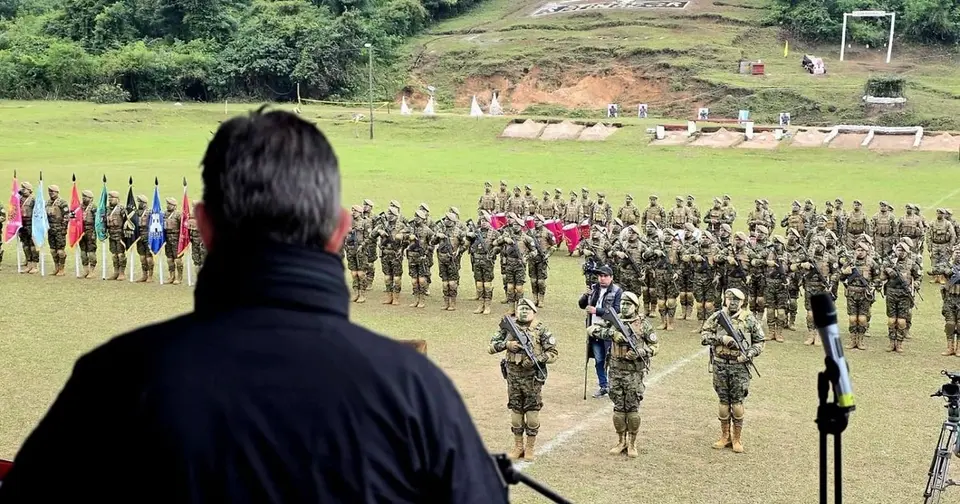
Paz's first year: capture of Marset, 283 tonnes seized and reinforced border control
The Bolivian government of Rodrigo Paz reported, according to El Deber, that during its first year in office the Police captured Uruguayan drug trafficker Sebastián Marset, seized 283 tonnes of drugs and deployed operations in border zones as part of its strategy against drug trafficking and organised crime.
The Office of the President released this Sunday a balance of measures implemented since November 2025, which includes police operations, international cooperation and actions aimed at strengthening state control in vulnerable regions.
Capture of Marset
On 13 March 2026, specialised units of the Bolivian Police, with support from the DEA, detained Marset in Santa Cruz. The drug trafficker had been a fugitive since 2023. His apprehension was described as one of the most significant results of the period.
Seizures and expulsions
The Ministry of Government presented figures corresponding to the first eight months in office: 283 tonnes of drugs seized, 58 aircraft, 370 properties and 573 vehicles confiscated. Additionally, 17 members of Brazilian criminal organisations were expelled from the country.
Operation against criminal networks
Between 30 September and 1 October, an operation was carried out resulting in 14 arrests, including that of the then attorney general of the State, Róger Mariaca, and other officials investigated for alleged links to criminal organisations. The case included the seizure of financial resources. Following Mariaca's suspension, the Legislative Assembly approved Law 1773 and appointed José Urioste as interim attorney general on 3 October.
Secure Border and international cooperation
On 13 August, the binational "Secure Border" plan was launched in Guayaramerín, Beni, with the participation of police authorities from Bolivia and Brazil. The initiative seeks to reinforce permanent police presence at strategic points and develop intelligence operations against transnational criminal organisations such as Primeiro Comando da Capital (PCC) and Comando Vermelho (CV). Subsequently, a second phase was announced, called "Secure Border 2.0", presented in Santa Cruz de la Sierra.
At the international level, Bolivia joined the Shield of the Americas, with the backing of 14 countries, and signed the Santiago Commitment, mechanisms intended to coordinate actions against transnational drug trafficking.
The Office of the President stated that these measures are part of a strategy aimed at protecting the population, defending sovereignty and recovering state presence in vulnerable zones. The report also mentions as a pending challenge ensuring transparent investigations and respecting due process in the determination of criminal liabilities.
Source: El Deber