Twelve ex-officials of Arce face justice as government transition marks one year
Four former ministers from the Arce government have been sent to prison on corruption charges. The former president has been held in preventive detention in La Paz for nearly 11 months.
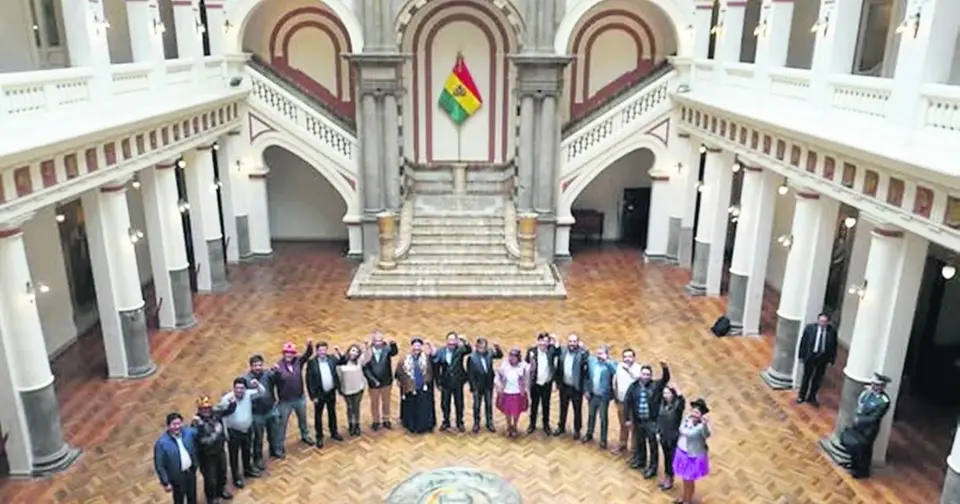
One year on: ex-ministers imprisoned and former president in preventive detention
On the first anniversary of the transition between Luis Arce and Rodrigo Paz, at least twelve ex-officials from the previous government face legal proceedings for alleged acts of corruption, reports El Deber. The former president has spent nearly eleven months in preventive detention at San Pedro prison in La Paz, since December 2025.
Arce faces an investigation linked to the Indigenous Fund, related to decisions he made as Minister of Economy during the government of Evo Morales. In September, a judge rejected his request for release. The organisation Transparency also reported irregularities in 3,177 projects, with estimated damage of Bs 3,197 million, figures that remain under investigation.
The legal case extends to his family. His son Luis Marcelo Arce Mosqueira is held in Palmasola for alleged money laundering; on 26 October his preventive detention was extended by an additional 40 days. His brother Ernesto Rafael is also being investigated.
Ex-ministers with convictions and detentions
Juan Santos Cruz, former Minister of Environment and Water, was convicted in April to ten years in prison in the Bribes case. The sentence established damages exceeding Bs 19 million for illegal charges linked to public contracts. The case crossed borders: a mission of Members of the European Parliament visited Bolivia at the end of October and the European ambassador Jaume Segura confirmed that the European Union's anti-fraud office, OLAF, requested information about possible irregularities in water projects financed with international cooperation resources.
Edwin Characayo, former Minister of Rural Development, received a conviction in 2022 of eight years for bribery, after being caught receiving 20,000 dollars. He was subsequently granted house arrest.
Édgar Montaño, former Minister of Public Works, was sent to San Pedro prison as part of investigations into the El Sillar dual carriageway; in May a new preventive detention was imposed on him. Néstor Huanca, former Minister of Productive Development, entered Patacamaya in January for alleged corruption in the sale of subsidised Emapa flour. The initial order was for four months, although a subsequent extension was not confirmed. His successor, Zenón Mamani, received house arrest.
Edmundo Novillo, former Minister of Defence, was detained in the Radars case, with alleged damage of Bs 1,478 million; he subsequently received house arrest. César Siles, former Minister of Justice, faces charges in the Consortium case. Eduardo del Castillo, former Minister of Government, is sought for alleged links with drug trafficker Sebastián Marset; the Public Prosecutor reported a red alert against him. The company B-Agro is also being investigated for losses of Bs 101 million.
El Deber emphasises that no imputation implies guilt.
The call for institutionalisation
Constitutional law expert José Luis Santistevan warns that corruption in the State goes beyond judicial treatment and relates to the recovery of institutional integrity. He questions interim appointments and designations that, in his view, breach constitutional procedures at the Central Bank of Bolivia, ASFI, the Comptroller's Office, the Public Prosecutor's Office and other entities. He recalls that Article 232 of the Constitution requires legality, impartiality and transparency in public administration.
"Institutionalising must be the first action to reduce inefficiency and corruption," Santistevan contends. He proposes that the Legislative Assembly draw up lists of candidates and appoint officials in accordance with regulations, to prevent positions from depending on the will of whoever holds power at any given time.
Former ambassador Jaime Aparicio calls for professionalising the diplomatic career to sustain international openness. Constitutional law expert William Herrera links legal certainty with an independent judiciary. Business leaders Gary Rodríguez and Jean-Pierre Antelo insist on clear rules to attract investment.
El Deber's analysis concludes that the change of cycle requires more than detentions: it involves public controls, lawful appointments, access to information and judges free from political pressure, all of this with respect for the presumption of innocence. President Rodrigo Paz has announced structural reforms for his second year in office, although he has faced criticism for delay in making decisions.
Source: El Deber