Clashes at Villa Tunari anti-drug post: three police officers wounded and detained
Coca growers retook El Castillo by force following a police intervention with gas. Three Umopar officers were wounded.
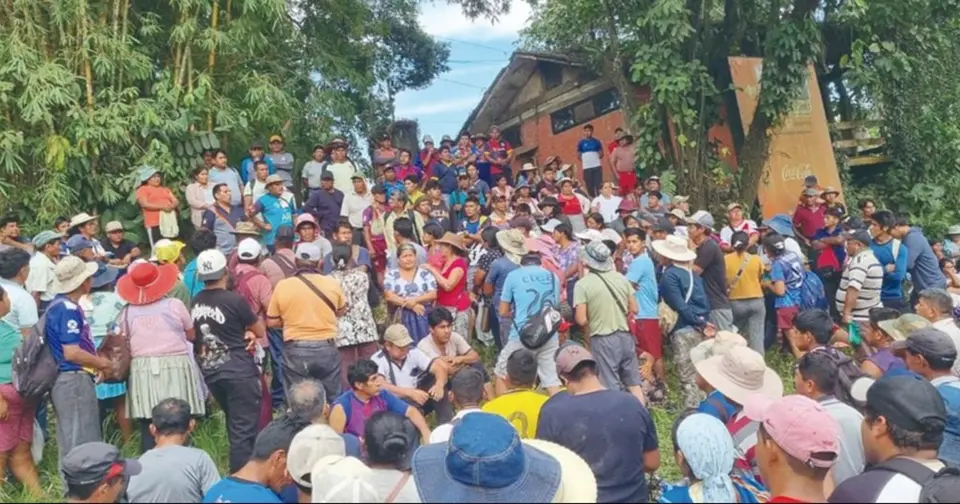
El Castillo anti-drug post in Villa Tunari, scene of violent clashes
El Deber reports that the El Castillo anti-drug control post, located in Villa Tunari in the Cochabamba tropics, was the scene of a new episode of tension between officers of the Mobile Rural Patrol Unit (Umopar) and coca growers who had maintained a vigil of approximately two months at the facilities.
During the early morning hours, a contingent of Umopar entered the location through the use of chemical agents to disperse those who were blocking police access. The intervention initially allowed the recovery of control of the strategic point, considered key for interdiction and drug trafficking control operations in the region.
However, hours after that first action, the protesters returned to occupy the post. The coca growers burned objects and belongings of the uniformed officers, and three Umopar officers were wounded to varying degrees. The sector also registered damage to vehicles and motorcycles, though authorities did not release an official report on the extent of the damage.
The sequence—police takeover, momentary recovery, and renewed occupation by the protesters—made clear that the conflict remains open.
Conflicting accounts of the intervention
At a press conference, the Coordinator of the Six Federations of the Cochabamba Tropics rejected statements by the national commander of Umopar about what occurred. The president of the organisation, Vilma Colque, called the police chief a liar and stated that the uniformed officers entered violently during the early morning hours.
"They entered with great arrogance and presumption, with gas dispersal during the early morning. We have wounded," Colque declared. The leader asserted that there were people injured during the operation, although she did not specify how many nor provide details about the severity of the wounds. There is no medical or police report available to verify that claim.
Cross-accusations between the Interior Minister and Morales
Interior Minister Marco Antonio Oviedo asserted that former president Evo Morales is the head of a drug trafficking cartel operating in the Cochabamba Tropics and that he would have financed the May and June blockades. "He is the head of a drug trafficking cartel that operates from the Cochabamba tropics, also known as the Chapare," Oviedo stated in statements to Erbol radio.
Morales responded by linking the minister to drug trafficking and proposed, in an ironic tone, changing his name: instead of Marco Antonio, calling him "Narco Antonio," according to statements made to media outlets in the Cochabamba Tropics.
Source: El Deber