US prosecutors seek to include bribes to Bolivia in trial against Marset
Federal prosecutors are seeking to present illicit payments to Bolivian officials as key evidence in the trial scheduled for 2027 against Uruguayan drug trafficker Sebastián Marset.
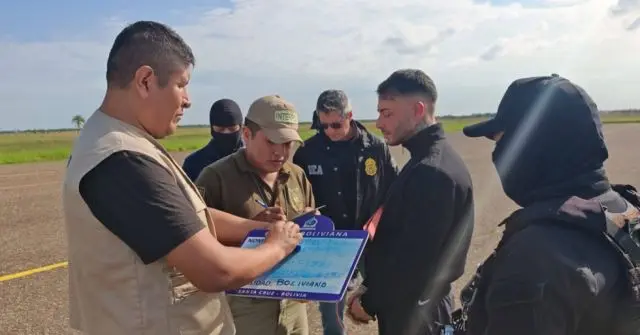
Marset trial: US wants to prove bribes to Bolivia authorities
The United States Department of Justice requested this week before federal court the inclusion of encrypted communications and alleged bribe payments as central evidence for the trial against Uruguayan drug trafficker Sebastián Marset, scheduled for early 2027, according to correodelsur.com.
Through prior motions presented before district judge Rossie Alston Jr., prosecutors argued that such material is indispensable to demonstrate to the jury the scope of the drug trafficking, money laundering and narco-terrorism network directed by Marset. The Organised Crime and Corruption Reporting Project (OCCRP) was cited as a source for the reports.
Payments that bought protection in Bolivia
Regarding Bolivia specifically, the US indictment details that illicit payments allowed the defendant to access confidential files on police investigations into drug trafficking, evade operations intended to capture him, and receive advance warnings about meetings between DEA agents and Bolivian authorities.
According to the documents, prosecutors contend that Marset directed his organisation in a "ruthless and brutal" manner, combining murders and use of explosives against agents who rejected corruption, with a systematic scheme of bribes to state institutions in Bolivia, Paraguay, Uruguay and Venezuela.
From Santa Cruz to a US federal court
Following his capture in an early-morning raid in Santa Cruz on 13 March 2026 and his subsequent extradition to the United States, Marset declared to the DEA that he maintained a friendship with then attorney general Roger Mariaca and that he made payments to guarantee his protection.
Currently, Mariaca and several former officials of the Public Ministry are detained in a prison in Potosí, within the framework of an institutional purge unleashed after the withdrawal of US visas to Bolivian political and judicial authorities.
Three additional evidentiary pillars
The prosecution additionally requests that the judge admit three complementary elements of evidence. Investigators identified 12 personal identification numbers (PINs) within an encrypted platform—three attributed directly to Marset—that contain photographs of his tattoos, his family and the image of a person allegedly murdered on his orders.
The prosecution also seeks to include statements from an undercover agent and from a non-indicted co-conspirator, with the objective of detailing the movement of illicit funds from Europe to South America. This is supplemented by documentation that would link the defendant to homicides and attacks against security forces.
The defence attempts to block the evidence
Marset's lawyers seek to prevent the admission of such material. The defence argues that the initial money laundering charges lack validity because they were based on a single transfer between Portugal and China that did not transit through US banking servers, and contends that his client never trafficked drugs into US territory.
The defence also asked judge Alston to exclude any mention of violent crimes outside the legal definition of narco-terrorism, drug seizures in international waters near Africa, and banking records without direct connection to the formal charges.
As of Thursday, the magistrate had not issued his ruling on the seven new motions nor on the previous challenges presented by the defence.
Source: Google News BO — Crime