Interim Attorney General Urioste reveals eight institutional flaws that facilitated organised crime in Bolivia
Interim Attorney General José Armando Urioste identified eight mechanisms that would have enabled criminal organisation infiltration into Bolivian public institutions. The findings emerge from the Marset, ROMA and Suitcases cases.
Eight state vulnerabilities that organised crime exploited
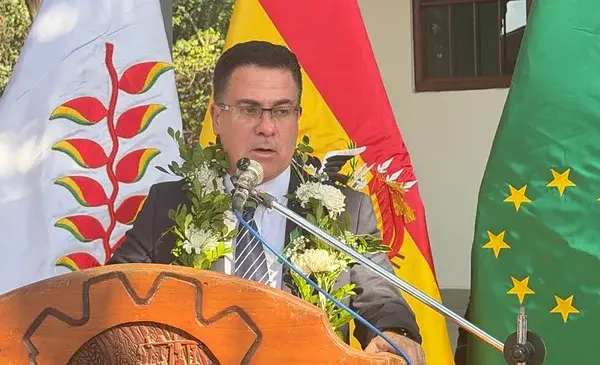
Interim Attorney General of the State José Armando Urioste identified eight mechanisms that would have facilitated the infiltration of criminal organisations into Bolivia's public institutions, according to reduno.com.bo. The findings were presented on Monday at the First National Forum "Justice in Transition: Constitutional, Criminal, Agroecological and Institutional Challenges", organised by the Departmental Court of Justice of Beni.
"Corruption and organised crime are two sides of the same coin," Urioste stated before forum attendees.
The conclusions arise from investigations into the Marset, ROMA and Suitcases cases, which exposed alleged information leaks, judicial influences, improper access to confidential information and failures in institutional controls.
The eight mechanisms identified
Recruitment of officials. Criminal organisations would have incorporated or used public servants to favour illicit activities and gain access to institutional information.
Leaking of operations. An investigation is underway into whether the circle around drug trafficker Sebastián Marset received advance information about the operation from which he managed to escape in Santa Cruz in July 2023.
Computer access to confidential information. Urioste reported that people outside the Office of the Attorney General, including Marset himself, accessed the ROMA system and data on judicial orders. The platform was created during Mariaca's term and subsequently renamed.
Use of judicial influence. The former president of the Departmental Court of Justice of Santa Cruz, Aldo Quezada, stated that Rómer Saucedo, then president of the Supreme Court of Justice, asked him to arrange travel permits for the daughters of Laura Rojas, a former deputy linked to the so-called Suitcases case.
Breach of institutional controls. Customs investigated the departure without inspection of 32 suitcases that arrived at Viru Viru airport and questioned the use of an expired diplomatic passport by Rojas. The case must determine whether there was negligence or complicity.
Irregular handling of money and assets. The Mariaca case is investigating luxury vehicles, real estate and cash. The Ministry of Government reported 33 raids, the seizure of 46 vehicles, five properties and more than 5 million bolivianos along with 407,000 dollars. In light of these facts, Urioste raised the need to attack the sources of financing of criminal organisations.
Control of seized assets. Vehicles seized in operations against Marset were transferred to the Judicial Authority; one of them was assigned to Saucedo. Urioste questioned the control mechanisms over those assets, although he clarified that the transfer did not take place during his tenure.
Institutional fragility. The attorney general acknowledged that the Specialised Superior Office for Organised Crime had an "absolutely theoretical" structure, without its own operational arm. Investigations were fragmented and lacked comprehensive vision of criminal structures. Martín Irusta, who served as superior prosecutor during Mariaca's term, is currently detained in Patacamaya.
Institutional response
Urioste further warned that there was no cross-cutting coordination in investigations and that the institution was vulnerable to political and economic pressures, conditions that would have generated spaces for impunity.
Facing these shortcomings, the prosecutor announced the strengthening of the Specialised Office for Criminal Prosecution of Organised Crime through multidisciplinary teams capable of comprehensively investigating these organisations.
The strategy includes financial tracking, analysis of capital movements, coordination with the Financial Investigation Unit (UIF), international cooperation and protection of witnesses and informants.
Urioste also defended the use of abbreviated proceedings as necessary tools for dismantling criminal networks. In the Suitcases case, Quezada and former prosecutor Julio César Porras received three-year sentences through that method; both were arrested again and transferred to La Paz, this time in the framework of the ROMA case.
The attorney general emphasised that international cooperation should support investigations without transferring the trial of offences to foreign authorities, and stated that the ultimate goal is to obtain convictions and recover assets in favour of the Bolivian state.
Source: Google News BO — Crime