YPFB: more than 30 fuel distribution points operating without invoices and quotas at 200% above limit
The Vice-Minister of Transparency identified serious irregularities in YPFB fuel distribution, with officials identified and criminal proceedings underway.
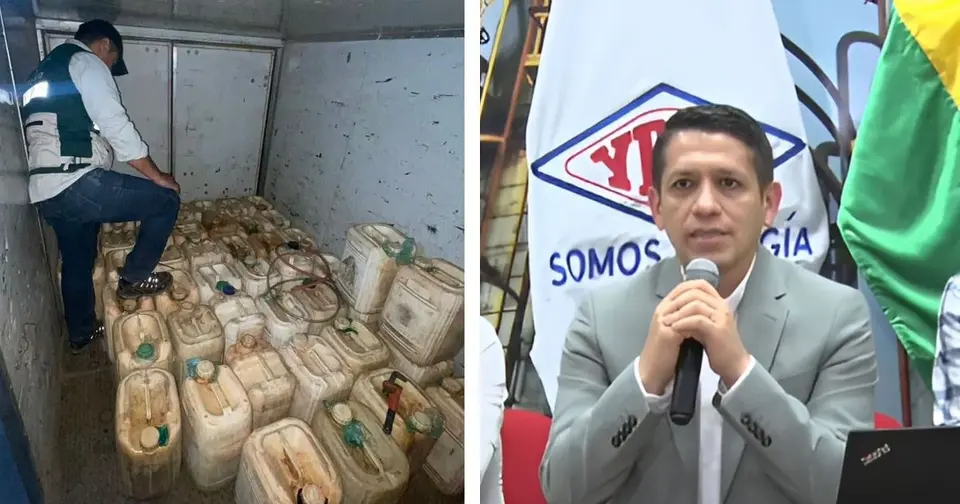
Irregularities at YPFB: dispatch points without invoices, exceeded quotas and Excel-based controls
Vice-Minister of Transparency Marcelo Yamil García revealed on 11 September a series of irregularities in the distribution and commercialisation chain of Yacimientos Petrolíferos Fiscales Bolivianos (YPFB) at the national level. According to reporting by El Deber, among the findings were fuel dispatches carried out before invoices were issued and quota allocations that far exceeded established limits.
García explained that regular procedure requires payment and invoicing first, then issuance of the dispatch order, and finally fuel allocation. However, investigations identified more than 30 cases in which fuel was delivered before the corresponding invoice was issued.
"This is not merely an administrative observation, but rather demonstrates that there has been much discretion in this distribution and commercialisation chain," the vice-minister stated. "We have been able to identify more than 30 cases where dispatches were issued and invoices were only issued afterwards."
Quotas at double the permitted limit
A second finding points to direct clients who received fuel volumes exceeding 199% of the permitted limit. "A second method of committing corrupt acts within fuel commercialisation has to do with quota allocation that has exceeded almost 200% of the permitted limit," García stated.
Additionally, more than 40 situations were detected in which scheduled withdrawals across several days were concentrated into a single day. "Withdrawals that were scheduled for several days were carried out in just one day," the official added.
Excel reconciliations and Bs 400 million without traceable system
García questioned that dispatch controls were being conducted through Excel spreadsheets, a system that allowed multiple users to modify information retroactively. "The entire system through which fuel dispatch control was supposed to be conducted was a system in which, furthermore, many users could make retroactive modifications," he explained.
The vice-minister noted that YPFB allocated more than Bs 400 million in technological infrastructure over the past five years, without this resulting in a digital system capable of tracking the entire distribution chain. "We can detail these Bs 400 million, but the result is that no traceable digital system has been created that could end corruption in this case," he questioned.
As a symbol of the system's weaknesses, García pointed out that to date physical control was being conducted using a strap—similar to those placed on luggage when travelling—as the sole security mechanism at dispatch points.
Officials identified and criminal proceedings underway
García confirmed that service stations that allegedly received fuel in a discretionary manner have already been identified, as well as officials who allegedly facilitated the diversion. "They are already fully identified and criminal proceedings are also underway," he stated.
The announced proceedings contemplate crimes of passive bribery, improper use of influence, incompatible negotiations, extortion and illegal fuel commercialisation.
The vice-minister also questioned Administrative Resolution 36-2024 of the National Hydrocarbons Agency (ANH), through which YPFB was delegated monthly programming and fuel supply allocation, noting that this delegation would have facilitated the irregularities.
Full digitalisation as a preventive measure
As an immediate response, the Ministry of Transparency proposed digitalising the entire distribution chain and creating a public portal that would allow real-time knowledge of fuel volumes entering, dispatches carried out and their recipients. To implement the measure, participation was requested from the Electronic Government Agency and Information and Communication Technologies (Agetic), together with the technological units of YPFB and the Ministry of Hydrocarbons.
Source: El Deber