Drones become standard weapon for organised crime in Latin America, NGO warns
ACLED report recorded 670 incidents involving armed drones since 2018, with 72 per cent concentrated between 2025 and 2026. Mexico, Colombia and Brazil lead the phenomenon.
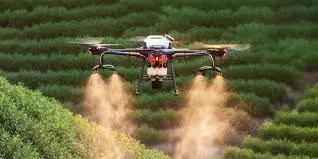
Drones replace conventional weapons in criminal operations across continent
A bomb fell from the sky during "Operation Containment", conducted in the slums of the Penha and Alemão complexes in Rio de Janeiro in October last year. Around 2,500 police officers, soldiers and snipers faced the Comando Vermelho in a maze of narrow streets when the device, launched by a drone, targeted the security forces. The episode, reported by cnnbrasil.com.br, illustrates a phenomenon rapidly expanding across Latin America: the use of drones as weaponry by organised crime.
Records accelerating sharply
A report by NGO ACLED (Armed Conflict Location & Event Data Project) quantifies the scale of the problem. The organisation counted "approximately 670 incidents involving armed drones since 2018", but more than 72 per cent of these events occurred between 1 January 2025 and 21 August 2026 — a concentration that evidences an abrupt acceleration of the phenomenon.
Paddy Ginn, senior expert at GI-TOC (Global Initiative Against Transnational Organised Crime), classifies current use into five categories: surveillance, logistics, attack, signalling and coordination. "We are observing a clear transition from experimental drone use by criminal groups to structured and replicable operational use," Ginn states.
Origins in Brazilian prisons
The earliest records of criminal drone use in Latin America date from 2014 and are linked to prisons, primarily in Brazil. According to InSight Crime, a website specialising in investigations into organised crime, "drones replaced the pigeons that had previously been used to deliver messages and small packages, offering greater advantages and easy access to black market goods — including weapons, drug packages, food, alcoholic beverages, mobile phones and all manner of contraband that found an aerial route into prisons".
Over the past decade, the devices migrated from cells to the streets and became an operational tool in open confrontations.
Mexico and Colombia at centre of offensive
Ginn points out that Mexico, Colombia and Brazil concentrate the most advanced and concerning cases. "In Mexico, cartels have been using drones to carry out attacks for at least five or six years," the expert says. "Criminal groups now use drones to monitor police patrols, launch improvised explosive devices against rivals or security forces and support migrant smuggling operations along the border with the USA."
David Mora, senior analyst at the Crisis Group specialising in Mexico, confirms the trend. "There has certainly been an increase in Mexico. From small drones used for surveillance — which is highly effective for criminal groups — to larger and more sophisticated drones with greater payload capacity, to which explosives are attached."
Both the Mexican Navy and Ministry of Defence confirmed to CNN an increase in drone seizures over the past year. In Colombia, the newly sworn-in president faces the growing challenge of armed groups also resorting to the technology. Guatemala presents "emerging use linked to cross-border conflicts between cartels", whilst Venezuela shows "initial indications through seizures and possession cases", according to Ginn.
Commercial devices adapted for lethal purposes
What concerns experts most is the accessibility of the equipment. "They adapt commercial drones, such as those used for parcel delivery, to carry explosives. Some have extremely high payload capacity. And, although they do not have great range, that is also changing," explains Mora.
Devices can be purchased online, which lowers the barrier to entry for smaller criminal groups. Ginn emphasises that the dissemination has been exceptionally rapid: "Few innovations have spread as quickly in conflicts and organised crime as drones have."
Regional hotspots in Mexico
Mora identifies Sinaloa as the Mexican state with the highest concentration of drone-related reports, amid the internal disputes of the cartel operating in the region. Michoacán also appears as an area of intensive use, mainly for territorial control and confrontations between groups. In Tamaulipas, a border state, use is more associated with surveillance. InSight Crime adds Chihuahua and Guanajuato to the list of zones with growing operations.
Use on the Mexico-USA border also includes the alleged trafficking of illicit cargo by air. The Trump administration invested in technology to combat the problem: last week, US forces used a laser system for the first time to shoot down three drones allegedly linked to Mexican cartels that were flying near the Texas border. Mexican authorities, for their part, downplayed the matter.
Professionalisation with external support
InSight Crime also notes that Mexican criminal groups "have sought the expertise of former Colombian military personnel to enhance and professionalise the process" of adapting devices for offensive use — an indication that the transfer of knowledge between criminal organisations from different countries is already part of the technology sector's evolution.
Regional security forces are attempting to keep pace with this evolution, but the experts consulted assess that the gap between criminal groups' offensive capabilities and institutional response remains significant.
Source: Google News BR — Crime