$1.5 million from Venezuela financed the assassination of Miguel Uribe Turbay, alleges his widow
María Claudia Tarazona claims that funds from Venezuela financed the murder of the Colombian senator. Eight people have already been convicted of the crime.
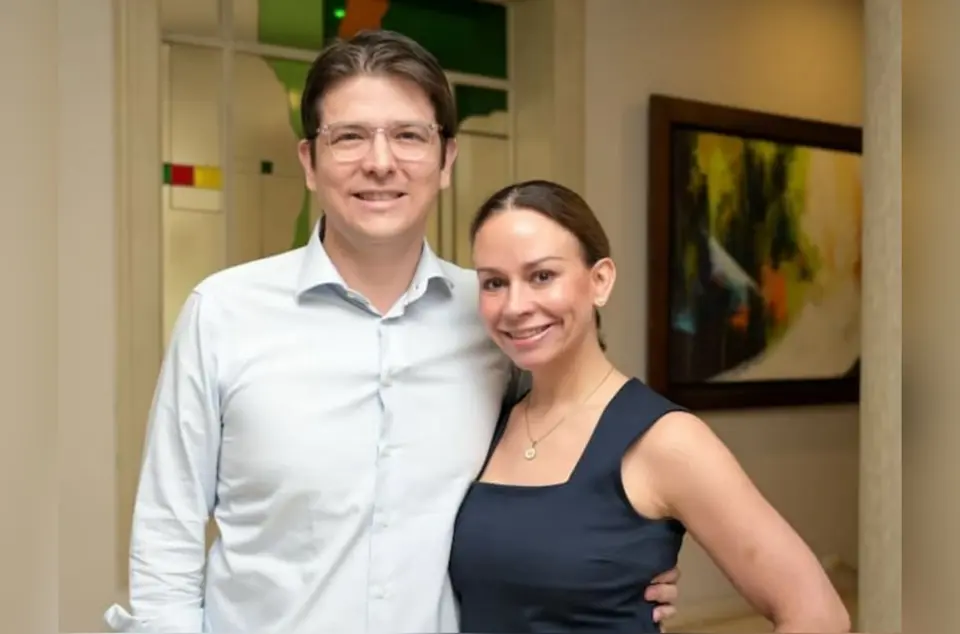
Widow of Uribe Turbay alleges state crime financed from Venezuela
More than $1.5 million was sent from Venezuela to finance the assassination of Colombian senator and presidential precandidacy hopeful Miguel Uribe Turbay, who was shot on 7 June 2025 during a campaign event in Bogotá and died 64 days later. This was alleged this week by his widow, María Claudia Tarazona, speaking from Madrid, according to elnacional.com.
Tarazona made these statements in an interview with Spanish newspaper ABC, after presenting her testimony before the European Parliament in Brussels and launching the Miguel Uribe Turbay Foundation. In them she provided details about the judicial progress of the case and directly identified Venezuela under Nicolás Maduro's administration as the source of the financing.
"Today we have the certainty, and it is a proven fact within the entire investigation, that more than $1.5 million was brought from Venezuela and handed to El Viejo—Simeón Pérez Marroquín, now convicted to more than 22 years in prison—who was the operation coordinator to orchestrate Miguel's assassination in Bogotá. He said that the money came from Venezuela. At that time the dictator Nicolás Maduro was in power and we know that not a single dollar, nor absolutely anything, moves without the approval and coordination of Maduro's dictatorial regime," Tarazona asserted.
Fifteen months after the crime, Colombian justice has already handed down sentences of between 7 and 26 years in prison against eight perpetrators and collaborators in the attack.
Segunda Marquetalia and links to "Total Peace"
Tarazona argued that the assassination of the Centro Democrático party leader took place in a context of prior political harassment and that two leaders of the dissident Segunda Marquetalia structure—identified as "El Zarco Aldinever" and "Kendry Téz"—held valid safe-conducts within the government's "Total Peace" strategy whilst orchestrating the criminal plan.
"Gustavo Petro, between 2023 and what transpired in 2025, publicly harassed Miguel. In his marches he used banners featuring Miguel's name and videos of him, and he incited people to promote hatred and mistreatment, provoking violent euphoria against his image. Petro also had within 'Total Peace' two important Segunda Marquetalia leaders: El Zarco Aldinever and Kendry Téz, who enjoyed safe-conducts to commit crimes throughout the country, sheltered by this false peace. We now have very solid proof that they were orchestrators, coordinators and financiers of Miguel's assassination," the widow specified.
Uribe Turbay's front position against drug trafficking—which included the proposal to resume aerial spraying with glyphosate on illicit crops and dismantle negotiations with irregular groups—would have made him a priority target for the 2026 elections, according to Tarazona's explanation.
Prior warnings ignored and intelligence failures
Two months before the attack, several media outlets received messages warning of the planning of an attack against Miguel Uribe Turbay and senator Paloma Valencia. According to documents that Tarazona received subsequently, these communications linked the order to parliamentary sectors of the Comunes party and confirmed the flow of money from Venezuela, together with a photograph of an operational coordinator of the Segunda Marquetalia in the department of Caquetá.
Following the submission of this evidentiary material to Colombian justice, the Supreme Court of Justice formally opened an investigation against congresspeople Sandra Ramírez and Marcos Calarcá, both former members of the FARC.
Tarazona lamented that intelligence agencies had not acted preventively when the first indications emerged. "Unfortunately, the information was underestimated and it was not possible to establish a line of investigation at that time. Furthermore, the DNI, which is the National Investigation Department, was penetrated by Gustavo Petro's government," she stated, referring to failures in state protection protocols.
The perpetrator: a 14-year-old adolescent
The perpetrator of the three shots is a 14-year-old adolescent convicted to seven years in a specialist detention centre. Faced with this situation, Tarazona refrained from expressing anger and described the young man as a victim of forced recruitment by organised crime networks.
"I tend to think that, whilst Miguel did not have a second chance, this young man does have one and hopefully, with all the possibilities and help from institutions, he can rebuild his life, because he is a child who during his childhood was neglected by his family, by society and forgotten by the state. This young man was simply another instrument of violence and crime in Colombia," she reflected.
New government and possible candidacy for Bogotá's mayoralty
Upon completion of the first 100 days of the current Colombian president Abelardo de la Espriella's term, Tarazona highlighted the shift in national security policy, cooperation in intelligence matters with the United States and the Executive's willingness to clarify the intellectual authorship of the crime.
The widow of the former candidate also did not rule out evaluating a potential candidacy for the mayoralty of Bogotá in the forthcoming municipal elections, after receiving the proposal from former president Álvaro Uribe Vélez.
On the social level, she explained that the Miguel Uribe Turbay Foundation aims to transform the living conditions of Colombian youth and prevent similar tragedies like the one that took her husband's life from being repeated.
Source: Google News VE — Crime