Murder of social leader in Cauca brings death toll to 135 victims in Colombia in 2026
David Mauricio Aza Chamorro, a human rights defender from Cauca, was murdered on 14 November. Indepaz has now recorded 135 social leaders murdered so far this year.
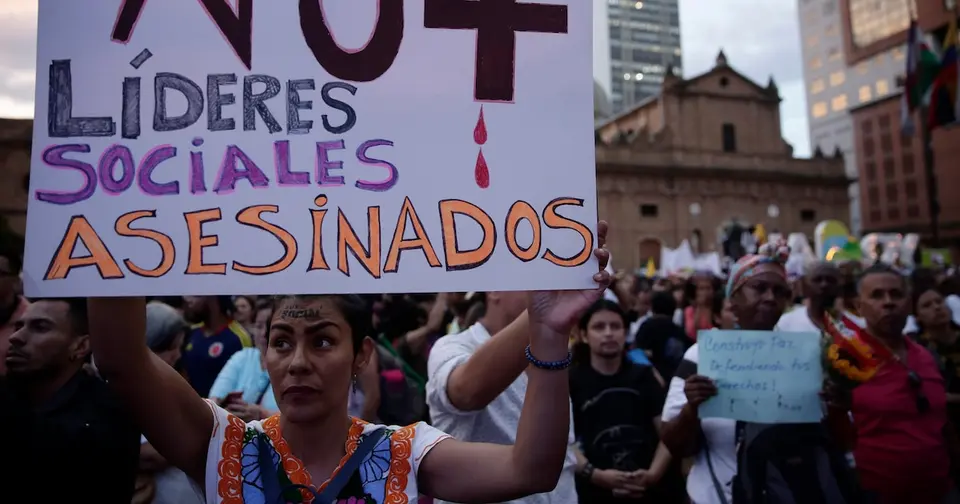
Youth leader from Cauca murdered on road between Caloto and Santander de Quilichao
David Mauricio Aza Chamorro, a human rights defender and young community leader, was murdered on Saturday 14 November on the road connecting Caloto with Santander de Quilichao, in the department of Cauca. This was reported by infobae.com, citing the Institute for Studies on Development and Peace (Indepaz).
With this crime, the number of social leaders murdered in Colombia during 2026 rises to 135, according to the organisation's count.
Indepaz described Aza as a prominent figure in youth work in northern Cauca. "He was a young community leader, recognised for his work on social projects. At one point he served as co-representative and was founder and member of the organisation 'El Norte Resiste', in the department of Cauca," the institute stated on its social media.
Circumstances under investigation; organisation points to Public Force
The exact circumstances of the homicide remain under investigation. Nevertheless, the organisation to which Aza belonged issued a statement in which it maintains that his death occurred during a Public Force operation and held its members responsible for what happened.
Indepaz included this version in its statement without validating it as an established fact: "The circumstances of his death are a matter of investigation. However, through a statement, the organisation El Norte Resiste reported that David apparently died during a public force operation and held its members responsible for what occurred."
Cauca leads violence figures against leaders
The crime occurs in a context of sustained alerts over the security situation in Cauca. The Office of the Ombudsman has warned about the deterioration of conditions in different territories of the department, where armed groups are disputing territorial control and illegal revenues linked to drug trafficking and marijuana sales.
The affected populations include indigenous, Afro-descendant, peasant and urban communities. Documented risks include selective killings, threats, forced displacement, confinement, recruitment of minors and the use of drones and explosives in inhabited areas.
Balance of the first 100 days of De la Espriella's Government
Aza's case is part of a broader report that Indepaz presented on the first hundred days of the Government of Abelardo de la Espriella, covering the period between 7 August and 15 November 2026. The organisation's Observatory of Human Rights and Conflicts recorded 45 murders of social leaders and human rights defenders in that timeframe.
Of the 45 victims, 36 were men and nine were women. The figure amounts to one homicide every 2.2 days. In 44 of the 45 cases, the alleged perpetrator had not been identified at the time the report was drawn up.
Cauca headed the departmental list with eleven murders, followed by Antioquia with eight and Putumayo with four, which places the south-west of the country among the zones most affected for those engaged in social leadership activities.
The same report documented eight murders of peace agreement signatories—all men—in the same period, in addition to 26 massacres which resulted in 87 victims, including five minors. During August and September, the organisation recorded 6,667 people displaced by acts of violence.
Indepaz clarified that the figures should be read bearing in mind territorial dynamics and conflicts prior to the current administration. The NGO warned that the crimes cannot be automatically attributed to decisions by De la Espriella's Government, as they also respond to disputes and conditions of structural violence that preceded it.
Source: Google News CO — Crime