Public Prosecutor's Office maintains investigation against Uribe for massacres in Antioquia
The Constitutional Court rejected transferring the case regarding alleged links between Álvaro Uribe and paramilitary groups to the Chamber of Representatives' Accusations Commission. The investigation into the Aro and La Granja massacres continues with the Public Prosecutor's Office.
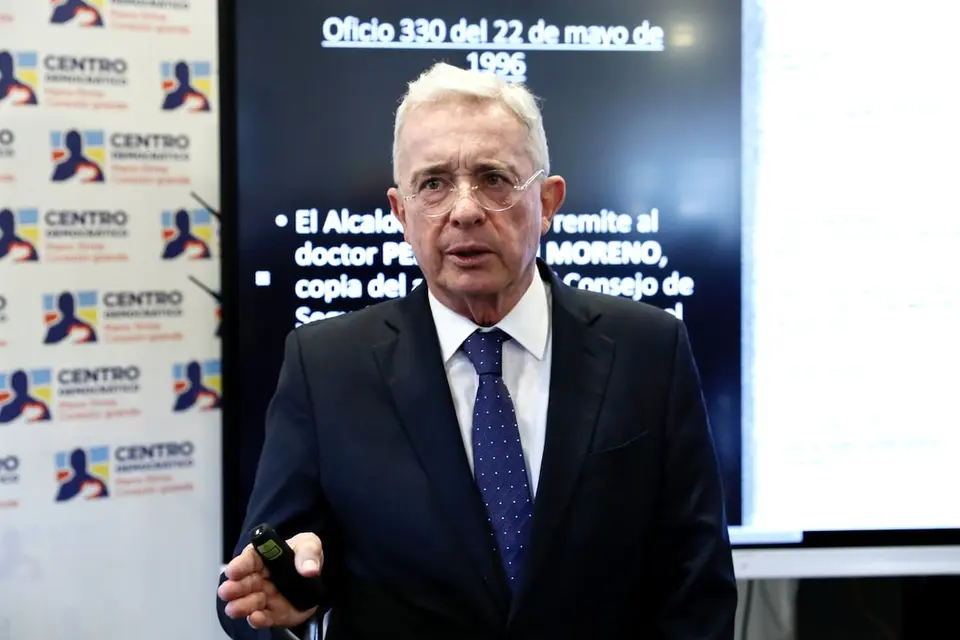
Constitutional Court maintains Public Prosecutor's Office authority in Uribe case
The Full Chamber of the Constitutional Court decided on Monday to maintain the criminal investigation against former president Álvaro Uribe Vélez under the authority of the Public Prosecutor's Office. By a vote of 7 to 2, the court abstained from determining whether the proceedings should be transferred to the Accusations Commission of the Chamber of Representatives, as requested by the former president's defence.
According to elpais.com, the case involves alleged links between Uribe and paramilitary groups in the nineteen-nineties, when he was governor of Antioquia. He faces charges of aggravated homicide of a protected person and aggravated criminal conspiracy. The facts include the massacres of La Granja (11 June 1996) and El Aro (22 October 1997), both perpetrated by illegal armed structures in municipalities in northern Antioquia when Uribe held the position of highest departmental authority between 1995 and 1997.
The Court considered that the request presented by the Accusations Commission contained "errors in its formulation" and lacked "the regulatory requirements and objective" necessary. Therefore, the case file remains with the Public Prosecutor's Office, where proceedings continue to be processed after several months.
Criminal lawyer Jaime Granados, Uribe's principal defence attorney, had requested months earlier that the congressmen request the case. His argument was based on the fact that the paramilitary bloc involved in the criminal acts continued operating while Uribe was president of the Republic. Granados argued that the events formed part of "a macro fact of criminal conspiracy" that extended beyond Uribe's gubernatorial period in Antioquia.
Senator Iván Cepeda, leader of the opposition in Congress and one of Uribe's principal political opponents, explicitly requested the Court to maintain the process with the Public Prosecutor's Office. Cepeda argued that the charges correspond to facts committed between 1996 and 1998, during Uribe's tenure as governor, not as president. He noted that the Accusations Commission has authority over crimes committed by former presidents during their presidency.
The defence's request generated surprise when it was supported by congressmen from the Histórico Pact, who voted in favour despite Cepeda's opposition. This unexpected alliance between Petrista and Uribista legislators, who weeks before had united to elect the Senate president against the Government's candidate, sparked speculation about possible agreements between former presidents of opposing ideologies.
The vote generated indignation among left-wing activists. The Sunday before the Court's decision, the Histórico Pact's parliamentary bloc retracted and published a statement requesting the court to maintain the case file with the Public Prosecutor's Office.
The murder of human rights defender Jesús María Valle on 27 February 1998 also forms part of the investigation. Before his death, Valle publicly reported an alleged omission by then-governor Uribe Vélez in the El Aro and La Granja massacres.
In June last year, the Public Prosecutor's Office summoned the former president to make a statement. This process will continue in the coming weeks. The Constitutional Court's decision comes days after the Supreme Court of Justice definitively sentenced Santiago Uribe, brother of the former president, to 28 years in prison for murder and paramilitarism in the case known as "Los 12 apóstoles".
Source: Google News ES — Crime (es)