US demands release of Anna Bensi and her mother following conviction in Havana
The US Under Secretary of State characterised the two-year sentence of restricted liberty imposed on the Cuban content creator and her mother as unjust.
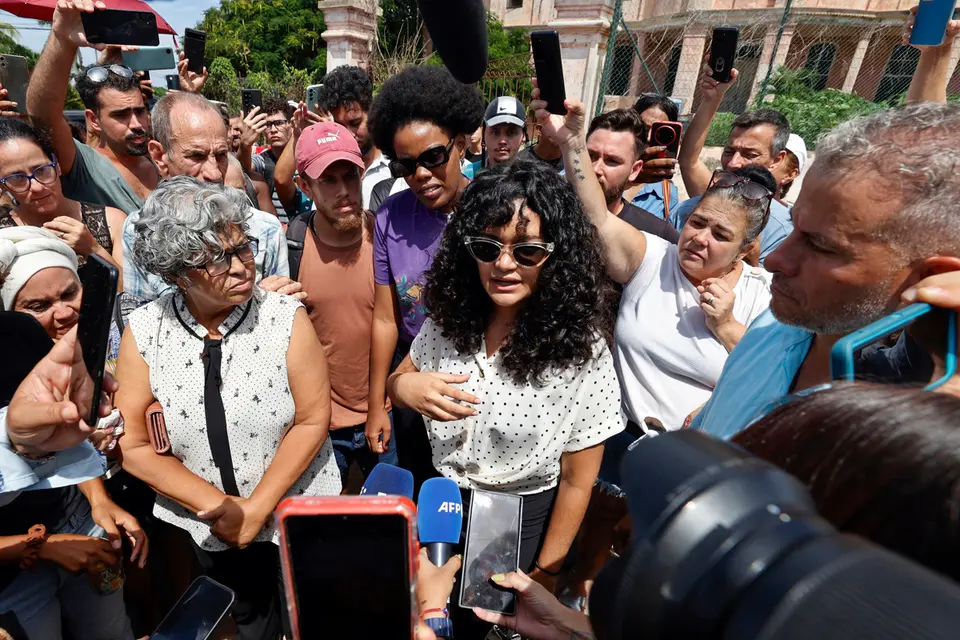
Washington demands release of Anna Bensi following conviction for spreading police officer video
The Government of the United States called on Friday for the release of Cuban content creator Anna Sofía Benítez—known on social media as Anna Bensi—her mother Caridad Silvente, and other detainees during the trial hearing held in Havana. According to oncubanews.com, both were found guilty and sentenced to two years of restricted liberty.
The Under Secretary of State for Western Hemisphere Affairs, Juan Pablo Segura, posted a message on social media platform X in which he stated that "the cowardice of the Cuban regime knows no bounds". The official accused authorities of "censoring anyone who expresses opinions different from their failed revolution" and described the conviction imposed on Bensi and her mother as unjust, arguing they were sanctioned "simply for raising their voices".
The origin of the case: a video in Alamar
The legal case originated last March, when Benítez, 21 years old, recorded and distributed a video featuring a police officer who came to their home in the Havana municipality of Alamar to deliver them a summons. The proceedings developed under an accusation of acts against personal and family privacy, one's own image and voice, the identity of another person and their data.
Upon leaving the courthouse, Bensi stated that the decision was "an injustice". Her lawyer, Roberto Ortega, explained that the restricted liberty sentence does not involve imprisonment in prison, but establishes restrictions: among them, the prohibition of leaving the country and changing residence without judicial authorisation. The written sentence was to be notified afterwards, following which the accused would have a period to file an appeal.
Those detained during the hearing
Under Secretary Segura's message also called for the release of other people arrested that day, among them evangelical pastor Rolando Fidel Pérez Lora, known as El Pregonero or Pregonero de Cristo, who attempted to accompany Bensi and her mother to court. Other activists and people who attempted to show their support for the accused also faced restrictions and detentions during the hearing.
Response from Cuba's Interior Ministry
For its part, Cuba's Interior Ministry distributed a message on social media in which it stated that "recording is not a crime, distributing without consent can be". The institution defended that the process did not centre on the recording of an official, but on the distribution of his image without authorisation.
Washington's statements add to criticism from organisations and activists who have questioned the judicial process and consider the criminal case to constitute a response against the expression of critical opinions towards the Cuban Government.
Source: Google News CU — La Habana