Havana Court Sentences Anna Bensi and Her Mother for Recording Police Officer
The Municipal Popular Court of Havana del Este imposed a two-year restriction of liberty on Anna Bensi and her mother for publishing a video of a police officer on social networks.
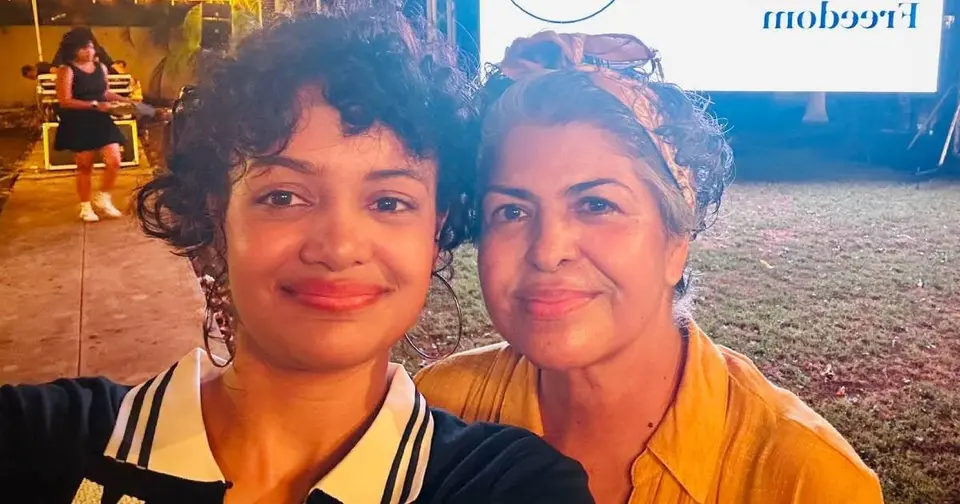
Two years' restriction of liberty for video of police officer in Alamar
The Municipal Popular Court of Havana del Este sentenced Anna Bensi—whose legal name is Ana Sofía Benítez Silvente—and her mother, Caridad Silvente Laffita, to two years' restriction of liberty for recording and disseminating on social networks a video of an officer from the National Revolutionary Police. This was reported by cibercuba.com, which followed the development of the case closely.
According to the official court statement, the facts date back to 10 March 2026, when the officer presented himself at their home in the municipality of Alamar to deliver them a summons. Upon identifying himself and showing his credentials, Caridad Silvente began recording him, capturing his name, surname, identity number, photograph and home address.
Ana Sofía subsequently published that video on social networks, where it generated thousands of comments. A significant portion of those messages contained, according to the court, "offensive, demeaning and threatening words against the officer and his family members", which allegedly caused them psychological harm.
The authorities characterised the facts as constituting the offence of "acts against personal and family intimacy, one's own image and voice, identity of other persons and their data", typified in article 393 of the Cuban Penal Code. The penalty of restriction of liberty—not deprivation of liberty—entails restrictions on movement, prohibition on changing residence without judicial authorisation and obligation to appear before the court when required.
The official statement assures that "during the oral trial all guarantees established in criminal procedural legislation were complied with" and that both sides were represented by lawyers. However, access to the courtroom was extremely restricted: reports indicate that barely one witness was authorised to enter.
Before entering the courthouse, 21-year-old Anna Bensi arrived to applause from supporters. "It is not fair," she declared, and added that "none of us are criminals". She stated that "we do not agree with the political system of our country" and called for "Cuba to be free".
The proceedings were presided over by judge Zamira Marrero Morgado, noted by activists for her participation in cases related to the trials of 11 July 2021. The case had initially been filed away, but was reopened in July 2026 following a complaint filed by the officer. Both defendants had remained under house arrest and with a ban on leaving the country since 25 March 2026.
The organisation Cubalex defended the right to record public officials performing their functions and argued that article 393 should not be applied to state agents, warning that it is being used to criminalise citizen oversight.
The case generated international repercussions. Cuban-American congressmembers Mario Díaz-Balart, María Elvira Salazar and Carlos A. Giménez expressed their support for the defendants and demanded their unconditional release. The United States Embassy in Havana issued a statement on the same day of the trial with the message: "Thinking differently is not a crime".
Against the sentence, the parties have the right to appeal before the corresponding Chamber of the Provincial Popular Court of Havana, once they receive written notification.
Source: Google News CU — Crime