Police investigate destruction of Martí bust in Valle Grande, Havana
A bust of José Martí was decapitated in Valle Grande, La Lisa, during a power outage lasting more than 20 hours. Police are collecting fingerprints and questioning witnesses.
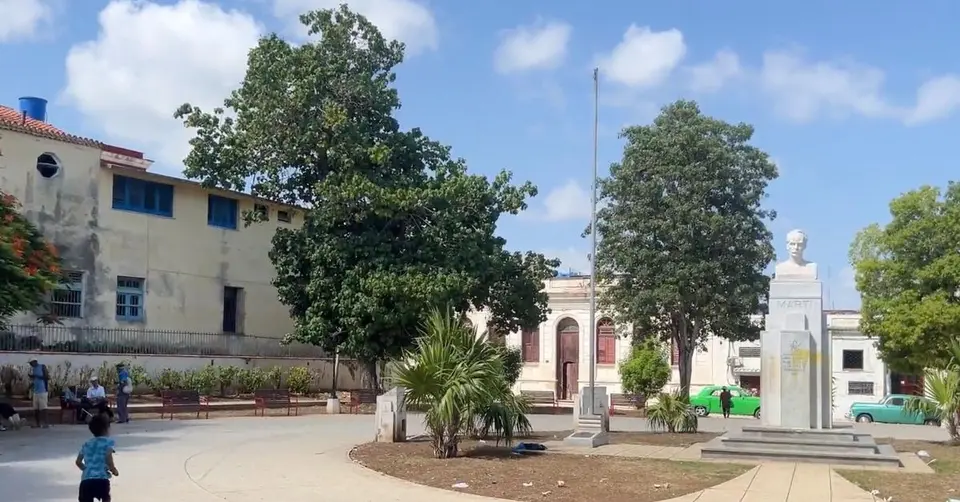
Martí bust vandalised in Havana during 20-hour power outage
A bust of José Martí located in the community park of Valle Grande, in the Havanan municipality of La Lisa, was found decapitated on Sunday morning after being vandalised during the early-morning power outage, which had already accumulated more than 20 hours of electrical cuts. According to residents of the area who spoke to 14ymedio.com, the monument was left "in pieces".
For the police, the act has political connotations given that it involves a monument to the "National Hero". The Cuban Penal Code contemplates specific offences such as "defamation of heroes and martyrs", which makes this type of vandalism a matter of special sensitivity for the authorities.
The same residents point out that the monument had already been attacked and partially damaged on previous nights during power outages, allegedly as a form of protest. The community of Valle Grande, like other areas of the La Lisa municipality and the rest of the capital, has witnessed pot-banging protests in recent months, in the context of what is considered the worst crisis Cuba has faced since 1959.
Fingerprints and witness interrogations
The police opened an investigation to identify those responsible. Officers collected fingerprints at the site and began questioning potential witnesses and suspects, according to neighbourhood sources. The investigation has generated fear among residents, who prefer not to provide further details for fear of retaliation.
Valle Grande was not the only monument affected that weekend in the capital. In the Martí Park in Guanabacoa, another bust dedicated to the same national figure was found smeared with yellow paint, according to documentation by 14ymedio.com at the scene. That bust was erected in the first half of the twentieth century under the auspices of the Masonic Lodge Sons of Light, in homage to Martí—who was also a Freemason—which sparked particular outrage among members of that community.
"This is not just an action against the Government but against history: that of Cuba, Guanabacoa and Freemasonry," wrote a resident of the municipality on social media.
Las Tunas: a bust of Maceo was also toppled
Another similar incident occurred in August in Las Tunas, where a marble bust of Antonio Maceo was toppled from its pedestal during the early morning of 9 August, with visible damage to the face. The provincial cultural authorities condemned the act. Critics of the Government interpreted it as a further expression of the deterioration of respect for historical symbols amid the crisis.
Acts against monuments and symbols of official history have been historically interpreted by Cuban authorities as expressions of "counterrevolution". From the early years following 1959, State Security and official media have presented this type of action as forms of political confrontation.
Precedent in 2020: sentences of up to 15 years' imprisonment
One of the best-known cases in recent years took place in January 2020, when several busts of José Martí in Havana were covered in pig's blood. The actions were claimed on social media by the group Clandestinos, who presented them as a protest against the Government of Miguel Díaz-Canel. State press described the perpetrators as "counterrevolutionaries", "vile" and "unpatriotic".
Police subsequently arrested several people and presented the case as an organised operation to discredit the Government. In December 2020, the Provincial Popular Court of Havana handed down a sentence against three accused. Panter Rodríguez Baró received a sentence of 15 years' imprisonment for "defamation of institutions and organisations and of heroes and martyrs" and "damage to cultural heritage property". Yoel Prieto Tamayo was sentenced to nine years for the same offences, and Jorge Ernesto Pérez García to one year's imprisonment for defamation.
These precedents place the recent facts in Valle Grande among high-risk legal acts for their perpetrators. The growing discontent of the population with the current situation appears to be leading some citizens to prioritise their forms of protest over fear of the criminal consequences that this type of action entails in Cuba.
Source: Google News CU — La Habana