€52 million asset seizures for money laundering – half linked to naturalisation cases
Over €32 million was seized in the first eight months of 2026 in 23 cases. Approximately half of the total amounts seized during 2023–2026 are connected to naturalisation cases.
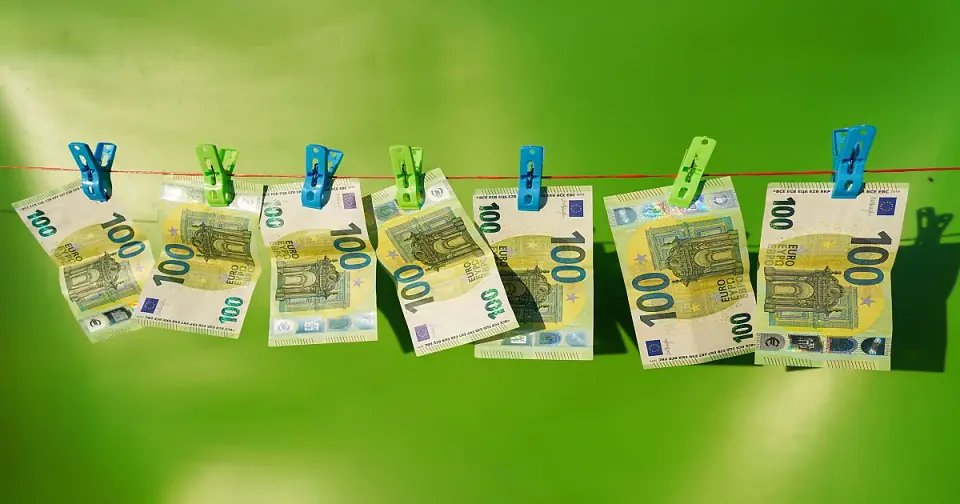
€32 million seizures in eight months – naturalisation cases in focus
Over €32 million in assets were seized as part of 23 cases during the first eight months of 2026, according to figures presented by the police on Thursday before the Parliamentary Oversight Committee. As reported by Politis, approximately half of the total seizure amounts for the period 2023–2026 are related to naturalisation cases.
The Committee examined a special report from the Audit Office on the effectiveness of banking sector supervision with regard to preventing money laundering from illegal activities.
Year-on-year increase in seizures
Auxentios Constantinou, Head of the Economic Crime Prosecution Unit, presented detailed figures by year: in 2023 assets worth approximately €550,000 were seized in nine cases, in 2024 approximately €8.5 million in 26 cases, and in 2025 approximately €10.5 million in 28 cases.
When asked by AKEL MP Christos Christofides about the relationship between seizures and naturalisation cases, Constantinou confirmed that these correspond to approximately half of the total amounts, although they are fewer in number. He made reference, among other things, to the case of Joe Louw, clarifying that asset seizure does not entail definitive confiscation nor completion of the case.
Constantinou attributed the increase in seizures to the training of police officers and the establishment of financial investigations conducted parallel to criminal investigations. He acknowledged that until 2024 there were problems with feedback between the police and MOKAS, which were addressed with new cooperation procedures.
Closure of thousands of bank accounts
The Committee chairman, DIKO MP Chrysanthos Savvides, noted that from 2020 to the present there has been an improvement in addressing money laundering by the Central Bank, MOKAS and the police alike. He noted that the staffing shortages recorded in the report are being addressed gradually, whilst he drew attention to the need to strengthen checks on electronic financial crime, an issue that also concerns Europol.
Savvides referred to the closure of thousands of bank accounts due to violations – specifically at least 42,000 accounts of corporate clients and 126,000 accounts of natural persons during the examined period. The Committee requested information on the fate of funds following their closure. He attributed the improvement to measures taken by the government of President Nicos Christodoulides, estimating that Cyprus will show better results during the MONEYVAL evaluation in 2028.
"Another facet of the golden passports scandal"
MP Christofides described the findings as "another facet of the great scandal with the golden passports", arguing that during the period of naturalisations the required checks on funds entering and being invested in Cyprus were not carried out. He levelled strong criticism at the then leadership of the police and MOKAS, saying that the prosecuting authorities "were more or less whistling indifferently".
He also characterised as a "huge gap" the delay in updating the National Risk Assessment, as the previous one was carried out in 2017. He noted that in the meantime new risks had emerged from cryptocurrencies and sanctions, and raised the issue of clear allocation of responsibility for conducting the assessments.
DISY MP Giorgos Karaiskakis pointed out that despite the existence of adequate legislative framework, the report records weaknesses and delays in supervisory checks – in some cases it took two or more years to complete them. He requested updated information on pending cases, staffing, and checks for 2025 and 2026.
Institutional gaps and legislative initiatives
ELAM MP Evgenios Hamboulas sought clarification on where funds from closed accounts are transferred and whether their movement to other countries is monitored, whilst also raising the question of the criteria on the basis of which banks allow or reject transactions.
ELAM movement leader Odysseas Michaelides referred to two serious institutional gaps identified from examination of the report. The first concerns the lack of clear legislative authority for the Audit Office to inspect the Central Bank on money laundering matters; a legislative initiative is being considered. The second concerns MOKAS: the Attorney General has the power to appoint and dismiss its head, whilst its budget falls under that of the Law Office.
Audit Office findings
Audit Office representative Akis Kikas reported that the audit, which covered the period January 2020 – July 2024, revealed problems of understaffing at the Central Bank, delays in implementing supervisory checks, and scope for improvement in the quality of reports on suspicious transactions submitted to MOKAS. Different legal interpretations, he added, restricted the Office's access to certain Central Bank information; the Office has recommended relevant legislative amendments.
Source: Politis