Lawyer Suková sentenced to seven years for embezzlement of 161 million, court accepted her account of debts
Eighty-year-old Prague lawyer Hana Suková received a seven-year prison sentence for embezzling 161 million crowns from client trust accounts. The court accepted her explanation that the money went towards debt repayments.
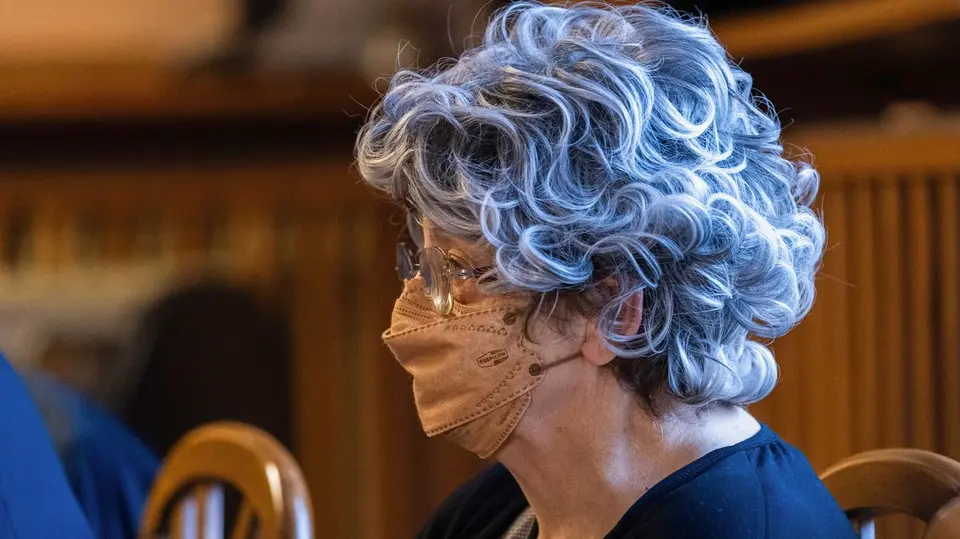
Court accepted Suková's version: money went to debts, not hidden assets
Eighty-year-old lawyer Hana Suková received a seven-year prison sentence in June for embezzling 161 million crowns. Before hearing the verdict, she turned to the victims in the courtroom. "So the victims do not think that I was living it up on their money…," she said.
As seznam zpravy.cz reported in detail after examining the verdict closely, judge Radek Mařík in his written judgement completely accepted the explanation that the embezzled money did not end up in secretly concealed assets, but served to pay long-standing debts. This conclusion stands in direct contradiction to the conviction of many victimised clients, who believe that at least part of the enormous sum may be hidden away somewhere by the lawyer.
"The court believed the defendant JUDr. Hana Suková that not only the criminal activity of fraud, but also that of embezzlement in the cases examined was committed primarily due to the need to remedy historically accumulated debt of the defendant…," wrote judge Mařík in his sixty-two-page verdict completed in October.
Classic scheme ran for at least fifteen years
Suková drained money from trust accounts for at least fifteen years. Clients send money to these accounts for lawyers — the purchase prices of flats or houses — so the funds sit on neutral ground until the property transfer is registered with the cadastre. The lawyer then releases the money to the seller.
However, Suková secretly withdrew the funds in cash and topped up the missing amounts with newly received deposits — she thus operated a classic Ponzi scheme, which collapsed only in 2022. When she could no longer plug the financial holes, everything unravelled and she ended up in custody. Along with her, her daughter, trainee lawyer Pavla Marešová, also stood before the court and received five and a half years in prison. Both sentences are currently not final and the case will go to an appeals court.
Debts from the start, payments to "strange people"
Suková herself testified that she got into financial trouble at the beginning of her legal practice. The office located in a building in Prague 2 cost her approximately 100,000 crowns per month, with total costs estimated at 150,000 to 200,000. "You do not make that money and after three months you are already almost at a million. Then it starts to get really tough," she told Seznam Zprávy two years ago.
The office focused exclusively on drafting contracts for clients of estate agencies and managing trusts — it did not conduct disputes or represent the accused. Income therefore fell short of even covering operating costs.
The creditors from whom Suková borrowed remained anonymous. The lawyer refused to disclose their names to either the police or the court, claiming she feared for her life. "One lawyer colleague received 300,000 crowns per month. Another 250,000," she hinted at how much she had to repay monthly. Judge Mařík stated in his verdict that she had to return to creditors not only the principal but also fees and interest for their willingness to lend her money. The police did identify several creditors, but their claims were only marginal in the context of the 161 million crown loss.
Cryptocurrencies, invention and forged statements
The investigation also revealed several side leads. Suková invested approximately 400,000 crowns in cryptocurrencies through a rather unreliable intermediary. At the same time, she maintained contact with the author of an unspecified invention that was supposed to function as an inexhaustible source of cheap energy. "I have been working for seven years with two scientists on an invention. But I do not want to talk about it," she indicated. In neither case did the police establish that any part of the embezzled money ended up there.
Suková clearly had an overview of the extent of the embezzlement: during a house search, detectives found handwritten notes capturing a rough sum of approximately 150 million crowns — a sort of internal accounting of the depth of her own deficit.
Already in 2017, the Financial Analytical Office (FAÚ) filed a criminal report against Suková. It documented specific transactions by which the lawyer transferred client money to other accounts and withdrew sums in cash. The case was then placed on the desk of officer Jiří Kuttelwascher, who formally initiated an investigation in May 2018 but factually did nothing and shelved the case. The state prosecutor subsequently described this approach as a serious error.
The FAÚ also alerted the Czech Bar Association. Its inspectors, however, found no irregularities during two inspections at Suková's office — according to the bar association, the lawyer presented them with forged bank statements. The current charge confirms this: "JUDr. Hana Suková throughout the period presented to the Czech Bar Association… adjusted statements from bank accounts of lawyer trusts, which did not contain information about transactions that occurred on the selected bank accounts."
Victims lost flats and money
After the scheme collapsed in 2022, Suková could not pay clients the deposited amounts. Many victims lost everything — they did not receive the money, yet the flats they were selling had already passed into the ownership of new owners.
Tension in the courtroom also escalated during the hearing itself. While Suková apologised to the victims, she also made a remark that many perceived as a jeer. "I am eighty, I live alone, no one cooks for me. They will cook for me there and you will pay 17 million crowns for me," she said — meaning that the costs of serving her sentence would be borne by the state.
After her release from custody, Suková made no public appearances. Seznam Zprávy found her in 2024 in new accommodation on one of Prague's housing estates. Apart from a cottage in the Krkonoše Mountains and cars, no significant assets were located.
Source: Google News CZ — Crime (cs)