Bavaria: Police search for serial killer after two sexual murders in the 1970s and 1980s
Investigators suspect DNA matches between two unsolved deaths from 1973 and 1981. They are now reviewing more than 40 additional cases nationwide for possible connections.
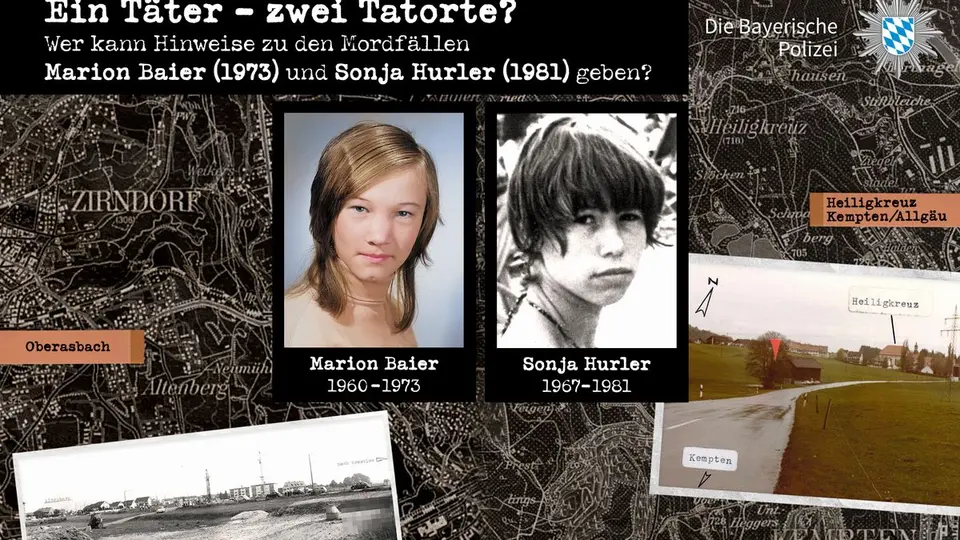
Police review 40 cases for serial killer
According to DER SPIEGEL (Justice & Crime), investigators at the Munich Police Headquarters have identified a DNA link between two unsolved sexual murders. Marion Baier was killed in 1973 in Fürth, Sonja Hurler in 1981 in Kempten – both following village celebrations and both victims of fatal sexual crimes. A DNA analysis suggests the crimes were committed by the same perpetrator.
Bavarian police have set up websites for both cases with calls for witnesses. Specialists from the Operational Case Analysis (OFA) unit at Munich Police Headquarters are now examining connections to other crimes. They are reviewing a total of more than 40 homicides and sexual offences nationwide – from Karlsruhe to Düsseldorf to Schleswig-Holstein.
Dirk Schinke, a senior criminal investigation officer and profiler, said that the probability of further victims was "certainly plausible". However, investigators could only work with cases in which evidence material still existed – that is, items of evidence such as a murder weapon or clothing with possible DNA traces. Alternatively, the cases would need to offer other concrete, promising investigative leads.
The geographical and temporal distance between the known crime scenes was considerable: 250 kilometres separated Kempten (Allgäu) from Fürth (Middle Franconia), and the crimes occurred eight years apart. Schinke suspects that Marion Baier may have known the perpetrator – "Marion would not have gone with an adult man". With Sonja Hurler, such an assumption cannot be made. Both girls were attacked whilst alone at night as random victims.
Schinke describes the crimes as characterised by "chance and spontaneity". Despite the decades that have passed, he sees good prospects that the perpetrator is still alive – the man would have been young at the time. Schinke has already worked at the OFA for 26 years. Generally speaking, it has become more difficult for serial offenders in Europe to remain undetected: most are caught early, often after the second crime.