NSU trial: Contradictions in witness statements on Kilic murder
In the trial over NSU murders, contradictions in witness testimony are hampering investigations. A neighbour and a customer give different statements in court than they did previously.
Discrepancies in the reconstruction of a murder
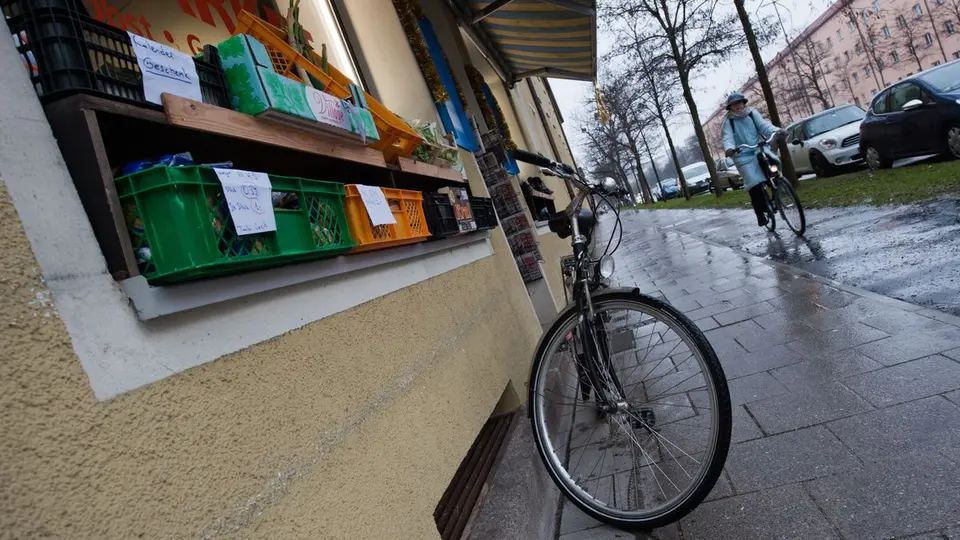
Habil Kilic was shot dead at 10.40 a.m. on 29 August 2001 in his shop at Bad-Schachener-Straße 14 in Munich-Ramersdorf. The 38-year-old is counted among ten murder victims for which the "Nationalsozialistische Untergrund" (NSU) is held responsible. According to forensic pathologist Oliver Peschel, Kilic suffered two shots to the head: one shot through the face and a second shot from behind. Weapons expert Hans Luber from the Bavarian state criminal police found no close-range gunshot residue indicating a contact shot. The investigating officer in charge at the time, Josef Wilfling, nonetheless described the act as an "absolutely professional execution".
As spiegel.de reports, the discrepancies came to light during court proceedings at the Munich Higher Regional Court (OLG).
Nuran K., 46 years old and an employee at the Munich Statistical State Office, entered the shop to buy bread. She found Kilic severely injured lying under the sales counter in a pool of blood. The witness testified in court that two children wanted to enter the shop shortly before her – her own eight-year-old son and his friend. She emphasised that they did not witness the scene. The judge confronted her with her earlier statement, in which she said her son had nightmares every night about "the bloody face and the big eyes" and that she had taken him to a paediatrician. Nuran K. vehemently denied this: "The boys didn't see that, definitely not."
Holger H., a postman, was among the first on the scene. The 48-year-old remembers the chaos: "It was gruesome. He was bleeding from his nose, mouth, ears – I couldn't see any wound." However, his account and the witness's account contradict each other on the question of how many children were present and whether one actually saw the victim. H. described how he ushered the boy out: "The boy was completely pale, I sent him out – I didn't want him to see the man die." This suggests that the child had actually witnessed the scene.
The most serious discrepancies appear in the statements of Anna S., a 67-year-old neighbour of Kilic's. She contacted police hours after the murder because she had "observed something suspicious". She describes two men who leant their bicycles against the building wall and then put on caps and bicycle gloves. The two were, according to her account, between 22 and 26 years old, with short dark hair and wore "black cycling gear" – short black trousers, black t-shirt, black rucksack.
The criminal police initially questioned Anna S. twice. The discrepancies became clear in court. She insists that she never mentioned the bicycles via headset the first time – a detail she had mentioned in her interrogation record at the time. She also maintains that the two unknown individuals did not match Uwe Mundlos and Uwe Böhnhardt, even though the behavioural pattern – arrival by bicycle, killing or robbery, flight – matched the typical modus operandi of the suspected far-right extremists. "Especially the one with the protruding ears – I definitely would have noticed that," says Anna S.
She instead believes the two men were Eastern Europeans, a detail that differs from her initial statement, in which she spoke of "foreign-looking" individuals who "could have been Turks". When confronted with this, she becomes indignant and claims she never said that.
A further contradiction concerns whether Anna S. regularly shopped in Kilic's shop. In court, she insists she had been a customer for many years. However, in her first interrogation after the incident, it was recorded in the protocol that she had "never shopped" there.
Judge Manfred Götzl confronted the witness multiple times with her earlier statements. A second interrogation protocol from December 2005 documents that the men had appeared "Western European" – a statement that Anna S. likewise disputes: "If I think they look Eastern European, I don't say Western European."
The contradictions between the interrogations at the time and the present witness statements raise questions about the reliability of the investigations and the classification of possible suspects. Whether the observed cyclists were actually NSU members Mundlos and Böhnhardt remains open given these contradictions.
Source: Die Zeit Kriminalität