Federal Prosecutors: Ukraine ordered sabotage of Nord Stream pipelines
Germany's Federal Prosecutors' Office has accused Ukrainian authorities of ordering the attack on the Nord Stream pipelines in September 2022. A Ukrainian soldier has been detained and is being held in investigative custody.
Federal Prosecutors: Ukraine ordered sabotage of Nord Stream pipelines
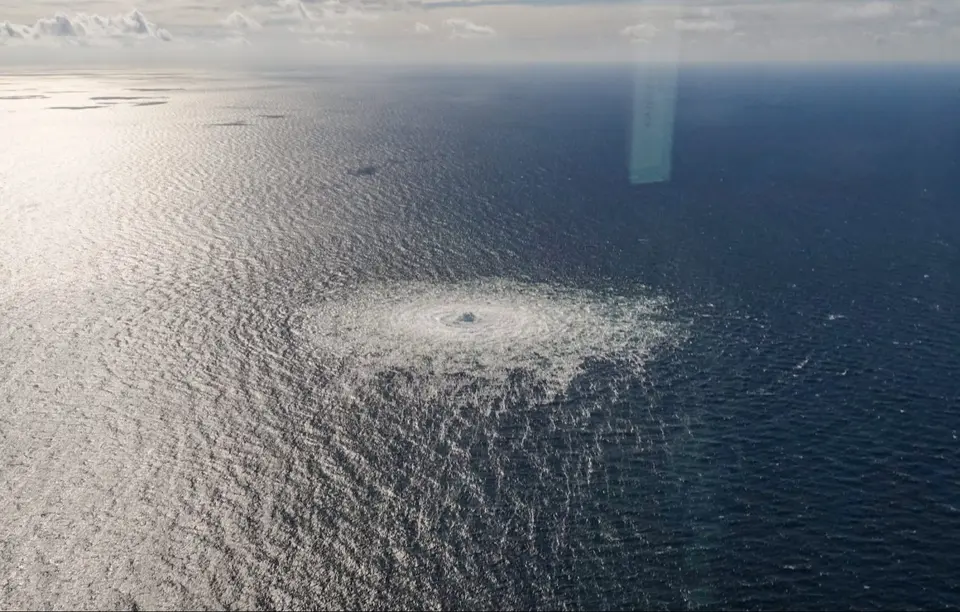
Germany's Federal Prosecutors' Office announced on Thursday that the destruction of the Nord Stream 1 and Nord Stream 2 gas pipelines in September 2022 was allegedly planned and carried out on the orders of Ukrainian authorities. This is reported by the BBC and Politico, according to an article from G4Media.ro.
The investigators' statement follows the filing of charges against a first suspect one day earlier. According to German authorities, a man identified as Serhij Kusnezow is alleged to have worked with other military personnel to develop a plan to destroy the pipelines running beneath the Baltic Sea.
"On the orders of Ukrainian authorities, he conceived together with other soldiers the sabotage operation on the Nord Stream 1 and Nord Stream 2 pipelines," states a message from the Federal Prosecutors' Office.
Kusnezow was arrested in Italy on 21 August 2025 and extradited to Germany a month later. The accused claims to have been a commander in the Ukrainian Army at the time of the explosions and to have been in Ukraine during the attack.
German investigators believe the suspect, together with several accomplices – including divers, a ship captain, and an explosives expert – rented a sailing boat in Germany and sailed to near the Danish island of Bornholm.
From there, members of the group are said to have dived and attached explosive charges to the pipelines. The explosive devices were later detonated and led to the destruction of the energy infrastructure.
In the prosecution's view, the aim of the operation was to permanently prevent gas transport through these pipelines and reduce the revenue that Russia obtained from energy exports.
"The aim was to permanently prevent gas transport and restrict Russia's ability to finance the war through revenues from natural gas sales," the statement clarifies.
At the time of the explosions, Nord Stream 2 had not yet been put into operation. Nord Stream 1 had provided approximately half of Germany's annual natural gas requirement before Russia's invasion of Ukraine.
The Nord Stream project had repeatedly been criticised by European partners and the United States, who had warned of growing European energy dependence on Russia.
After the start of the war in Ukraine, the European Union drastically reduced imports of Russian hydrocarbons, which confronted the continent with a sharp rise in energy prices.
Ukrainian authorities have never admitted involvement in the sabotage of the Nord Stream pipelines. Representatives from Kyiv have, however, repeatedly stated that any action that impairs the Kremlin's ability to finance the war is legitimate.
The investigation by German justice authorities is continuing. The prosecution is attempting to determine the entire structure that is alleged to have been involved in the organisation and implementation of the sabotage operation.
Source: G4Media