Trial of Kuznetsov in Hamburg begins over Nord Stream pipeline sabotage
Ukrainian military officer Serhii Kuznetsov is on trial in Hamburg for alleged involvement in the sabotage of Nord Stream pipelines in 2022. The defence disputes the legality of the prosecution.
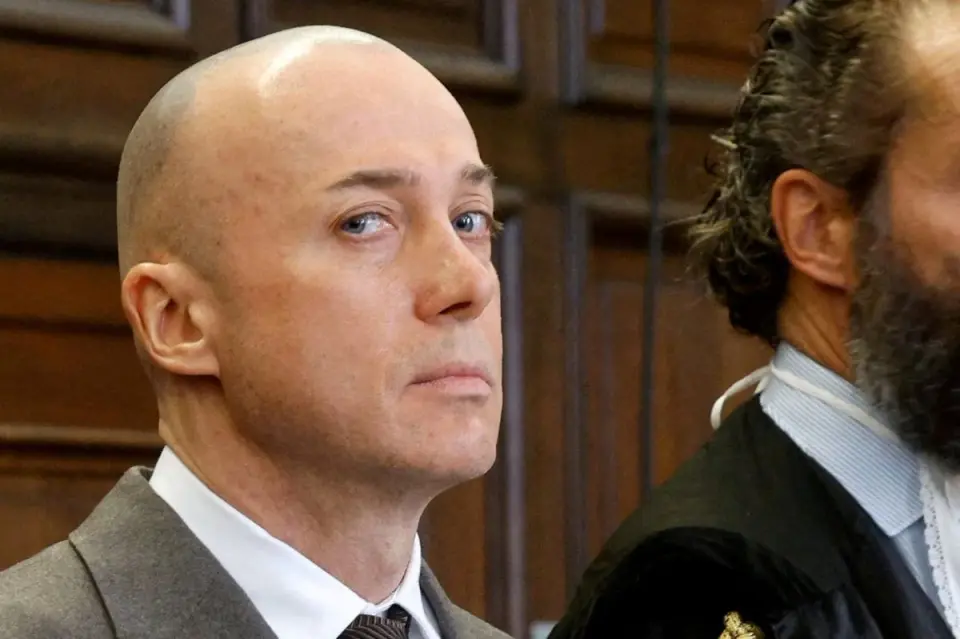
Trial in Hamburg over Nord Stream pipeline sabotage
Ukrainian special forces officer Serhii Kuznetsov appeared before Hamburg's High Regional Court, accused of involvement in the explosion of Nord Stream natural gas pipelines in September 2022. According to To Vima, the trial commenced four years after the blasts, which were characterised as one of the most significant acts of sabotage in post-war European history.
Kuznetsov appeared in the courtroom wearing a grey suit, white shirt and black tie. He saluted on entering and listened silently for approximately ten minutes to the reading of the indictment by the federal prosecutor—with simultaneous translation into Ukrainian.
The charges he faces include complicity in war crimes through attacks on civilian infrastructure, causing explosions, damage to foreign property and disruption of public services. According to prosecutors, the defendant participated in the placement of at least four explosive devices, weighing up to 27 kilograms each, at a depth of approximately 80 metres near the Danish island of Bornholm.
German authorities estimate that seven people in total participated in the operation: Kuznetsov and six collaborators, including four deep-sea divers, an explosives expert and a vessel captain. According to the indictment, the group used a rented sailing vessel and explosive devices with timers. The defendant denies all charges, whilst Ukraine has also denied any involvement in the sabotage.
The defence line
Kuznetsov's lawyers argue that their client is being treated as a "pawn on a chessboard" and dispute whether the trial should have taken place at all. A central argument of the defence concerns whether the Nord Stream pipelines constituted civilian infrastructure or whether the operation had a military character from the outset.
Kuznetsov is expected to invoke his right to silence during the trial. The defence also plans to present sworn statements from two senior military officers, arguing that the defendant is unable to disclose details about his actions due to his military status. His military record is said to confirm that he was serving actively during the period of the explosions. He is also said to have received orders from a person considered the mastermind of the operation and who has already given testimony on his behalf.
Sixteen hearings are scheduled until 17 December, with additional hearing procedures expected in January and February.
From the explosions to prosecution
The explosions of 26 September 2022 caused serious damage to the pipelines that conveyed Russian natural gas from Vyborg to Lübmin in northern Germany. Sections of Nord Stream 1, the main pipeline supplying German natural gas from Russia before supplies were cut off by Moscow in August 2022, were destroyed, whilst Nord Stream 2, which was never operational, was also damaged.
Initially, security observers directed suspicion at Russia. Moscow denied responsibility and accused the United States, which dismissed these claims. In July, however, German prosecutors announced that they believed the operation was ordered by Ukrainian state authorities, with the aim of permanently halting the flow of natural gas and depriving Russia of revenue from its trade. Volodymyr Zelensky has denied any Ukrainian involvement. The German government has avoided commenting publicly on the trial.
Arrest in Italy and second suspect
Kuznetsov was arrested in August 2025 in Italy whilst on family holiday. According to Italian police, he was handed over without resistance. He is said to have been travelling on a forged passport. After the failure of legal appeals against his extradition, he was transferred to Germany in November 2025.
A second suspect, Volodymyr Zhuravlev, an air conditioning technician and amateur diver, was arrested in August in Croatia on the basis of a European arrest warrant. He denies any involvement and is attempting to prevent his extradition, having submitted an asylum application in Croatia.
His case has revealed differing approaches among European courts: in October 2025, a Polish court rejected a request for his extradition to Germany, ruling that the attack on the pipelines was not illegal and that a possible Ukrainian military operation would be "justified, rational and just". Last month, Croatian authorities approved his extradition, without it being clarified when this would take place or whether it would be linked to the Hamburg trial.
Demonstrations outside the court
On Wednesday, demonstrators with Ukrainian flags gathered outside Hamburg's court as a show of support for the defendant. The trial has already sparked public debate in Germany, highlighting the tension between Berlin's support for Kyiv and its obligation to investigate an attack on infrastructure of German interest.
Source: To Vima