Nordea ruling in historic money-laundering case – fine of 6.6 billion kroner at stake
The court will decide today whether Nordea has breached the money-laundering act during the period 2012-2015. The prosecution is seeking a fine of 6.596 billion kroner – possibly the largest ever imposed in Denmark.
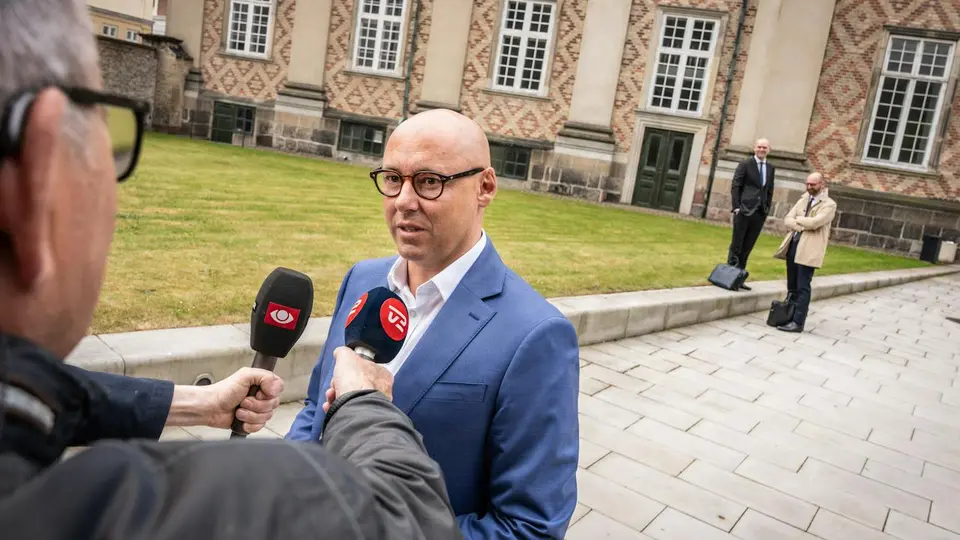
Ruling on Nordea in money-laundering case could become the largest in Danish banking history
A bank employee walked into the back room of a Copenhagen currency exchange one day to deliver fresh banknotes from Nordea. Already in the room stood another man with a sports bag full of cash – estimated at two million kroner. The bank employee immediately had doubts about whether the money was legitimate.
This episode was featured in the TV 2 programme Operation X in 2018, when TV 2 Nyheder revealed that Nordea had for years supplied criminal currency exchanges in Copenhagen with 500-euro notes, which amongst other things were used for laundering drug money. Today the ruling falls in the criminal case which the exposé helped to trigger.
Five counts and transactions worth 26 billion
The National Special Crime Unit has brought five charges against Nordea for breaches committed between 2012 and 2015. The case concerns in total transactions and business worth more than 26 billion kroner.
By far the largest part of the charges concerns 25 so-called eastern clients – largely companies registered in tax havens with Russians as the ultimate owners. These clients sent nearly 25 billion kroner through Nordea's international division at Vesterport via more than 17,000 transactions. According to the prosecution, the bank failed by not monitoring the client relationships, investigating the transactions or reporting suspicious movements to the authorities.
The supply of 500-euro notes to the Copenhagen currency exchanges makes up one of the five counts. The notes are popular in criminal circles because vast sums take up little space and are easy to transport.
Background to the case: Financial Supervisory Authority and whistleblower
The case began with an inspection by the Financial Supervisory Authority in 2015, which the following year led to a police report. The Authority found so many and such serious problems that it was, according to the Financial Supervisory Authority, "obvious" that Nordea Denmark over "a period of years may have been misused for money-laundering or terrorist financing" – information which Berlingske previously reported on the basis of confidential material from the Authority.
The investigation was subsequently expanded, amongst other things on the basis of information from a whistleblower. In July 2024, Nordea was formally charged.
The bank's defence: the rules were unclear at the time
Nordea denies guilt and demands acquittal. The bank's chief legal officer, Anders Holkmann, has stated during the trial according to Ritzau:
– Our systems and processes from more than ten years ago could – particularly viewed with today's eyes – have been even better. But there is a difference between being able to have done something better and having done something punishable.
The bank has argued that the rules at that time were unclear, and that the case should not be judged according to the intensified focus on money-laundering which characterises the present day. The defence has furthermore argued that the prosecution has not proved which specific individuals at the bank knew what and when.
The prosecution: the bank acted intentionally
The prosecution sees matters differently. In the indictment, it appears on four out of five counts that Nordea acted "intentionally" in breach of the money-laundering act's obligations.
Special prosecutor Karen Moestrup Jensen has during the trial highlighted an internal bank document on money-laundering controls, in which it stated: "In fact, customers' payments should be monitored continuously – but of course we cannot do that." This formulation can according to Jensen be "a very good explanation for why we are here today", she has stated according to Ritzau.
Jensen has furthermore stated that Nordea probably maintained the risky clients because it has been "relatively lucrative".
Up to 6.596 billion kroner in fine
The prosecution is seeking a fine of exactly 6.596 billion kroner – an amount which could become the largest fine Danish authorities have ever imposed on a bank.
After more than 60 court hearings and thousands of documents, two legal judges and three lay judges must now decide whether Nordea is criminally liable. The decisive question is not whether the bank could have done more to prevent money-laundering, but whether it has acted punishably by failing to comply with the rules that applied at that time.
Source: TV 2 Nyheder