Organised crime besieges Ecuadorian municipalities on eve of elections
At least 20 local authorities are under criminal investigation and between 50 per cent and 60 per cent of municipalities have links with criminal networks, according to the Interior Minister.
Municipal elections under organised crime control in Ecuador
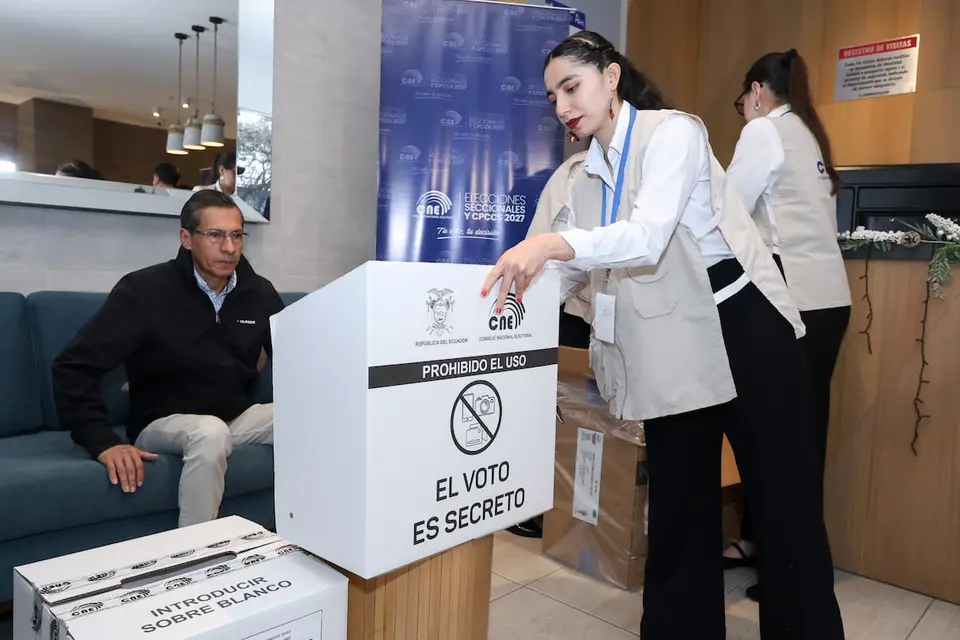
Durán, a coastal city in Ecuador, has been without a mayor in its territory for years. On 15 May 2023, Luis Chonillo survived an attack and has since governed the municipality from abroad, via social media. According to elpais.com, at least 15 members of the municipal structure have been murdered during his administration: councillors, area directors, traffic officers and even relatives of officials. On Sunday 29 November, Durán's residents will go to the polls with a question that goes beyond who will win: whether the next mayor will be able to govern from within the city.
A city without institutional leadership
The absence of the mayor is not merely a political matter. Residents feel it in uncollected rubbish, unpaved streets, lack of water despite paying for the service and abandoned parks. "Here there is no one to complain to, to ask for explanations," says Amelia, a resident. "Here we live only with the help of God," laments Jénesis, another municipal resident.
Three years after the attack, the courts have yet to determine who was behind it or what their motives were. During that same period, the Prosecution and Police have raided municipal offices in investigations pointing to links between town hall officials and the ChoneKillers gang. Legal proceedings have revealed that officials allegedly worked for that structure in obtaining public contracts and accessing warehouses used for storing drugs. Chonillo has denied having links with criminal groups.
Durán, the most extreme case of a national problem
Durán was the most dangerous city in the country until 2025, amid a dispute by the ChoneKillers criminal gang for total territorial control. In 2026, military intervention and changes in criminal dynamics have contributed to a 42 per cent reduction in homicides compared with the previous year, according to Interior Ministry data. Lethal violence has diminished, although residents report they continue to be victims of extortion and many now coexist with gun battles.
Durán is, however, the most extreme case of a phenomenon extending across Ecuador. In 2025, authorities detected that relatives of alias Fito, leader of Los Choneros, were working in Manta's traffic agencies. Interior Minister John Reimberg publicly acknowledged in March 2025 the criminal infiltration of local governments: "Some municipalities are handed over to criminal groups." In September of this year, Reimberg stated that between 50 per cent and 60 per cent of municipalities would have irresponsible management of their traffic agencies, some allegedly linked to criminal networks.
At least 20 authorities under criminal investigation
An investigation by the journalist network Spondylyus Info Lab and Fundamedios has documented that at least 20 authorities, including mayors and prefects, have been under criminal inquiry since 2023. In some cases, proceedings were opened before they took office. The offences range from theft to criminal association.
The cases of officials involved in criminal structures are no longer limited to the occasional recruitment of public servants. Criminal organisations have advanced towards the total infiltration of institutions, according to the same investigation.
Municipalities as a strategic target
Municipalities administer budgets, contracts, services, permits, cadastres, property registers and territorial planning. In many cantons they also concentrate traffic responsibilities. They are not just institutions that collect rubbish or pave streets: they also gather information about people, vehicles, land, economic activities and projects that can move large sums of money.
An investigation by Connectas on the advance of crime in Ecuador documents how organisations seek to infiltrate town halls, traffic agencies and entities related to land administration. That penetration can serve to launder money through public contracts, access sensitive information, facilitate illegal operations or intimidate officials who resist. In some territories, control of a town hall is strategic simply to dominate a street.
Traffic agencies, a privileged target
Traffic agencies manage vehicle registration, inspection, licences and records. Control of those systems allows obtaining forged documents, putting irregular vehicles into circulation and accessing databases of people and property. That information can become an instrument for identifying victims and facilitating criminal activities.
The Connectas investigation further documents the murder of at least 28 municipal traffic agency workers between 2019 and 2026 in five cities across the country.
Territory, mining and corruption
Municipal power can also intersect with economic interests over territory. Local governments have responsibilities for planning, land use and, in certain cases, environmental management. Municipalities accredited as environmental authorities can grant licences for mining projects. In areas where mining or construction represent million-pound businesses, those decisions become a point of pressure, corruption and a target for criminal gangs that have expanded their influence beyond direct violence towards the control of local institutions.
Source: Google News EC — Crime