Femicides in Ecuador surge between 2020 and 2025 with links to organised crime
Ecuador recorded 1,721 femicides in six years according to civil society, compared with 485 by the State. Organised crime and firearms transformed the profile of these crimes.
Ecuador: historical gap between official and actual femicide figures
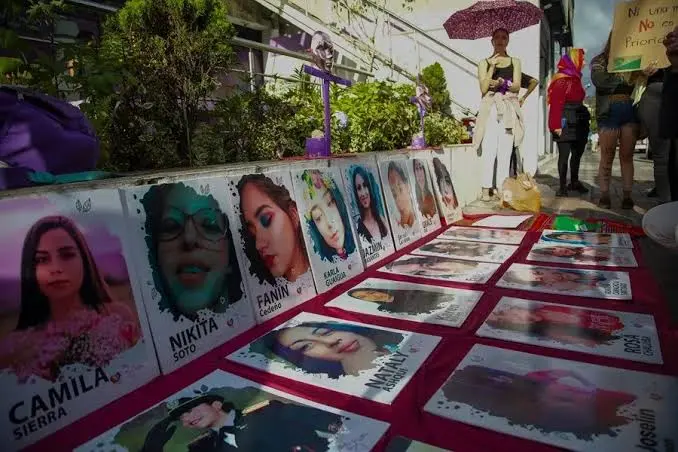
Ecuador experienced an unprecedented increase in femicides between 2020 and 2025, in a period during which these crimes also changed: perpetrators linked to organised crime became involved, the use of firearms skyrocketed and murders ceased to be concentrated in the domestic sphere. This is documented in a report presented this Wednesday, according to noticiassin.com.
The document, titled Femi(ni)cidal violences in Ecuador: continuum and reorganisation, was produced with the participation of the Observatory of Gender-based and Sexual Violences at the Latin American Faculty of Social Sciences (Flacso). In addition to documenting the expansion of the phenomenon, the report focuses on how the State "registers this extreme form of violence increasingly less".
A statistical gap that grows each year
Ailynn Torres, coordinator of the Flacso Observatory and one of the authors of the report, explained to EFE that between 2020 and 2025 there was "a collapse of the state femicide registration system that is essential to discuss and correct, because without records there are neither reparation nor prevention policies".
According to Torres, this collapse is due to the fact that the State only classifies crimes committed by partners or family members as femicides, without recognising other gender-based killings linked to organised crime.
The difference between the two records is stark. In 2025, the year with the most murders of women, the Public Prosecutor's Office classified only 62 cases as femicides, whilst the Feminist Alliance for Mapping Femi(ni)cides identified 434. Over the entire period, civil society organisations counted 1,721 femicides compared with 485 recognised by the State. The victims documented by the Alliance rose from 130 in 2020 to 434 in 2025.
Organised crime as a new perpetrator
The gap in statistics began to widen from 2021, when the Alliance incorporated femicides linked to criminal structures into its record. These include contract killings, homicides of relatives of gang members as acts of revenge, and murders related to human trafficking or territorial control. In all these cases, the report states, the bodies of women are used "as spoils of war".
The type of weapon used also reflects this change. In 2020, 38 per cent of femicides were committed with bladed weapons and 25 per cent with bare hands; only 9 per cent involved firearms. In 2025, that proportion reversed completely: 75 per cent of cases were perpetrated with firearms.
Furthermore, the majority of murders took place in public spaces, contradicting the image of femicide as a crime that occurs exclusively in homes. The report also documents an accelerating increase in homicides of adolescents aged between 12 and 17 years, in parallel with the growth of recruitment of minors by criminal groups.
Concealment and institutional lack of protection
Torres warned that concealing these gender-based killings swells the overall violence figures in the country, which, in her view, serves to justify the hardline policy applied by President Daniel Noboa's government against criminal groups, but ultimately "leaves women, girls, adolescents and trans women unprotected".
That lack of protection, according to the researcher, is already translating into a "loss of budgets and an institutional structure that is increasingly unstructured and inefficient", referring among other aspects to the elimination in 2025 of the Ministry for Women.
Torres considers it necessary to reform or broaden the interpretation of the crime of femicide to adapt it to the transformation of violence, and hopes that the report will prompt state institutions to address this problem with urgency.
Source: Google News EC — Crime