Ignored warnings: murders of Amal, Adam and Hiba in Cuenca
A man stabbed his wife and two children to death in Cuenca following years of abuse and explicit threats. Protection services failed to identify the pattern of danger.
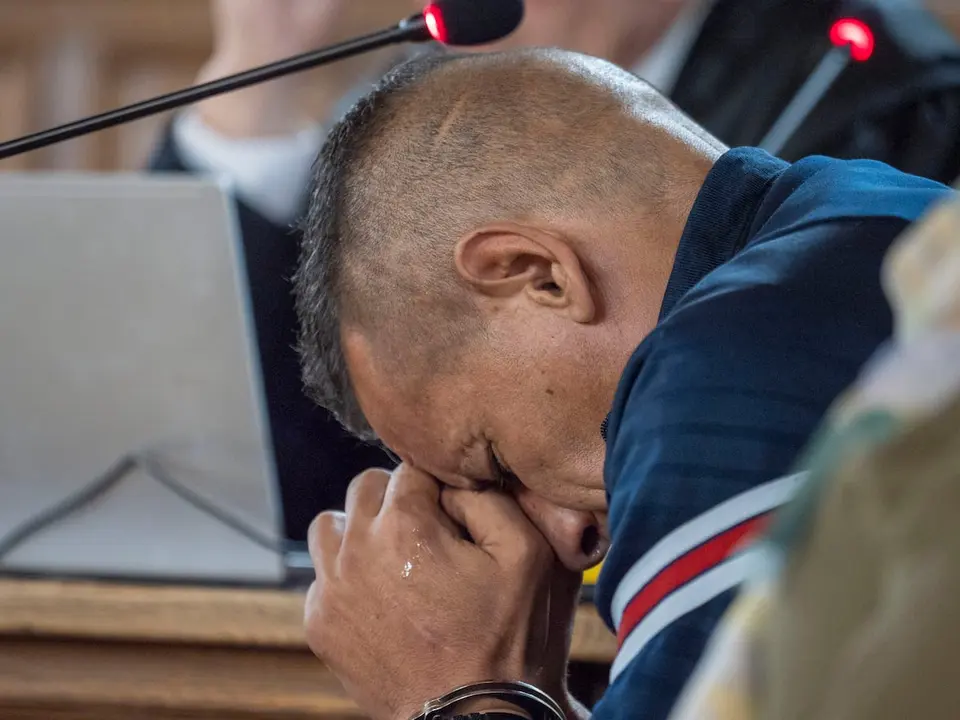
Crime in Las Pedroñeras following years of documented violence
On 28 June 2024, Mehdi B. waited for Amal S.'s flatmate to leave the family home in Las Pedroñeras (Cuenca) before entering and delivered 18 stab wounds to his 31-year-old wife. He then stabbed his two children, Adam, aged 10, and Hiba, aged 3. He placed the bodies in a chest and abandoned them in a back garden. According to elpais.com, the forensic doctor Antonio Hidalgo, who attended the crime scene, described what he found as "appalling", "horrifying" and "terrifying" after 27 years practising forensic medicine.
Mehdi was arrested the following night whilst asleep in a shed in a municipal park, where he was carrying out community work by court order. He was carrying the knife used in the massacre. He meticulously cleaned the dwelling, leaving barely any traces of blood, something that was not detected by the flatmate until hours later, when she became alarmed by the family's disappearance.
Threats prior to the murder
In the months preceding the crime, Mehdi sent Amal a barrage of voice messages. On 11 June he wrote: "Darling, please, I need you. Forgive me, I beg you. I am drinking alcohol because of you". A few hours later: "Think about it. I'm not alone in this, tell your lawyer that we have to find a solution for me". He then escalated: "You are responsible for everything, be careful, my children will pay for it".
Days later he made explicit threats: "From now on, be on your guard. I am carrying knives with me". "When your brother said I should leave the house, I could have plunged the knife into his heart in front of your eyes". On 20 June, Amal's sister wrote to her warning that Mehdi "says he is going to put you in bags". Eight days later he committed the murders.
History of systemic abuse
Mehdi's first arrest for mistreatment of Amal occurred in 2017. Five further arrests followed in 2019, 2021, 2022 and two in 2023. On the last occasion, a neighbour witnessed him dragging the woman through the street. The courts imposed a restraining order and sentenced him to community service. He also had a record for fighting and drink-driving, with a date set for him to enter prison for the latter offence—something for which Mehdi also blamed Amal.
Failure of protection systems
Amal's family lawyer, Nessrin El Hachlaf, points out that the protection system "completely failed her". Amal came from a poor rural area in the Moroccan interior, was a migrant with limited language skills, lived in a rural setting without a support network and worked in precarious conditions. "She came from a humble family, could only rely on other women in the same precarious situation, barely spoke the language and was in a rural environment where she had no support network," El Hachlaf summarises.
The language barrier prevented her from accessing health or social services. In the courts, her interpreter was a man from the town who knew the aggressor. On one occasion, the protection services assessed that "there was no perceived risk" in her case, despite the history of complaints. "Nobody was able to see a pattern, neither when she went to file a complaint nor when she appeared in court," the lawyer criticises. She describes the case as "a chill of abandonment of a victim". The family is requesting financial redress from the state.
Moments of greatest risk went unnoticed
The crime occurred during a period that experts identify as one of maximum danger. Amal had obtained a protection order for the first time, a friend was living with her and she had refused to forgive her husband again. She declined to celebrate the Feast of the Lamb, a central celebration in the Muslim world, with Mehdi. "Please, let me celebrate the feast with you, I promise you nothing bad will happen," he wrote to her, employing a tactic typical of abusers.
Additionally, Mehdi's entry into prison for the offence of driving under the influence of alcohol was imminent. According to court records, he had promised not to leave his family alive before entering prison.
Court testimony and denial of psychiatric disorder
This week, two years after the triple homicide, a jury at the Provincial Court of Cuenca has delivered its sentence after hearing the evidence. Mehdi admitted the facts before the judge, but his lawyer argued for a psychiatric disorder at the time of the crime. The forensic doctors categorically contradicted this in their testimony. "This man has no alteration whatsoever, he only had a physical reaction to a medication he was given to calm him down," the doctor stated. In the first session of the oral trial, the defendant only claimed he "was not well" at the time of the crime, without further specification.
Source: Google News ES — Crime (es)