Viertola school shooter aged 12: new book reveals chilling behaviour at arrest
A new book reveals how the Vantaa school shooter was indifferent to his actions. According to the investigation leader, the boy only understood the consequences during the investigation.
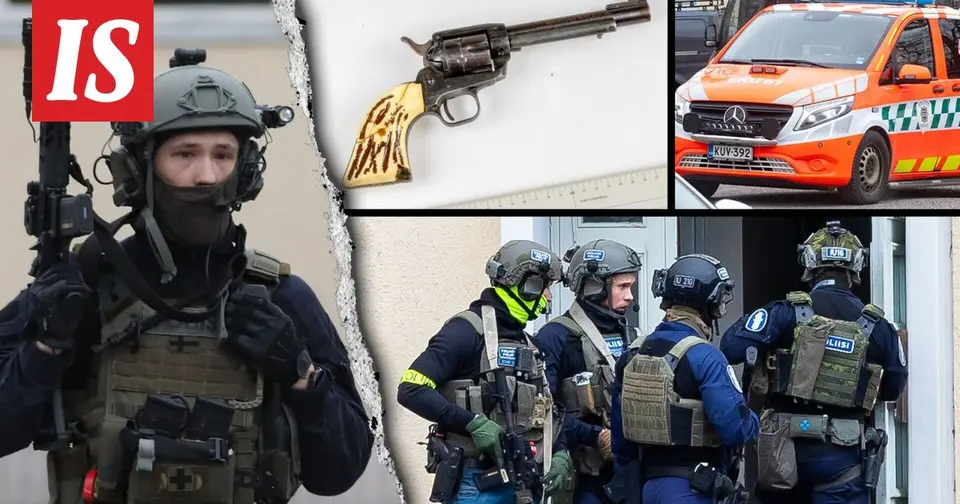
Indifference and later remorse – what is now known about the Viertola case
According to Ilta-Sanomat, a new work entitled Children Who Killed (Docendo 2026), written by journalist Riika Nykänen, brings to light previously unpublished information about the Viertola school shooting in Vantaa. In the book, the investigation leader Marko Särkkä describes in detail the behaviour of the 12-year-old boy both at the moment of arrest and in the interrogations that followed.
A sixth-grader shot and killed a 12-year-old boy and wounded two girls of the same age at Viertola school on Tuesday, 2 April 2024. The boy had taken his grandfather's small-calibre revolver without permission.
After arrest: no signs of shock
Police arrested the boy shortly after the shooting. He had managed to walk several kilometres from the school towards North Helsinki with the weapon in his hand.
– According to the patrol's observation, he did not appear shocked at all and he exuded indifference towards his actions, Särkkä describes in the book.
During interrogations, the boy showed no concern for the victims' wellbeing and did not ask about their condition. When the boy was told that he was suspected of murder and two attempted murders, he commented:
– Is it just one murder and two attempts?
In later interrogations, the boy's attitude changed. Investigation leader Särkkä says in the book that he believes the boy only understood the seriousness of his actions and their consequences as the investigation progressed. The preliminary investigation into the Viertola school shooting was completed in October 2024.
School bullying claimed as cause – investigation did not confirm
The boy had stated school bullying as the reason for his actions. According to Särkkä, the boy had been bullied at his previous school, but he had transferred to Viertola in January 2024, approximately three months before the shooting. The investigation did not reveal that the boy had been bullied at Viertola school.
The descriptions given by teachers interviewed at the school paint a different picture. The boy appeared rather withdrawn than bullied: schoolmates tried to include him, but the boy did not want to spend time with others. One teacher considered him quiet and lacking in social skills.
In the weeks before the incident, the same teacher had observed a situation that stuck with him:
– But then I saw that he had a stick with which he was physically poking another pupil and pretending to shoot. I stopped this and took the stick away.
According to police, the boy's parents were completely surprised by the act. The boy's parent had said they believed the boy was content in his own company and did not need peer company.
Expert: experience of injustice is enough
Criminology and forensic psychology lecturer Helinä Häkkänen says in the book that school shooters' violent fantasies often stem from an experience of injustice. According to her, school shooters typically have a fragile self-image.
– And not necessarily even the experience of bullying, but simply that the person did not feel they belonged to the group, Häkkänen states.
Investigation leader Särkkä assessed that in the Viertola case the motive was a sum of many factors: the experience of being an outsider, watching violent videos online and the opportunity that the situation presented. However, the final triggering factor remained unexplained.
– The final motive remained unclear. If the suspect does not want to tell us about it, they do not have to. The motive may often remain unanswered in cases like this, Särkkä says in the book.
Source: Ilta-Sanomat