Disappearance of Marion Wagon in Agen: new testimony revives cold case investigation
A 43-year-old woman claims she was followed by a stranger on the day Marion Wagon disappeared. The Nanterre cold case unit considers her account "deemed credible".
A belated testimony, thirty years after Marion Wagon's disappearance
The national division for serial or unsolved crimes (PNCSE), better known as the "cold case" unit, has launched an appeal for witnesses to find a man who would now be around sixty years old. According to ladepeche.fr, this appeal follows an interview conducted in October 2026 by gendarmes from the investigation section (SR) of Bordeaux, on commission rogatoire from investigating magistrate Sabine Khéris.
A 43-year-old woman recounted to investigators an event that occurred on 14 November 1996 — the very day Marion Wagon disappeared in Agen. At the time thirteen years old, she was attending Paul-Dangla secondary school, on the street of the same name in the town. During the lunch break, she claims she was followed by a stranger as she left the school. "A look froze my blood," she told the gendarmes.
Portrait of a stranger
The woman describes the man with precision: a man in his thirties at the time of the events, average height, rather slim build, brown eyes, dark complexion, "lots of" brown hair. He was wearing a twisted blue jumper and had a well-groomed appearance.
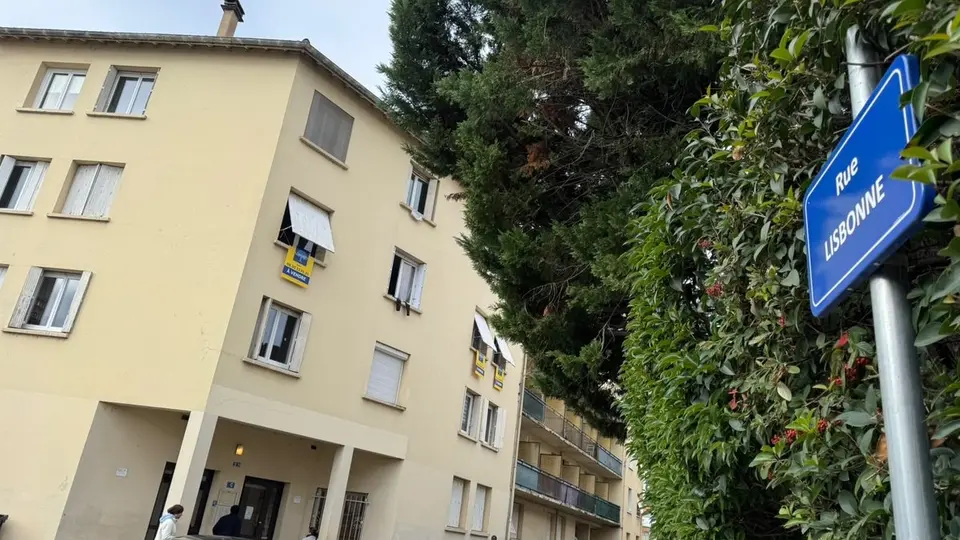
Describing herself as "terrified", she claims she took refuge at 2 bis, rue Lisbonne — approximately one hundred metres from her school — in a friend's flat. She was unable to specify whether the individual had turned back or had followed her into the building.
The PNCSE qualifies this account as "deemed credible". The appeal for witnesses is now aimed at identifying this man and, possibly, confirming his presence through other testimony.
Why this testimony is being taken seriously
The initiative raises legitimate questions: how can such a precise memory resurface thirty years after the events? Marie-Céline Lawrysz, deputy public prosecutor of the cold case unit, provides a first answer relating to social context.
"You have to put yourself back in the context: at the time, people didn't necessarily talk about these things. They were trivialised a lot," she explains. The woman apparently did mention the incident to her family at the time, but those around her had paid it no attention. "They told her she had probably exaggerated."
According to the magistrate, this type of enforced silence often explains late revelations: "When certain people reach a certain age, they decide to speak out. We have proof of that in many proceedings."
A troubling coincidence of time and place
The precise circumstances of the testimony constitute the second element that holds the attention of the justice system. Marion Wagon disappeared on 14 November 1996, around 12.15 p.m. The scene described by the former secondary school pupil would have occurred that same day, at the same time, and on the exact route the girl took to return home, on rue Paul-Dangla.
"Until now, we did not have testimony of such proximity," emphasises Marie-Céline Lawrysz.
To this coincidence is added a further connection. During the initial investigations in 1996, tracker dogs had "alerted" in front of a technical storage area at 2 bis, rue Lisbonne — the very address where the young girl claims she took refuge. This coincidence provides no certainty, but the justice system does not intend to overlook it. "We must verify the slightest lead," the prosecutor states.
The objective of the appeal for witnesses
The PNCSE states it clearly: the aim is to put a name to the description of this man. "The appeal for witnesses can also allow us to corroborate his presence through possible other witnesses. At this stage, he is a suspect," the cold case unit specifies.
Marion Wagon disappeared on 14 November 1996 in Agen, at the age of nine years. Thirty years on, the investigation continues under the impetus of the Nanterre cold case unit, which has already pursued several leads in recent years, notably through genetic analysis.
Source: Google News LU FR