Disappearance of Marion Wagon in Agen: suspect identified 30 years on, appeal for witnesses launched
The cold case unit in Nanterre has reopened the investigation into Marion Wagon's disappearance in 1996 in Agen, following the identification of her DNA and a new suspect.
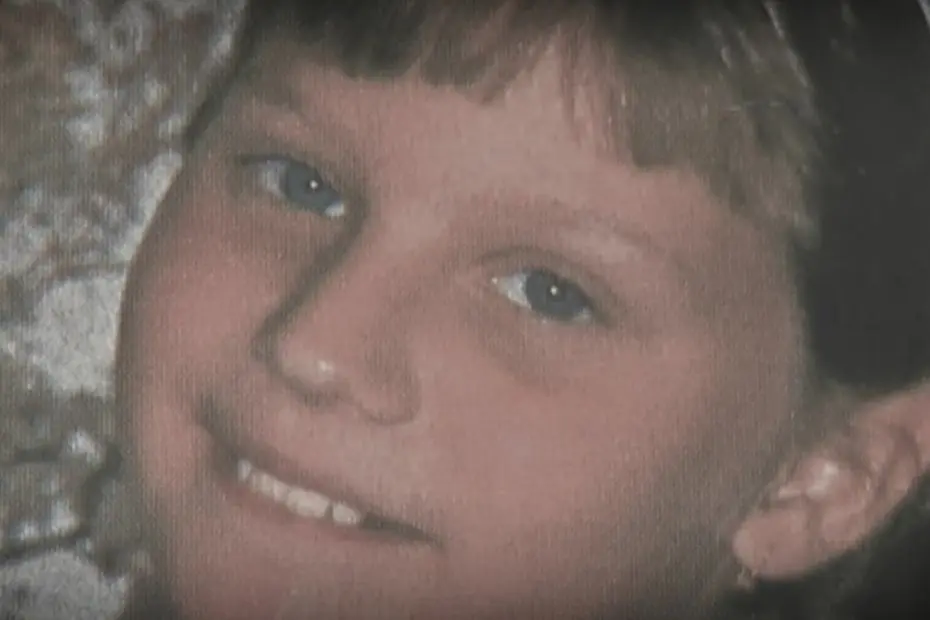
A new suspect in Marion Wagon's disappearance, thirty years after the events
The unsolved cases unit in Nanterre has launched an appeal for witnesses to find a man who may be implicated in the disappearance of Marion Wagon, which occurred on 14 November 1996 in Agen, in Lot-et-Garonne. France3-regions.franceinfo.fr reports that this renewed investigation is based on a major development: the identification, in January 2025, of the child's DNA by a Bordeaux laboratory.
The man being sought was between 30 and 35 years old at the time of the events. "With plenty of hair, brown, the man would have brown eyes, a dark complexion and was wearing a blue cable-knit jumper, well dressed," said Marie-Céline Lawrysz, deputy prosecutor for the cold case unit in Nanterre. Investigators are attempting to establish whether other girls or young women were accosted by an individual matching this description on the streets of Agen in 1996.
A teenager questioned again
On the same day as Marion Wagon's disappearance, a thirteen-year-old girl had been followed by a man in the same neighbourhood. Heard during the initial investigation, she was questioned again a month ago. She told investigators that she could "very well remember the day of 14 November 1996".
According to Marie-Céline Lawrysz, "she was a secondary school pupil at the school situated just next to Marion Wagon's home and she explains that this man looked at her very intently, followed her to such an extent that she had to hurry her pace to get away from this man and take refuge in the entrance hall of the building at 2 bis rue de Lisbonne, frightened". Thirty years on, she says she mentioned it at the time, but the matter had been considered "somewhat trivial", so much so that she had "not mentioned it further".
2 bis rue de Lisbonne at the heart of the investigation
The address 2 bis rue de Lisbonne has been known to investigators since the start of the case: it is the location where search dogs had alerted on several occasions during the initial search. "This place would probably be the location of her disappearance," the deputy prosecutor indicated. Samples were recently taken from a technical room in the building, where Marion may have taken refuge. "Hair, hair fibres and traces were collected, analyses are ongoing to determine whether Marion was in this room at any point," said Marie-Céline Lawrysz.
Marion's DNA identified thanks to a poetry notebook
For decades, the young girl's personal effects, placed under seal, had not made it possible to determine her genetic profile. In January 2025, a Bordeaux laboratory succeeded in identifying Marion's DNA following a year of analysis involving a large number of objects that belonged to her. It was a poetry notebook that provided the decisive result. "It was on an item from this notebook that her DNA was able to be determined," said the deputy prosecutor, emphasising that it was "pure" DNA and "not mixed".
This genetic profile is now registered in the national database of genetic fingerprints (FNAEG). Investigators can thus compare it with unknown traces found at other crime scenes, but also with unidentified bodies or remains. "This is only the beginning," said Marie-Céline Lawrysz.
The Fourniret lead is not definitively ruled out
Comparisons have already been undertaken with sealed evidence from the Michel Fourniret case, to verify whether Marion's DNA was found among unidentified victims listed in that case. The result is negative: "Marion's DNA was not found in the Fourniret files". The deputy prosecutor qualified this, however: "we cannot speak of a definitive exclusion, we can only speak of a small door that has closed but it remains under investigation".
Painstaking work, no lead closed
The cold case unit in Nanterre is conducting what Marie-Céline Lawrysz describes as "painstaking work": every police report, every statement, every cross-reference is re-read and verified. When a question remains, the person concerned is questioned again. No lead is prioritised, none is definitively abandoned. "We open all doors, as long as they are not closed there is no prioritised lead," said the deputy prosecutor.
Investigators hope that the publicity given to the appeal for witnesses will make it possible to gather more precise statements than those obtained in 1996. "It is not insignificant to remember what happened in 1996 when you were twelve or thirteen years old, when you were a young girl and you may have been accosted by an individual," noted Marie-Céline Lawrysz. Each detail, however small, can allow investigators to work on a lead "with greater rigour".
Source: Google News LU FR