French justice under pressure in Rwanda genocide trials, 32 years on
Defendants and witnesses die before trials conclude. In France, 33 cases linked to the 1994 Rwandan genocide are ongoing.
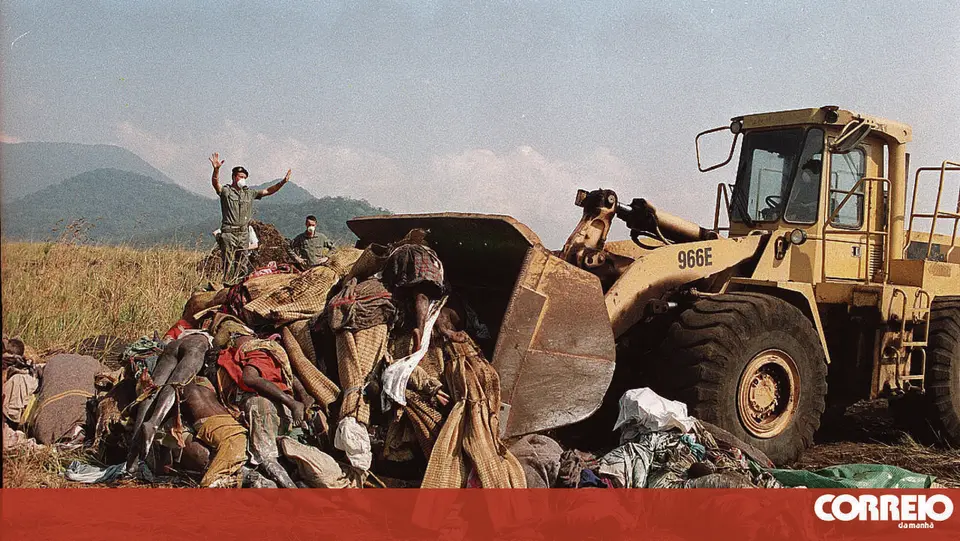
Rwanda genocide trials in France accumulate delays of decades
Thirty-two years after the genocide in Rwanda, parties involved in judicial proceedings in France are denouncing the slowness of justice. Correio da Manhã reports that, despite an increase in the number of trials in recent years, defendants and witnesses die before cases reach their conclusion.
"Defendants die, witnesses die, we see this daily in proceedings," lawyer Philippe Meilhac told the France-Presse agency, representing several suspects including Madjaliwa Safari — a merchant being tried until 18 December in the Paris County Court for genocide and crimes against humanity.
Two deaths in October shake proceedings
In October, two defendants died weeks apart. Former Hutu rebel leader Callixte Mbarushimana died aged 63, after benefiting from an archival decision in October 2024 following 14 years of investigation. The case had been referred back in May 2025 for further proceedings, at the request of the civil parties, according to his lawyer, Laurence Garapin.
Paul Barril, who held the status of assisted witness since 2020, died on 20 October, aged 80. Non-governmental organisations had accused him of complicity and supplying weapons to those responsible for the genocide — accusations he had always rejected.
The death, also in October, of Dafroza Gauthier, a central figure in judicial prosecution of the genocide's perpetrators and whose family was decimated in 1994, deeply affected victims and associations. Her husband, Alain Gauthier, president of the Collective of Civil Parties for Rwanda (CPCR), laments successive "postponements" of justice and considers that "the judges did not take investigations to their conclusion".
Witnesses age, memories are questioned
According to the United Nations, the genocide caused approximately 800,000 deaths between April and July 1994, primarily among the Tutsi minority, but also among moderate Hutus.
"Thirty-two years after the events, many witnesses have died or are no longer in physical or psychological condition to testify," emphasises Rachel Lindon, lawyer for the Ibuka association. Those who were 30 or 40 years old at the time of events see the reliability of their recollections challenged today, on the grounds that they are considered to have lost part of their memory. Witnesses who were only five or ten years old are frequently confronted with the argument that these are "childhood memories" and therefore less reliable.
Habyarimana case drags on for "nearly twenty years"
Meilhac points in particular to the case against Agathe Habyarimana, widow of Rwandan president Juvénal Habyarimana, whose assassination served as the trigger for the genocide. The case has dragged on for "nearly twenty years". "It is absolutely senseless," says the lawyer, who is considering appealing to the European Court of Human Rights.
Habyarimana, currently 84 years old and an assisted witness since 2016, benefited from an archival decision issued in summer 2025 by investigating judges — a decision that troubled the civil parties. The Investigating Chamber meanwhile ordered the resumption of investigations in May last. Meilhac appealed to the Court of Cassation.
Alain Gauthier also laments that no Rwanda-related trial is scheduled for 2027.
33 cases ongoing, limited agenda
According to a judicial source cited by Correio da Manhã, at least one trial is to take place in 2028. One case is already ready for hearing but was concluded too late to be scheduled for the coming year. Five others are in the final stages of investigation.
There are currently 33 cases ongoing in France linked to Rwanda, 23 of which are in the hands of investigating judges.
The same judicial source justifies the delay with the intrinsic complexity of the cases: "Investigations, as often happens in matters of international crimes, are necessarily long and complex. They require investigators and magistrates to travel to Rwanda for several weeks, in particular to hear numerous witnesses or conduct reconstructions." At least two or three missions are carried out per year.
Pace accelerated since 2021, but delays persist
The judicial source emphasises that, since 2021, trials have gained pace: nine cases have been conducted at first instance or on appeal. Since 2012, eight people have been convicted to sentences ranging from 14 years imprisonment to life imprisonment.
Trials, lasting between one and two months, require considerable resources — from transporting witnesses from Rwanda to providing interpreters, observes Rachel Lindon.
The lawyer recognises "a clear and unequivocal change of pace" in recent years in the specialised department for Crimes against Humanity of the National Anti-Terrorism Public Prosecutor's Office, but continues to lament delays caused by legal appeals and their consequences for victims.
Source: Correio da Manhã