A10 trial: psychiatrist assesses mother's diminished capacity for discernment
Daniel Zagury testified on the mental state of Halima El Bakhti, 72, accused of abusing her daughter Inass, found dead in 1987. He concluded that her capacity for discernment was diminished, without psychotic pathology.
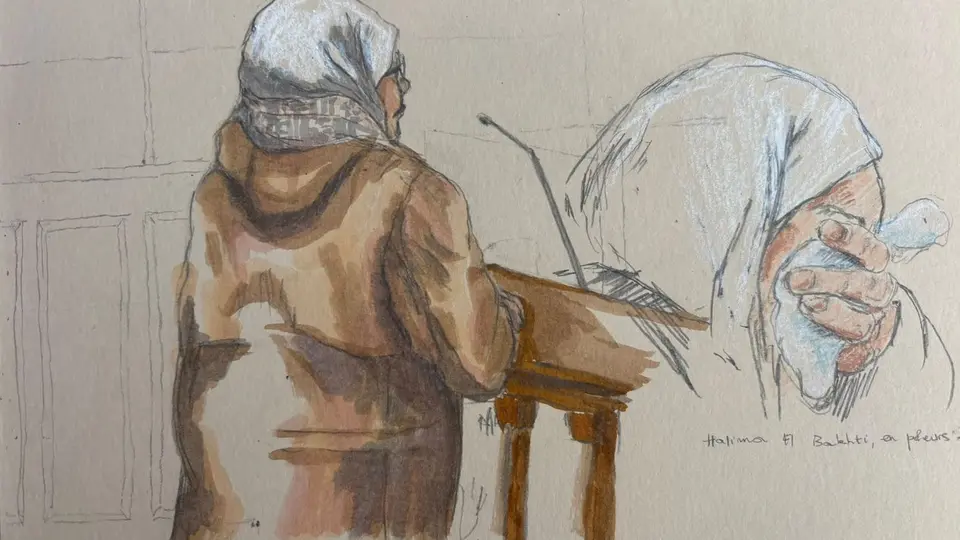
Psychiatric evaluation at the heart of the "unknown girl of the A10" trial
According to franceinfo.fr, the Loir-et-Cher assize court heard psychiatrist Daniel Zagury on Tuesday regarding the diminished capacity for discernment of Halima El Bakhti, mother of Inass Touloub found dead along the A10 motorway in 1987. Zagury, recognised for his expertise in complex criminal cases, met the 72-year-old accused last June at the request of her lawyer.
The expert immediately clarified that he had conducted his evaluation according to the same criteria as a judicial expert assessment, not a defence examination. He addressed the court on what constitutes the "entirely abnormal" aspect of the case: the impossibility of understanding in the face of such extreme abuse inflicted on a child. Zagury emphasised that the psychiatrist must help the tribunal move beyond visceral reactions when confronted with such a case.
To evaluate Halima El Bakhti, Zagury also spoke with one of her sons, who provided crucial testimony speaking on behalf of his siblings. The latter described his mother as someone "consumed from within" who "did not live in the same reality" as those around her. He reported that she "invented things that never happened", even speaking "with a different voice". The children felt they were living "protecting their mother from her own demons" and saw themselves as "the sons or daughters of the mad woman".
The son, however, emphasised that his mother was "loving" and "hyper protective". He told the expert: "If she had been a psychopath or a perverted person, we would all have distanced ourselves from her. But we stayed until the end." These family testimonies reveal a nuanced portrait, far from the monster that the material evidence might suggest.
Before the court, Halima El Bakhti presented an account dominated by the idealisation of her parents. She only concedes a "harsh" upbringing. However, according to Zagury, converging elements indicate that she herself suffered severe abuse. Her son confirmed that she had "a terrible fear of her own mother". The expert noted that this grandmother presented "psychiatric problems" and inflicted extreme abuse on the accused, such as hanging her by the feet from a butcher's hook. Inass's brothers and sisters themselves remained "terrified" by this grandmother, who was compared to "a reptile".
Zagury proposes a reading of the violence against Inass as the reproduction of this cycle of abuse. The child had spent a year with her maternal grandmother in Casablanca before returning to France in 1984. The reunion with Halima El Bakhti proved problematic. The accused reportedly expressed "very clearly" that there was an obstacle between her and her daughter, "a sort of mutual rejection". The child refused to eat, to speak, to laugh, giving her mother the impression that she was rejecting her as a mother.
The expert analyses that Halima El Bakhti experienced "in a persecutory manner" these childish behaviours, which revived her own distress as an abused child. "The attitude of the child threatened the whole of her defensive organisation," Zagury emphasises. He continues: "To accept that her mother did not love her and that, moreover, she tortured her, is something completely unbearable, which would cause her to lose her foundations."
For Zagury, the unleashing of violence on Inass also constitutes the violence that the accused had not exercised against her own mother. He even wonders whether there may have been, at moments, "hallucinatory instants where her mother and her daughter became confused". Inass would thus have been "chosen in reverse as a scapegoat child".
On the central question of criminal responsibility, Zagury concludes to an "absence of psychotic pathology" concerning the septuagenarian. However, he states: "Her capacity for discernment cannot be considered as having been abolished, but the overall personality pathologies justify that her capacity for discernment should be considered as having been diminished."
The day before, Roland Coutanceau, who had conducted the first expert assessment of the accused in 2019, revealed to the court that he had not retained this diminishment in his initial report. He "changed his mind" recently after having followed the oral proceedings of the trial, concluding that the septuagenarian's depressive state at that time could justify this diminishment of her capacity for discernment.
This expert assessment occurs at the heart of a trial that continues to examine how a mother could have inflicted such severe abuse on her child, and to what extent the family history and mental state of the accused shed light on—without justifying—these acts.
Source: Le Monde - Justice